How Hulk Hogan Changed Wrestling and Pop Culture Forever
“`html
Hulk Hogan: The American Icon Who Transcended Wrestling
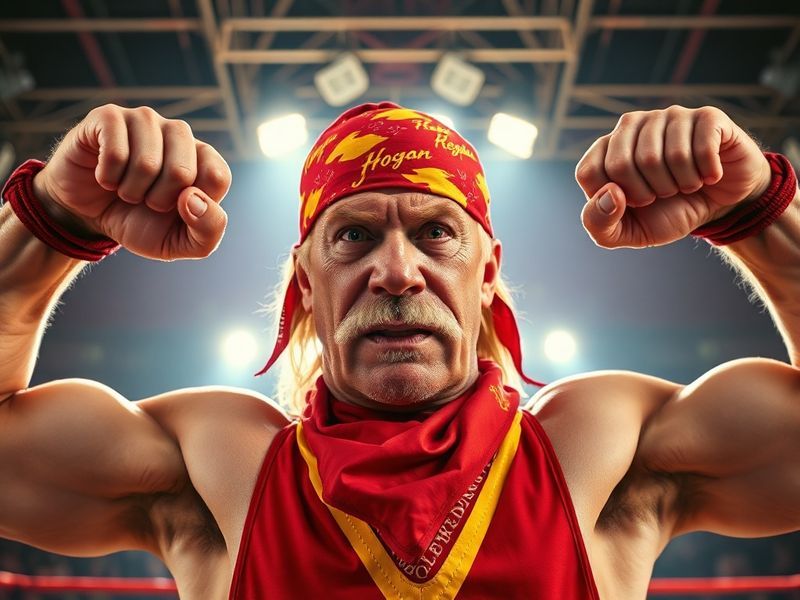
Terry Bollea, better known as Hulk Hogan, remains one of the most recognizable figures in sports entertainment history. With his bleached-blond mustache, red-and-yellow bandana, and larger-than-life personality, Hogan didn’t just compete in professional wrestling—he redefined it. From his early days in the sports entertainment circuit to becoming a global pop culture symbol, Hogan’s influence extended far beyond the squared circle.
Born in 1953 in Augusta, Georgia, Hogan’s athletic journey began in football before shifting to wrestling under the guidance of the legendary Ed “Strangler” Lewis. His transformation into Hulk Hogan in the early 1980s coincided with the wrestling boom of that decade, a period when the sport evolved from regional carnivals into a mainstream spectacle.
The Rise of Hulkamania and the 1980s Wrestling Revolution
Hogan’s ascent to superstardom was cemented by his role in the World Wrestling Federation (WWF, now WWE). His character—boisterous, patriotic, and unapologetically virtuous—resonated with audiences tired of the villainous heels dominating the era. The introduction of “Hulkamania” in 1984, fueled by his victory over Iron Sheik at Madison Square Garden, marked the beginning of a new chapter in sports entertainment.
This era wasn’t just about Hogan’s in-ring prowess; it was about his ability to connect with fans. His catchphrases—”Train, say your prayers, and eat your vitamins”—became cultural shorthand, while his feuds with the likes of André the Giant and Randy “Macho Man” Savage elevated wrestling into a primetime spectacle.
The 1980s also saw Hogan’s crossover into mainstream media. His appearance in Rocky III (1982) alongside Sylvester Stallone cemented his status as a pop culture figure. Alongside this, his autobiography, Hulk Hogan: My Life Outside the Ring, further solidified his image as an all-American hero.
Global Influence and the Wrestling Boom Beyond America
Hogan’s impact wasn’t confined to the United States. His tours in Japan and Australia introduced international audiences to his brand of wrestling, which blended athleticism with theatrical storytelling. In Japan, Hogan’s matches against Antonio Inoki drew massive crowds, bridging the gap between American and Japanese wrestling styles.
In Europe, Hogan’s appearances on television shows like WWF Superstars of Wrestling expanded his fanbase. His image as a hero transcended language barriers, making him one of the first global wrestling stars in an era before social media and streaming.
Even in countries where wrestling wasn’t traditionally popular, Hogan’s larger-than-life persona made him a household name. His influence can still be seen today in wrestlers like John Cena and Roman Reigns, who adopted similar heroic personas.
The Controversies and the Enduring Legacy
No discussion of Hulk Hogan’s career would be complete without addressing the controversies that followed him. His leaked sex tape in 2012 led to a public fallout, resulting in his departure from WWE. The scandal, which included racial slurs in a rant, tarnished his squeaky-clean image and forced a reckoning with his legacy.
Yet, despite these setbacks, Hogan’s cultural footprint remains intact. His induction into the WWE Hall of Fame in 2005 and his recurring appearances in WWE events (despite the controversies) underscore his enduring appeal. For many fans, Hogan’s early years overshadow the later scandals, cementing him as an indelible figure in wrestling history.
The wrestling landscape today owes much to Hogan’s blueprint. His ability to craft a compelling narrative around his persona set the standard for how wrestlers engage with audiences. While modern wrestling has evolved with more complex storytelling and diverse talent, Hogan’s legacy as the face of the 1980s wrestling boom endures.
Hulk Hogan’s Influence on Modern Pop Culture
Beyond wrestling, Hogan’s influence seeped into music, television, and even politics. His cameo in Thunder in Paradise (1993), a made-for-TV movie, showcased his crossover appeal. Meanwhile, his appearances on talk shows and reality TV programs like Hogan Knows Best (2005-2007) brought his family life into the spotlight, blending entertainment with personal drama.
Hogan’s political affiliations have also been a topic of discussion. His support for conservative figures and causes has occasionally clashed with his progressive fanbase, further complicating his legacy. Yet, his ability to remain relevant across decades speaks to his adaptability as a cultural figure.
Today, Hogan’s image is often revisited through memes, retrospectives, and documentaries like Hulk Hogan: The Last Revolutions. His iconic status ensures that new generations continue to discover his contributions to sports and entertainment.
What’s Next for Hulk Hogan?
As of 2024, Hogan remains semi-retired from active wrestling but continues to make occasional appearances. His role in WWE, though limited, keeps him connected to the industry he helped shape. Meanwhile, his business ventures, including his chain of restaurants and merchandise, ensure that his brand remains commercially viable.
For younger fans, Hogan’s legacy is often viewed through a critical lens, acknowledging both his contributions and his flaws. For older generations, he remains the hero who introduced them to the thrill of wrestling. This duality ensures that Hogan’s story is far from over, even as the wrestling world continues to evolve.
Whether as a hero, a villain, or a cautionary tale, Hulk Hogan’s place in history is secure. His story is a testament to the power of larger-than-life personas in shaping global pop culture.