Kurt Volker carved a distinctive path in American diplomacy, blending decades of service with a pragmatic approach to international relations. His career spanned Republican and Democratic administrations, showcasing his ability to navigate complex geopolitical landscapes. Volker’s work in Eastern Europe, particularly during the Trump administration, left an indelible mark on U.S. foreign policy, especially regarding Ukraine.
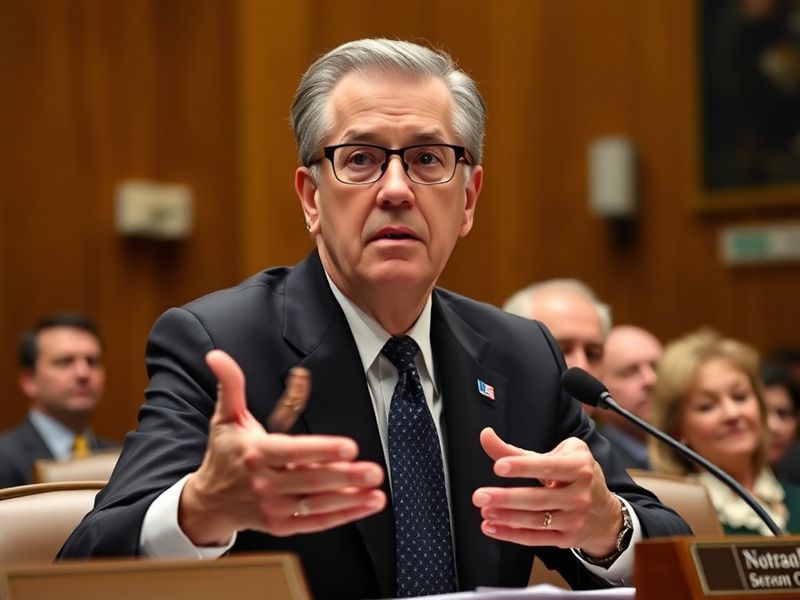
As a career Foreign Service officer and later as the U.S. Special Representative for Ukraine Negotiations, Volker played a pivotal role in shaping Washington’s response to Russia’s aggression in the region. His tenure coincided with critical moments, including the 2016 U.S. election interference and the subsequent impeachment inquiry that centered on Ukraine policy. Volker’s testimony before Congress became a focal point in those proceedings, offering insights into the administration’s decision-making processes.
Early Career and Diplomatic Foundations
Volker’s journey in diplomacy began in the 1980s when he joined the U.S. Foreign Service. His early postings included roles in Eastern Europe, where he witnessed the fall of the Berlin Wall and the collapse of communist regimes. These experiences shaped his understanding of post-Soviet transitions and the challenges of nation-building in former Eastern Bloc countries.
By the 1990s, Volker had risen through the ranks, serving in key positions at the U.S. embassies in Hungary and the European Union. His work during this period focused on expanding NATO and fostering economic cooperation in Central and Eastern Europe. These efforts were instrumental in integrating former Warsaw Pact nations into Western institutions, a cornerstone of U.S. policy during the post-Cold War era.
Volker’s expertise in transatlantic relations earned him recognition within diplomatic circles. He later served as the Deputy Assistant Secretary of State for European and Eurasian Affairs, where he coordinated U.S. policy toward Russia and its neighbors. His tenure under President George W. Bush highlighted his ability to manage crises, including the 2008 Russo-Georgian War, which tested U.S.-Russia relations.
Role in the Trump Administration and Ukraine Policy
Volker’s most high-profile role came during the Trump administration, when he was appointed the U.S. Special Representative for Ukraine Negotiations in 2017. His mission was to support Ukraine’s sovereignty and counter Russian aggression, particularly in the Donbas region. Volker worked closely with Ukrainian officials, including then-President Petro Poroshenko, to strengthen bilateral ties and coordinate U.S. assistance.
His approach emphasized diplomacy and deterrence, advocating for a firm stance against Moscow while maintaining channels for dialogue. Volker’s efforts culminated in the 2018 summit between Presidents Trump and Putin in Helsinki, where he sought to de-escalate tensions. However, his role also intersected with the political turbulence surrounding the 2016 U.S. election, as investigations into Russian interference intensified.
Volker’s involvement in the Trump-Ukraine scandal became a defining moment in his career. In 2019, reports emerged that he had provided guidance to Ukrainian officials about opening investigations into the Bidens, a move that later became central to the impeachment inquiry against President Trump. Volker testified before Congress, describing his interactions with Ukrainian leaders and the administration’s policy toward the country. His testimony revealed the complexities of U.S. foreign policy under Trump, where personal and political interests often blurred with national security objectives.
- Volker’s Key Contributions:
- Advocated for Ukraine’s NATO membership and military support.
- Coordinated U.S. efforts to counter Russian disinformation campaigns.
- Provided critical testimony during the 2019 impeachment inquiry.
- Facilitated dialogues between U.S. and Ukrainian officials on energy and security.
Post-Government Career and Public Advocacy
After leaving government service in 2019, Volker transitioned to the private sector and academia. He joined the McCain Institute as a senior advisor, where he focused on democracy promotion and human rights. His work at the institute reflected his long-standing commitment to supporting vulnerable democracies in the face of authoritarianism.
Volker also became a frequent commentator on U.S. foreign policy, particularly regarding Russia and Ukraine. His analyses appeared in major publications, including The Washington Post and Foreign Affairs, where he critiqued the Biden administration’s approach to Ukraine. He argued for sustained U.S. support for Kyiv, warning that any perceived weakness could embolden Moscow. His advocacy highlighted the ongoing challenges of balancing diplomacy with deterrence in a rapidly evolving geopolitical landscape.
In addition to his public commentary, Volker continued to engage with policymakers and analysts. He participated in think tank discussions and briefed members of Congress on the risks of U.S. disengagement from Eastern Europe. His insights were particularly valuable as the Biden administration navigated the aftermath of Russia’s 2022 invasion of Ukraine, a conflict that Volker had long warned about.
Legacy and Impact on U.S. Foreign Policy
Kurt Volker’s career offers a lens into the evolution of U.S. diplomacy over the past four decades. His work in Eastern Europe during the 1990s and 2000s demonstrated the importance of strategic engagement in post-Soviet states. His tenure in the Trump administration, however, revealed the vulnerabilities of U.S. foreign policy when personal and political interests intersect with national security.
Volker’s legacy is multifaceted. On one hand, he is remembered as a steadfast advocate for Ukraine and a defender of democratic values in the face of Russian aggression. On the other, his role in the Trump-Ukraine scandal underscored the ethical complexities of modern diplomacy, where career diplomats often find themselves navigating uncharted political waters.
For aspiring diplomats, Volker’s career provides valuable lessons in adaptability and resilience. His ability to serve under multiple administrations—each with distinct foreign policy priorities—highlighted the importance of institutional memory and diplomatic continuity. At the same time, his experiences serve as a reminder of the challenges inherent in balancing idealism with realism in international relations.
As the U.S. continues to grapple with the aftermath of Russia’s invasion of Ukraine, Volker’s insights remain relevant. His calls for sustained U.S. support for Kyiv reflect a broader debate about America’s role in the world. Whether through diplomacy, military aid, or economic sanctions, Volker’s career underscores the enduring importance of U.S. engagement in global affairs.
For those interested in the intersection of diplomacy and domestic politics, Volker’s story is a compelling case study. It offers a glimpse into the inner workings of U.S. foreign policy and the individuals who shape it. His career challenges us to consider what it means to serve one’s country in an era of increasing polarization and geopolitical uncertainty.
To explore more about U.S. foreign policy and diplomacy, visit our News and Analysis sections for in-depth coverage of global events and their implications.