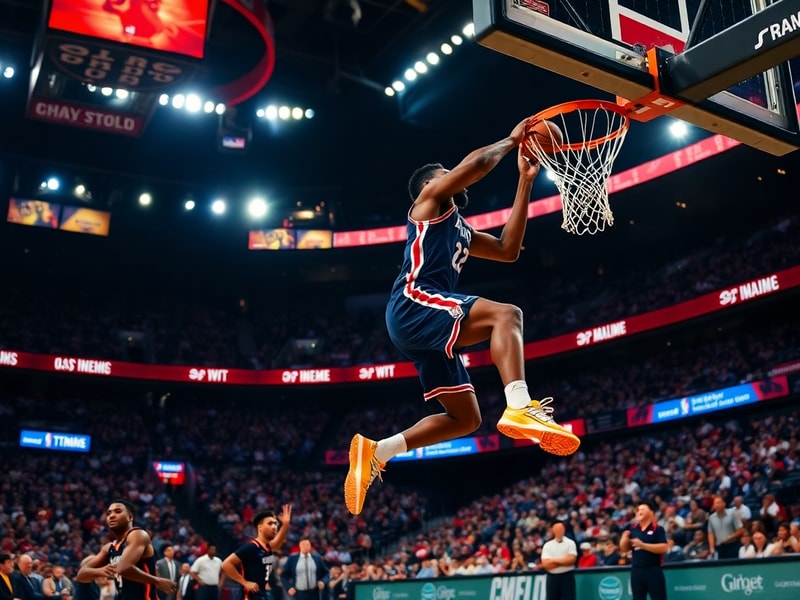
Marvin Bagley III has carved out a unique path in professional basketball, blending elite athleticism with a cerebral approach to the game. The Sacramento Kings forward’s career has been marked by flashes of brilliance, persistent injuries, and a relentless drive to redefine his role in the NBA. At 6’11” with a 7’1” wingspan, Bagley’s physical tools have always been undeniable, but his journey has been far from linear. From his standout college career at Duke to his rollercoaster tenure with the Kings, Bagley’s story is one of unfulfilled potential, resilience, and the complexities of navigating a league that demands instant results.
Early Career and College Dominance
Bagley’s rise to basketball prominence began in Phoenix, Arizona, where he attended Corona del Sol High School. His combination of size, speed, and skill made him a five-star recruit, and he committed to Duke University under coach Mike Krzyzewski. As a freshman in the 2017-18 season, Bagley wasted no time announcing himself to the college basketball world. He averaged 21.0 points and 11.1 rebounds per game, earning consensus First-Team All-American honors and the Karl Malone Award as the nation’s top power forward.
His freshman campaign was defined by jaw-dropping athleticism and an uncanny ability to finish around the rim. Bagley’s fluidity in transition and his knack for drawing fouls made him a nightmare matchup for opponents. He led Duke to a 28-8 record and a berth in the Elite Eight of the NCAA Tournament, where the Blue Devils fell to Kansas despite Bagley’s 22-point, 11-rebound performance. The season cemented his status as a top NBA prospect, with many scouts projecting him as a potential lottery pick due to his two-way potential and motor.
NBA Draft and Sacramento Kings Era
Bagley’s transition to the NBA began when the Sacramento Kings selected him with the second overall pick in the 2018 NBA Draft. The Kings, desperate for a franchise cornerstone after years of mediocrity, viewed Bagley as the missing piece. However, the early stages of his rookie season were marred by inconsistency and limited playing time behind veteran big men like Willie Cauley-Stein. Bagley struggled to adapt to the NBA’s physicality and the Kings’ system, averaging just 14.9 minutes per game through December.
His breakout moment came on December 21, 2018, when he scored 20 points in a loss to the Houston Rockets. Over the next two months, Bagley’s role expanded, and he delivered several impressive performances, including a 28-point outing against the Washington Wizards in February. Despite his progress, questions lingered about his defensive engagement and effort level, traits that would become recurring themes throughout his Kings tenure.
By the 2019-20 season, Bagley was entrenched in Sacramento’s rotation, but injuries derailed his momentum. A thumb injury in December 2019 and a subsequent wrist injury in March 2020 limited him to just 13 games. His final season with the Kings was cut short by the COVID-19 pandemic, and Sacramento’s decision to draft James Wiseman with the second overall pick in the 2020 draft signaled a shift in their long-term plans. Bagley’s time in Sacramento ended when he was traded to the Detroit Pistons in February 2022 as part of the three-team deal that sent Domantas Sabonis to the Kings.
Reinvention in Detroit and Beyond
Joining the Pistons provided Bagley with a fresh start, and he quickly embraced a new role as a stretch big man. Under coach Dwane Casey, Bagley was encouraged to develop his three-point shooting, a skill that had shown promise during his college career. In the 2022-23 season, he converted 32.6% of his threes, a career-high, while averaging 12.0 points and 7.9 rebounds per game. His improved shooting and energy off the bench made him a valuable rotational piece for a young Pistons squad.
However, Bagley’s tenure in Detroit was overshadowed by another injury, this time a strained calf that sidelined him for 10 games. The setback highlighted the fragility that has plagued his career, raising questions about his durability and long-term viability as an NBA starter. Still, Bagley’s work ethic and willingness to adapt have kept him in the league, a testament to his resilience and determination.
As of the 2024 season, Bagley has signed with the Minnesota Timberwolves, reuniting with former Kings teammate Karl-Anthony Towns. The move presents an opportunity for Bagley to showcase his skills in a competitive environment, particularly as a backup to Towns and Rudy Gobert. Whether he can translate his recent improvements into sustained success remains an open question, but Bagley’s journey underscores the challenges and rewards of a professional athlete’s career.
Key Strengths and Areas for Improvement
Bagley’s game is defined by several standout attributes. His athleticism is undeniable, allowing him to finish above the rim and run the floor with elite speed for his size. Defensively, he has the tools to guard multiple positions, though his effort and engagement have often fluctuated. Offensively, Bagley’s post game and ability to score in transition remain his most reliable weapons.
Yet, Bagley’s career has been hindered by inconsistency. His shooting touch from mid-range has waxed and waned, and his three-point percentage remains inconsistent. Defensively, he has been criticized for passive play and a lack of intensity, particularly in pick-and-roll coverage. These issues have limited his ceiling as a starting-caliber NBA player, despite his physical gifts.
Here’s a breakdown of Bagley’s key strengths and areas for improvement:
- Strengths:
- Elite athleticism and speed for a big man
- High-energy rebounder and transition scorer
- Improving three-point shooting touch
- Versatility to play as a stretch four or traditional power forward
- Areas for Improvement:
- Defensive engagement and effort
- Mid-range shooting consistency
- Post game development and footwork
- Mental toughness in high-pressure situations
Legacy and Future Prospects
Marvin Bagley’s career is a study in unfulfilled potential. His physical tools and early promise suggested he could be a perennial All-Star, but injuries, inconsistency, and a lack of development have tempered those expectations. Still, Bagley’s journey offers valuable lessons about the unpredictability of professional sports and the importance of adaptability. His ability to reinvent himself as a stretch big man and his resilience in the face of setbacks demonstrate the qualities of a true competitor.
Looking ahead, Bagley’s future in the NBA may lie in a sixth-man or specialist role. His energy, athleticism, and improving shooting make him a valuable piece for contending teams seeking depth. If he can refine his defensive impact and shooting consistency, Bagley could carve out a long and productive career, even if it falls short of the lofty expectations set during his draft days.
For fans and analysts alike, Bagley’s story is a reminder that talent alone is rarely enough to sustain success in the NBA. It takes work ethic, adaptability, and a willingness to embrace new roles to thrive in a league that constantly evolves. As Bagley continues his career with the Timberwolves, his next chapter may finally provide the stability and opportunity he has sought since entering the league.
Whether he reaches that potential remains to be seen, but Marvin Bagley’s journey is far from over. His story is one of perseverance, and it’s a testament to the unpredictable nature of professional sports.