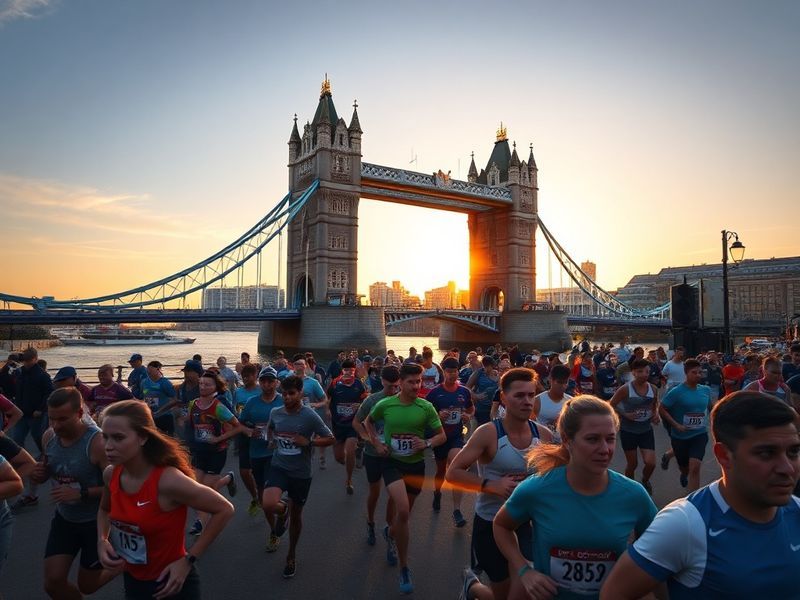
London Marathon 2026: Global Stars, Culture, and Impact Await
“`html
The London Marathon 2026: A Global Stage for Athletic Excellence and Cultural Exchange
The London Marathon has long transcended its origins as a local sporting event to become one of the world’s most prestigious road races. By 2026, the event will mark its 37th edition, continuing a tradition that blends elite athletic competition with vibrant public participation. As the city prepares to welcome runners from over 100 countries, the marathon serves not only as a test of human endurance but also as a canvas for cultural expression, economic impact, and urban storytelling.
London’s ability to host such a high-profile event reflects its status as a global metropolis—one where tradition meets innovation. The 2026 race comes at a time when the marathon movement is expanding across new demographics and geographies, particularly in Africa and Asia, where rising stars are reshaping the sport’s future. This evolution ensures that the London Marathon remains a dynamic platform for both established elites and emerging talents.
The Evolution of London’s Signature Race
Since its inception in 1981, the London Marathon has grown from a modest field of 20,000 runners to one of the six Abbott World Marathon Majors. Its route through iconic landmarks such as Tower Bridge, the Cutty Sark, and Buckingham Palace offers runners a journey through British history while providing spectators with unforgettable views. The 2026 edition will likely retain the same course, preserving its status as both a sporting spectacle and a cultural tour.
In recent years, the event has embraced technological and social changes. From real-time tracking apps to AI-driven training platforms, the marathon has become a testing ground for innovation in endurance sports. Organizers have also expanded accessibility, increasing the number of charity entries and adaptive race slots, reflecting a broader commitment to inclusivity.
Looking ahead to 2026, the London Marathon is expected to further integrate sustainability initiatives. Past editions have introduced biodegradable packaging, water stations with compostable cups, and carbon offset programs. These efforts align with London’s broader environmental goals and set a standard for future global sporting events.
Global Talent on Display: Who Will Emerge in 2026?
The London Marathon has historically been a stage where legends are made. In 2019, Brigid Kosgei shattered the women’s world record in a time of 2:14:04, a performance that redefined the limits of human performance. The men’s race, too, has seen monumental moments, such as Eliud Kipchoge’s 2018 appearance, just months before his historic sub-two-hour marathon in Vienna.
By 2026, a new generation of athletes will be poised to claim their place in history. East African runners—particularly from Kenya and Ethiopia—continue to dominate the sport, but rising stars from Uganda, Eritrea, and Morocco are closing the gap. Meanwhile, athletes from traditionally non-marathon nations such as Japan, China, and even Brazil are pushing the boundaries of what’s possible.
In addition to elite runners, the London Marathon remains a focal point for masters athletes and wheelchair racers. The event’s commitment to para-athletics ensures that the 2026 race will feature some of the most inspiring performances in adaptive sports, highlighting resilience and determination on a global stage.
Cultural Fusion: How London Celebrates Diversity Through Sport
The London Marathon is more than a race; it is a cultural festival. Each year, the event draws over one million spectators who line the route, creating a carnival-like atmosphere. Music, dance, and food stalls representing cuisines from around the world reflect London’s multicultural identity. In 2026, organizers are expected to introduce even more community-centric programming, including cultural pavilions along the course.
For many international runners, the marathon is also a journey of personal connection. Runners often dedicate their efforts to causes close to their hearts—whether supporting local charities in their home countries or fundraising for global initiatives. This spirit of solidarity amplifies the event’s impact beyond athletics, fostering cross-cultural understanding.
The integration of music and art has become a signature of the London Marathon. In past years, live bands, DJs, and even orchestras have performed near key landmarks. For 2026, collaborations with British artists and musicians are anticipated, blending the event’s sporting core with London’s thriving creative sector.
Economic and Urban Impact: A Marathon That Moves More Than Miles
The London Marathon generates an estimated £100 million annually for the city’s economy. Hotels, restaurants, and local businesses see a surge in activity, particularly in areas along the route. For 2026, the event is expected to draw over 40,000 participants and 800,000 spectators, creating a ripple effect across London’s diverse neighborhoods.
The race also influences urban planning and public engagement. In the weeks leading up to the marathon, the city hosts a series of running festivals, fitness expos, and wellness workshops. These events encourage physical activity among Londoners of all ages, reinforcing the marathon’s role as a driver of public health awareness.
Moreover, the event serves as a catalyst for infrastructure improvements. Past marathons have led to enhanced pedestrian pathways, improved public transport access, and upgrades to iconic bridges. For 2026, organizers and local authorities are likely to continue investing in accessibility, ensuring that the event remains inclusive for both participants and visitors.
Key Highlights to Watch in 2026
The 2026 London Marathon promises several exciting developments:
- Enhanced Fan Engagement: Augmented reality apps will allow viewers at home and on-site to access real-time data, athlete interviews, and course insights.
- Sustainability Milestones: Plans include a fully plastic-free route and a zero-waste finish line.
- Global Broadcast Expansion: With growing interest in Africa and Asia, the event will be streamed in more languages than ever before.
- Community Legacy Projects: Funds raised through charity entries will support youth sports programs in underserved London boroughs.
A Marathon for the Future
As the world looks toward 2026, the London Marathon stands as a symbol of endurance in more ways than one. It is a celebration of human potential, a platform for cultural exchange, and a testament to the power of sport to unite communities. In an era marked by division and uncertainty, events like the London Marathon remind us of what can be achieved when people come together under a shared purpose.
For runners, the challenge is clear: to push their limits and leave their mark on one of the world’s most storied courses. For London, the marathon remains a source of pride, a driver of progress, and a vibrant expression of its global identity. And for the world watching, the 2026 race offers not just a spectacle of speed and stamina, but a glimpse into the future of sport—one that is inclusive, innovative, and deeply human.