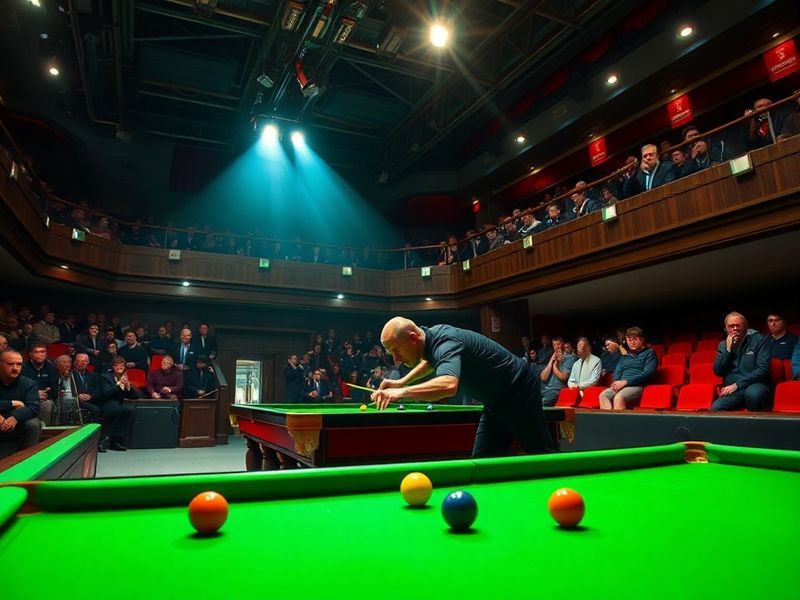
The Snooker World Championship stands as one of the most prestigious events in the world of cue sports, blending athleticism, strategy, and theatrical flair. Held annually since 1927, this tournament has grown from a modest British competition into a global spectacle that captivates millions across continents. With its rich history, iconic venues, and legendary players, the championship is more than just a sporting event—it is a cultural institution that bridges generations and borders.
This year’s tournament, held at the Crucible Theatre in Sheffield, England, once again showcased the finest talent in snooker. The Crucible has been the championship’s home since 1977, its intimate setting amplifying the drama of every frame. The venue’s unique atmosphere, with its red velvet seats and historic ambiance, creates an unparalleled experience for both players and spectators.
The Evolution of a Global Sport
Snooker’s journey to international prominence is a story of adaptation and expansion. Originating in the late 19th century among British Army officers stationed in India, the game evolved from a pastime into a structured sport with formal rules. By the mid-20th century, snooker had established itself in the United Kingdom, but its true global breakthrough came in the 1980s and 1990s. This era saw the rise of television coverage, which transformed the sport into a prime-time spectacle.
Television broadcasters recognized snooker’s potential early on. The BBC’s coverage of the 1985 World Championship final between Dennis Taylor and Steve Davis is often cited as a turning point. The nail-biting conclusion, decided in the final black ball, drew over 18 million viewers in the UK alone. This moment cemented snooker’s place in British sporting culture and paved the way for its international growth.
Today, the sport boasts a diverse field of competitors hailing from across Europe, Asia, and beyond. Players like Ronnie O’Sullivan, Judd Trump, and Mark Selby have become household names, while emerging talents from China, Thailand, and Belgium continue to push the boundaries of the game. The globalization of snooker has also led to increased participation in countries where the sport was previously unknown, expanding its fanbase and competitive depth.
Key Milestones in Snooker’s Global Expansion
- 1980s: Television coverage brings snooker into living rooms worldwide, transforming it into a spectator sport.
- 1990s: The rise of Asian players like James Wattana introduces new styles and techniques to the game.
- 2000s: The introduction of ranking tournaments in China and other Asian countries fuels the growth of local talent.
- 2010s: Players from Belgium and Thailand, such as Luca Brecel and Thepchaiya Un-Nooh, achieve breakthrough victories on the world stage.
- 2020s: The rise of social media and streaming platforms brings snooker to younger, digital-native audiences.
The Crucible Theatre: A Stage for Legends
The Crucible Theatre has been synonymous with the World Snooker Championship since 1977, and its significance cannot be overstated. The venue’s intimate setting, with a capacity of just over 900 spectators, creates an electric atmosphere where every shot resonates. The theatre’s history as a performing arts venue adds a layer of cultural prestige, making it a fitting home for a championship that blends sport and artistry.
One of the Crucible’s most enduring traditions is the “walk-on” music, which players use to enter the arena. Each competitor selects their own track, adding a personal touch to the pre-match ritual. This tradition has become a beloved part of the championship, with fans eagerly anticipating each player’s choice. From AC/DC to classical compositions, the walk-on music reflects the diverse personalities and tastes of the sport’s top athletes.
The theatre’s location in Sheffield, a city with a strong industrial heritage, further enhances its appeal. Sheffield has embraced snooker as part of its cultural identity, hosting numerous grassroots initiatives and youth programs. The city’s commitment to the sport has earned it the nickname “The Steel City of Snooker,” underscoring its role as a hub for cue sports in the UK.
The Cultural Impact of Snooker
Beyond its sporting significance, the Snooker World Championship holds a unique place in global culture. In the UK, snooker is often associated with pubs and social gatherings, where friends and families come together to watch the tournament. The championship’s presence in these settings fosters a sense of community, with people of all ages tuning in to share the experience. In China, snooker has become a mainstream sport, with dedicated television channels and celebrity players attracting millions of fans.
The sport’s cultural reach extends to literature and film as well. The 1980s saw the publication of books like Snooker Scene magazine, which chronicled the game’s evolution and personalities. More recently, films like The Rack Pack have dramatized the rivalry between Steve Davis and Alex Higgins, bringing snooker’s history to new audiences. These cultural touchpoints highlight the sport’s ability to inspire storytelling and creativity.
Snooker also plays a role in promoting values such as discipline, focus, and respect. The sport’s emphasis on etiquette—such as not walking in front of a player mid-stroke or maintaining silence during play—reflects broader societal ideals of sportsmanship. These values resonate with fans worldwide, reinforcing snooker’s reputation as a game of both skill and character.
The Future of the Championship
As the Snooker World Championship looks ahead, it faces both opportunities and challenges. The rise of digital platforms has opened new avenues for fan engagement, with streaming services and social media providing global access to the tournament. However, the sport must also navigate the complexities of maintaining its traditional appeal while appealing to younger audiences.
One promising development is the expansion of snooker’s presence in new markets. Countries like India, where cricket dominates the sporting landscape, are beginning to embrace snooker as an alternative. The introduction of grassroots programs and school initiatives could help grow the sport’s footprint in these regions. Additionally, the World Snooker Tour’s efforts to increase prize money and improve player welfare are crucial for sustaining the sport’s competitiveness.
The championship’s organizers are also exploring innovations to enhance the spectator experience. Virtual reality (VR) and augmented reality (AR) technologies could offer fans immersive ways to engage with the tournament, whether from their living rooms or the Crucible’s stands. These advancements could attract a new generation of fans while preserving the event’s historic charm.
Ultimately, the Snooker World Championship’s enduring appeal lies in its ability to adapt while staying true to its roots. From the green baize of the Crucible Theatre to the living rooms of millions worldwide, the tournament continues to captivate audiences with its blend of precision, drama, and tradition. As snooker evolves, it remains a testament to the power of sport to unite, inspire, and entertain.
For those looking to dive deeper into the world of cue sports, Dave’s Locker’s Sports section offers a wealth of articles, analysis, and updates on snooker and other sporting events. Whether you’re a seasoned fan or a newcomer, there’s always more to discover about this fascinating sport.