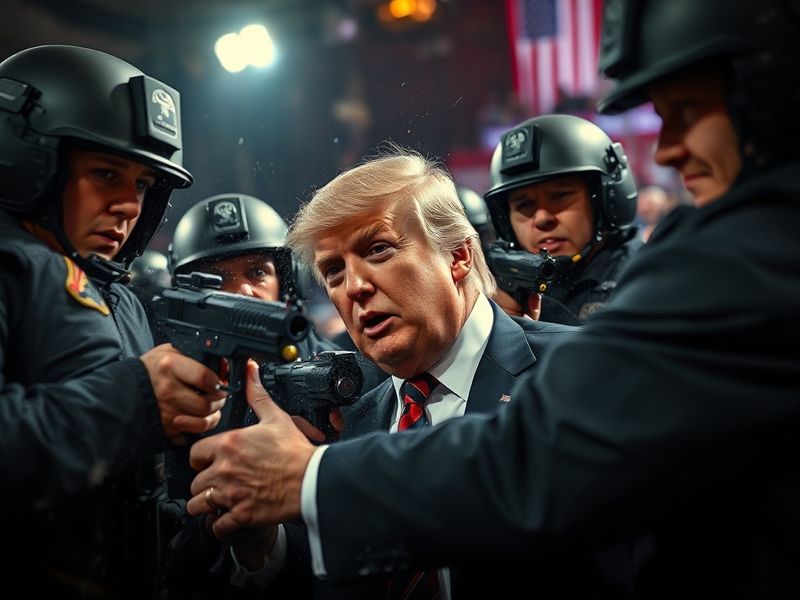
The attempted assassination of former President Donald Trump during a campaign rally in Butler, Pennsylvania, has sent shockwaves through the political landscape. The incident, which unfolded on a sweltering summer evening, left one audience member dead and two critically injured, while Trump himself escaped with minor injuries. As investigations unfold, the attack raises urgent questions about security protocols, political violence in America, and the escalating rhetoric surrounding this year’s election.
Timeline of Events: How the Attack Unfolded
On July 13, 2024, former President Donald Trump was addressing a crowd of supporters at a rally in Butler, Pennsylvania, when gunfire erupted. Secret Service agents immediately rushed to shield Trump, who was struck by a bullet that grazed his ear. The shooter, identified as 20-year-old Thomas Matthew Crooks, was killed by Secret Service counter-snipers. One attendee, Corey Comperatore, a 50-year-old firefighter, was fatally wounded, while two others remain in critical condition.
Eyewitness accounts describe chaos as attendees dropped to the ground, some bleeding from shrapnel wounds. Video footage captures Trump briefly raising his fist before being ushered to safety by Secret Service agents. The former president later posted on Truth Social, stating, “I am praying for the family of the person who was killed and for the others who were badly injured.”
Key Details Emerging from the Investigation
- Shooter’s Background: Thomas Matthew Crooks had no known criminal record but had made a $15 donation to a progressive political action committee in 2021. Investigators are examining his online activity and potential motives.
- Security Failures: Reports indicate that Crooks was able to climb onto a nearby rooftop with an AR-style rifle, raising concerns about perimeter security and advance screening procedures.
- Political Motivations: While no definitive motive has been confirmed, Crooks’ social media activity suggests a mix of political frustration and personal grievances.
- Trump’s Response: Trump has called for national unity and condemned political violence, framing the attack as an assault on democracy itself.
Broader Implications: Political Violence in the U.S.
This assassination attempt is not an isolated incident but part of a disturbing trend of political violence in America. According to data from the Center for Strategic and International Studies, the U.S. has seen a 400% increase in domestic extremist attacks since 2016. The attack on Trump follows a wave of threats against political figures, including President Joe Biden, who has also faced heightened security concerns.
Political analysts warn that the rhetoric surrounding this year’s election has contributed to a climate of intimidation. A 2024 Pew Research poll found that 38% of Americans believe violence could be justified to prevent the other party from winning. This normalization of aggression, whether from the far left or far right, poses a grave threat to democratic institutions.
Comparisons to Historical Assassinations
The attack on Trump evokes memories of past political assassinations in the U.S., including the murders of John F. Kennedy, Robert F. Kennedy, and Martin Luther King Jr. Each of these events reshaped the nation’s political trajectory. While it is too early to determine the long-term impact of this incident, historians note that political violence often accelerates polarization and fuels conspiracy theories.
In the case of Trump, the attack could galvanize his base while simultaneously intensifying scrutiny of his rhetoric and policies. The incident may also embolden calls for stricter gun control measures, though legislative action remains uncertain in a deeply divided Congress.
What’s Next: Investigations, Security Reforms, and Political Fallout
Federal and state authorities are conducting a joint investigation, with the FBI taking the lead. Key areas of focus include Crooks’ online activity, potential accomplices, and gaps in Secret Service protocols. Meanwhile, lawmakers on both sides of the aisle have called for hearings on security failures and the rise of political extremism.
Trump’s campaign has resumed with renewed energy, framing the attack as evidence of a “rigged system” that seeks to silence dissent. His opponents, however, have accused him of stoking divisions that contribute to such violence. The incident has also prompted calls for unity, with some leaders urging a pause in inflammatory rhetoric.
Potential Policy Responses
- Enhanced Security Measures: The Secret Service and local law enforcement may implement stricter perimeter controls at future political events.
- Legislation on Domestic Terrorism: Congress could revisit proposals to establish a federal domestic terrorism statute, though partisan divisions may hinder progress.
- Social Media Monitoring: Platforms may face renewed pressure to monitor extremist content, particularly among lone-wolf actors.
- Bipartisan Rhetoric Reform: Some lawmakers are advocating for a return to civil discourse, though skepticism remains about its feasibility.
Conclusion: A Nation at a Crossroads
The assassination attempt on Donald Trump is more than a tragic headline—it is a symptom of deeper societal fractures. As investigations continue, the incident underscores the urgent need for national healing and a recommitment to democratic norms. Whether this event will unite or further divide the country remains uncertain, but one thing is clear: the stakes have never been higher.
For now, Americans are left grappling with questions about security, free speech, and the future of their democracy. The answers will shape the nation for years to come.
For further analysis on political trends and security issues, visit our News and Politics sections.