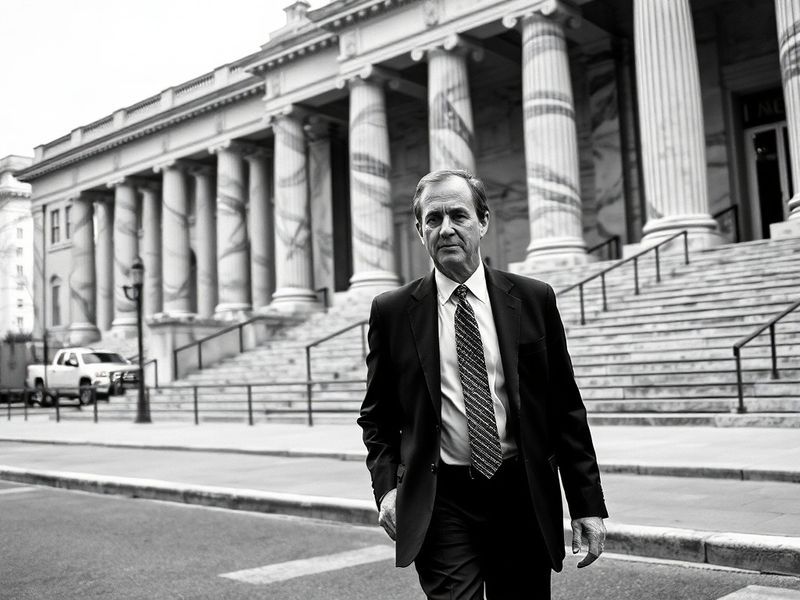
Who Is Carter Page?
Carter Page is a former American energy executive turned political figure whose name became synonymous with one of the most scrutinized investigations in modern U.S. history. Born in 1971 in Minnesota, Page earned degrees from the United States Naval Academy and later Columbia University’s School of International and Public Affairs. His career focused on the energy sector, particularly in Russia, where he worked as an investment banker and consultant during the 2000s.
Page’s professional background in Russia positioned him as a bridge between Western businesses and post-Soviet energy markets. However, his visibility extended far beyond corporate boardrooms when he became entangled in the crosshairs of the FBI’s investigation into Russian interference in the 2016 U.S. presidential election. The probe, known as Crossfire Hurricane, examined whether members of Donald Trump’s campaign conspired with Moscow to influence the election outcome.
Page’s role in the investigation was twofold: he was both a witness and, according to court documents, a potential target. His interactions with Russian officials and business figures made him a focal point for federal scrutiny, sparking a broader debate about foreign influence in American politics.
The Steele Dossier and Its Connection to Page
At the heart of Carter Page’s notoriety is the Steele dossier, a controversial collection of opposition research compiled by former British intelligence officer Christopher Steele. Commissioned by political opponents of Donald Trump during the 2016 campaign, the dossier alleged extensive ties between Trump associates and Russian operatives.
Page’s name appears in multiple sections of the dossier, which claimed he met with high-ranking Russian officials in Moscow in July 2016. The document suggested these meetings were part of a coordinated effort to gather intelligence and potentially compromise Page as a conduit for Kremlin influence. While the dossier’s veracity remains hotly debated, it became a cornerstone for the FBI’s surveillance warrant applications targeting Page.
In 2017, the U.S. intelligence community released a declassified assessment confirming Russia’s interference in the 2016 election. However, the extent of Carter Page’s involvement—or whether he was knowingly complicit—has never been conclusively proven. Critics argue the investigation was politically motivated, while supporters claim it was a necessary probe into foreign interference.
A Global Perspective: Energy, Espionage, and Geopolitical Tensions
Carter Page’s story cannot be separated from the larger context of U.S.-Russia relations during the 21st century. The energy sector has long been a battleground for geopolitical influence, with Russia leveraging its vast oil and gas reserves as both an economic tool and a strategic asset.
Page’s work in Russia coincided with a period of rising tensions between Moscow and the West. The 2008 Russo-Georgian War and the 2014 annexation of Crimea underscored the Kremlin’s willingness to use energy and military power to assert dominance. In this environment, American business figures operating in Russia often found themselves caught between commercial interests and national security concerns.
From a global standpoint, Page’s case reflects broader anxieties about foreign influence in democratic processes. Countries such as the United Kingdom, Germany, and Canada have also grappled with similar issues, as digital disinformation and covert lobbying campaigns become more sophisticated. The Carter Page investigation serves as a case study in how nations navigate the blurred lines between diplomacy, espionage, and corporate activity.
Key Takeaways from Page’s Role in U.S.-Russia Relations
- Energy Diplomacy: Page’s work in Russia highlights the intersection of business and geopolitics, where energy projects often serve as leverage in international negotiations.
- Surveillance and Privacy: The FBI’s use of the Foreign Intelligence Surveillance Act (FISA) to monitor Page raised debates about the balance between national security and civil liberties.
- Diplomatic Fallout: The investigation strained U.S.-Russia relations further, contributing to the expulsion of diplomats and the imposition of sanctions.
- Media and Misinformation: The Steele dossier’s role in the investigation underscored the power—and pitfalls—of unverified intelligence in shaping public perception and policy.
Legal Battles and the Aftermath
Carter Page’s legal and political battles extended well beyond the 2016 election. In 2019, the U.S. Department of Justice (DOJ) dropped its surveillance warrants against him, citing errors in the FISA applications. This decision was seen as a partial vindication for Page, who had long maintained his innocence and accused the government of overreach.
However, the resolution did little to silence the broader controversies surrounding the investigation. The DOJ’s inspector general later identified significant flaws in the FBI’s handling of the FISA warrants, including omissions and inaccuracies in the applications used to justify surveillance on Page. These findings fueled accusations that the investigation was politically weaponized.
Page, in turn, filed lawsuits against various parties, including the DOJ, the FBI, and the Democratic National Committee (DNC), alleging defamation and wrongful surveillance. While some cases were dismissed, the legal saga highlighted the enduring impact of the investigation on Page’s reputation and career.
Beyond the courtroom, Page became a polarizing figure in conservative media circles. He frequently appeared on talk shows and podcasts to discuss what he described as a “witch hunt” targeting Trump and his associates. His narrative resonated with audiences skeptical of mainstream media and government institutions, further embedding his story in the cultural fabric of the Trump era.
Cultural Impact: From Headlines to Conspiracy Theories
Carter Page’s name transcended political reporting to become a symbol in broader cultural and conspiracy-driven narratives. The QAnon movement, for instance, latched onto Page’s story as part of its sprawling—and often unsubstantiated—claims about a “deep state” conspiracy within the U.S. government.
In Russia, where Page had once been a familiar face in energy circles, his notoriety took on a different hue. State-controlled media outlets amplified his story, portraying him as a victim of American political infighting. This framing aligned with the Kremlin’s narrative that the U.S. was rife with internal divisions and hypocrisy.
Meanwhile, in Western Europe, the Carter Page saga was dissected through the lens of transatlantic relations. Analysts questioned whether the episode had permanently eroded trust between the U.S. and its European allies, particularly as they grappled with their own challenges from Russian disinformation campaigns.
Page’s story also intersected with the growing skepticism toward elite institutions, from intelligence agencies to academia. His case became a rallying point for those who viewed the establishment as corrupt and unaccountable, a theme that echoed across populist movements worldwide.
Conclusion: A Legacy of Controversy and Unanswered Questions
Carter Page’s journey from an energy executive to a central figure in one of the most contentious political sagas of the 21st century reflects the complexities of modern geopolitics. His story is not just about espionage or election interference; it is about the blurred boundaries between business, diplomacy, and national security in an era of digital warfare and global distrust.
The unanswered questions surrounding Page’s case—Was he a willing participant in Russian efforts? Was he a scapegoat for a politically motivated investigation?—ensure that his legacy will continue to be debated for years to come. What remains clear is that his story is a microcosm of the larger struggles facing democracies in an age of foreign interference and misinformation.
For observers of geopolitics, Page’s saga serves as a reminder of the fragility of truth in an era where narratives are often shaped by competing agendas. Whether viewed as a cautionary tale or a symbol of resistance, Carter Page’s role in history underscores the enduring power—and peril—of influence in the modern world.
Explore more about global political figures and their impact on News or delve into the complexities of international relations in our Analysis section.