Michael Jackson’s Death: The Day the World Lost Its King of Pop
“`html
Michael Jackson’s Death: The Day Music Lost Its King
The passing of Michael Jackson on June 25, 2009, marked the end of an era in music history. At just 50 years old, the King of Pop left behind a legacy that continues to influence artists across generations. His death wasn’t just the loss of a superstar—it was the end of an artistic revolution that had reshaped global entertainment.
Jackson’s final days were spent preparing for his ambitious This Is It residency in London, a series of 50 concerts that promised to be his grand return to the stage. Instead, the world woke up to the tragic news of his sudden cardiac arrest. The circumstances surrounding his death—from the chaotic scene at UCLA Medical Center to the global outpouring of grief—revealed both the fragility of fame and the unbreakable bond between Jackson and his fans.
The Final Days: A Star Preparing for Comeback
In the months leading up to his death, Jackson was focused on reclaiming his place in the spotlight. After years of personal struggles and financial troubles, the This Is It tour represented more than just a comeback—it was a chance to restore his reputation. Rehearsals in Los Angeles were intense, with Jackson pushing himself physically despite his frail appearance. Witnesses described him as meticulous, even obsessive, about every detail of the performances.
Reports later suggested that Jackson had been in poor health. His personal physician, Dr. Conrad Murray, administered propofol—a powerful anesthetic—to help Jackson sleep before rehearsals. The drug’s risks were well-documented, yet Murray’s decisions would later become central to the legal aftermath. Jackson’s final public appearance was on June 24, 2009, when he visited a friend’s studio to record vocals. It would be his last.
Key Factors Leading to His Death
- Underlying Health Conditions: Jackson had been battling chronic pain, insomnia, and stress for years, exacerbated by his demanding career and personal life.
- Medication Use: His reliance on prescription drugs, including painkillers and sedatives, had become a growing concern among his inner circle.
- Lack of Supervision: Despite his famous paranoia about his health, Jackson’s medical care lacked the rigorous oversight needed for his complex needs.
- Pressure to Perform: The grueling rehearsal schedule for This Is It may have pushed his already weakened body beyond safe limits.
The Aftermath: A World in Mourning
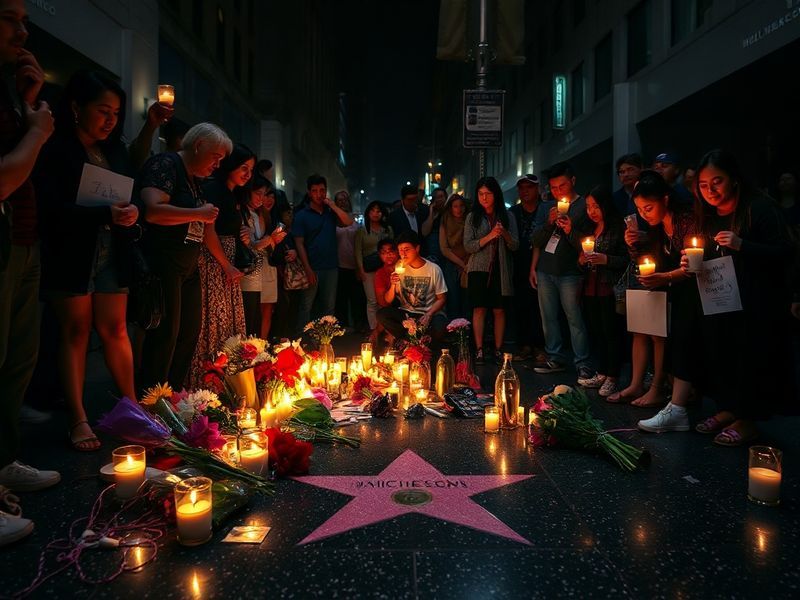
The announcement of Jackson’s death sent shockwaves through media outlets worldwide. News networks preempted regular programming to cover the breaking story, while social media—still in its relative infancy—exploded with tributes. Fans gathered spontaneously at hospitals, his Neverland Ranch, and music landmarks like the Apollo Theater, leaving flowers, handwritten notes, and records in his honor.
Jackson’s public memorial service, held on July 7, 2009, at the Staples Center in Los Angeles, was a surreal spectacle. Broadcast to billions, it featured performances by Stevie Wonder, Usher, and Jennifer Hudson, alongside speeches from family and celebrities. Yet even in grief, controversy lingered. Jackson’s children, including a young Blanket, were thrust into the spotlight, while his family’s feuds played out publicly. The service became less about mourning and more about spectacle—a final act in the drama that had defined Jackson’s life.
Legal Fallout and Cultural Reckoning
The legal consequences of Jackson’s death unfolded over the next several years. Dr. Conrad Murray was convicted of involuntary manslaughter in 2011 for administering the fatal dose of propofol. His trial revealed troubling details about Jackson’s medical care, including Murray’s reckless decisions and Jackson’s own desperation for relief. Murray served two years in prison, a sentence that underscored the dangers of unchecked medical oversight in the entertainment industry.
Jackson’s estate, meanwhile, became a battleground of its own. His children, supported by their grandmother Katherine Jackson, fought against AEG Live—the company promoting the This Is It tour—in a wrongful death lawsuit. The case centered on whether AEG had negligently pushed Jackson to perform despite his declining health. After years of legal wrangling, AEG settled out of court for an undisclosed sum, leaving many questions unanswered about corporate responsibility in the entertainment world.
Broader Implications for the Music Industry
Jackson’s death forced the music industry to confront uncomfortable truths about artist welfare, exploitation, and the pressures of fame. His passing highlighted the lack of safeguards for performers, particularly those with long careers and complex health needs. The rise of reality TV and social media in the 2000s had intensified scrutiny on celebrities, often blurring the line between public fascination and exploitation.
Artists like Prince and Whitney Houston would later face eerily similar struggles, their deaths also tied to prescription drug use and the relentless demands of the industry. Jackson’s legacy, therefore, extends beyond his music—it serves as a cautionary tale about the cost of unchecked fame and the ethical responsibilities of those who profit from artists’ labor.
For fans, Jackson’s death was a turning point in how they engaged with celebrity culture. The outpouring of grief in 2009 foreshadowed the internet-driven mourning that would become commonplace in the years to come, from Prince’s passing to Kobe Bryant’s. Yet Jackson’s death was unique in its scale—a global event that transcended borders, languages, and generations.
A Legacy That Endures
More than a decade after his death, Michael Jackson’s influence remains undeniable. His music continues to top charts, his dance moves are replicated by fans worldwide, and his innovations in music videos set the standard for visual storytelling. Documentaries like Leaving Neverland and This Is It have kept his story—and controversies—alive in public discourse.
Yet Jackson’s most enduring impact may be the way his life and death forced a reckoning with celebrity culture itself. He was a product of an industry that demanded perfection while offering little protection. His struggles with identity, health, and privacy revealed the dark side of fame, a side that society is still grappling with today.
For those who grew up with his music, Jackson’s death feels like a collective loss—a moment when the world realized that even its brightest stars are human. His songs endure because they capture both joy and pain, triumph and tragedy. In the end, Michael Jackson wasn’t just a performer; he was a mirror, reflecting the contradictions of his time.
As we remember him, it’s worth asking what his death taught us—and whether we’ve truly learned anything at all.
For more on the cultural impact of music legends, explore our Music section, or dive deeper into entertainment industry analysis on our Entertainment page.