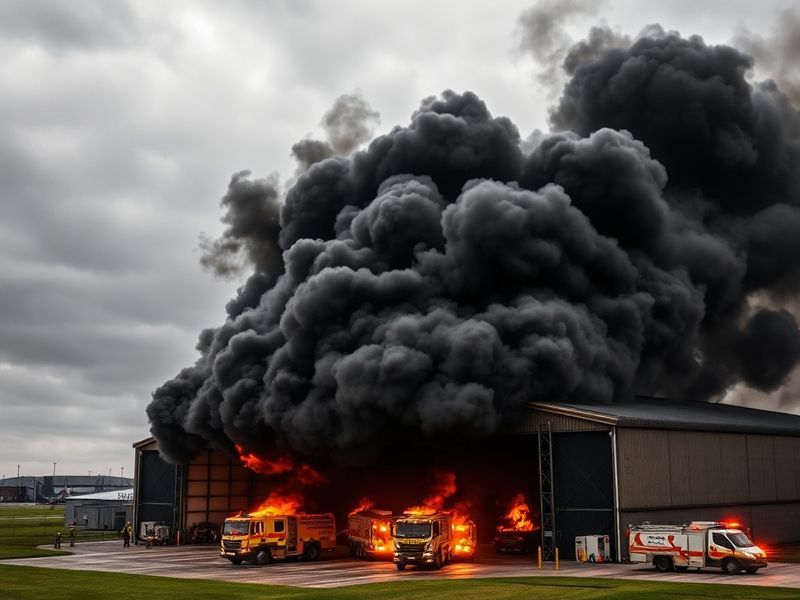
The fire that tore through a commercial building near RAF Fairford on the morning of June 12, 2024, has left the local community grappling with its immediate and long-term consequences. Authorities confirmed that the blaze, which broke out shortly after 7:30 AM, required a multi-agency response involving over 100 firefighters and specialized equipment. While no fatalities were reported, the incident has raised concerns about emergency preparedness, infrastructure resilience, and the vulnerability of commercial properties in the region.
The Fire and Immediate Response
The fire originated in a two-story commercial building located approximately one mile from the perimeter of RAF Fairford, a key Royal Air Force base known for its historical role in military operations, including hosting U.S. Air Force bombers during the Cold War. Eyewitnesses described thick black smoke billowing into the sky, visible from miles away. Local fire services, supported by crews from neighboring counties, worked for nearly six hours to bring the blaze under control.
An investigation into the cause of the fire is ongoing, with preliminary assessments suggesting an electrical fault as the likely trigger. However, the intensity of the flames and partial structural collapse have complicated efforts to pinpoint the exact origin. Emergency services confirmed that five businesses housed within the building were forced to suspend operations indefinitely, with some sustaining total losses.
Key Details of the Incident
- Time of ignition: Approximately 7:32 AM BST
- Response units: 15 fire engines, 5 aerial appliances, and over 100 firefighters
- Buildings affected: One commercial block housing five businesses
- Casualties: None reported; one firefighter treated for minor smoke inhalation
- Estimated financial impact: Over £2 million in property damage and business interruption
Broader Implications for the Community
The fire has exposed vulnerabilities in local infrastructure and emergency planning. The proximity to RAF Fairford adds another layer of complexity, as the base plays a critical role in both military logistics and regional disaster response. While the base’s emergency services were not directly engaged in firefighting efforts, the incident has prompted discussions about mutual aid agreements and coordinated emergency protocols between civilian and military authorities.
Local business owners are facing significant hardship. Among those affected are a family-run café, a printing shop, and a small engineering firm. The café owner, who requested anonymity, expressed concern over the lack of insurance coverage for structural damages. “We’ve been operating here for 15 years,” she said. “This wasn’t just a building—it was our livelihood.”
In the aftermath, community leaders have emphasized the need for improved fire safety measures in older commercial buildings. Many structures in the area were built decades ago and may not meet modern fire codes. Calls for stricter inspections and financial incentives to retrofit fire suppression systems have gained traction among local council members.
Lessons in Emergency Preparedness and Response
The incident at RAF Fairford serves as a case study in how quickly a localized disaster can escalate. Firefighting experts point to several factors that contributed to the severity of the blaze, including the building’s age, the presence of flammable materials, and strong winds that fanned the flames. These conditions highlight the importance of proactive risk assessment and community-wide emergency drills.
Moreover, the response demonstrated the value of interagency collaboration. Fire services from Gloucestershire, Oxfordshire, and Wiltshire coordinated efforts seamlessly, showcasing the effectiveness of mutual aid systems in the UK. However, the incident also underscored the strain on emergency resources, especially in rural areas where fire stations are spread thin.
Recommendations for Future Prevention
- Conduct mandatory fire risk assessments for all commercial buildings over 20 years old.
- Expand funding for retrofitting older structures with modern fire suppression technology.
- Enhance public awareness campaigns on emergency preparedness and evacuation procedures.
- Strengthen mutual aid agreements between military and civilian emergency services.
Looking Ahead: Recovery and Resilience
As cleanup and investigation efforts continue, the focus is shifting toward recovery. The local council has pledged to expedite permits for temporary business relocations and is exploring grants to support affected enterprises. Meanwhile, the fire service has urged property owners to review their insurance policies and fire safety protocols.
This incident is a reminder that disasters do not discriminate—they can strike anywhere, at any time. What matters most is how communities respond, adapt, and rebuild. For the businesses near RAF Fairford, the path forward will require resilience, support, and a commitment to stronger safety measures.
As one firefighter noted during the operation, “We don’t just put out fires—we protect lives and futures. Today, we did both.”
Further Reading: