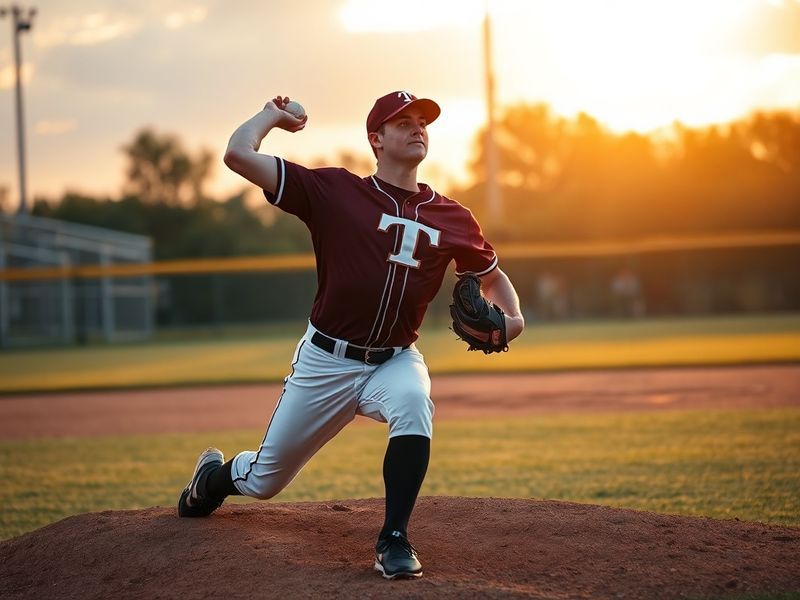
Baseball in Texas is more than a sport—it’s a cultural institution woven into the state’s identity. From high school diamonds to the bright lights of Major League Baseball, Texas has long been a breeding ground for talent, innovation, and unforgettable moments. The state’s baseball culture is deeply rooted in community pride, competitive spirit, and a relentless pursuit of greatness.
At the collegiate level, Texas baseball programs have consistently set the standard for excellence. The University of Texas at Austin, in particular, stands out as a perennial powerhouse. Since the inception of the NCAA baseball tournament in 1947, Texas has claimed six national championships, the most recent in 2005. The Longhorns’ legacy is built on a foundation of elite coaching, player development, and a fanbase that fills the stands at UFCU Disch-Falk Field with unmatched passion.
High School Baseball: The Foundation of Texas Talent
Texas high school baseball is a proving ground for future stars. Programs across the state have produced Major League Baseball draftees at an astonishing rate. The Texas High School Baseball Coaches Association oversees one of the most competitive environments in the country, where athletes compete at the highest level year-round. Schools like Pearland High School and The Woodlands High School have become synonymous with consistent success, churning out MLB-ready talent annually.
In 2023 alone, Texas high school players accounted for nearly 20% of all drafted prep athletes in the MLB Draft. This staggering statistic underscores the state’s role as a pipeline for professional baseball. The emphasis on fundamentals, work ethic, and mental toughness begins early, often under the watchful eyes of scouts and college recruiters. Tournaments like the Texas State Baseball Tournament draw thousands of spectators, showcasing the raw talent and competitive fire that define Texas baseball.
For many young athletes, the dream of playing college or professional baseball starts in their hometown. The state’s hot summers and high school summer leagues provide ample opportunities to refine skills and gain exposure. Programs like the Texas Baseball League and the Area Code Games give top prospects a chance to compete against the best in the nation, often leading to scholarship offers and professional contracts.
Notable High School Programs and Their Impact
- Pearland High School (Pearland, TX): Known for its dominant baseball program, Pearland has produced MLB players like Josh Wolf and David Hensley. The school’s state championship titles in 2018 and 2019 solidified its reputation as a baseball powerhouse.
- The Woodlands High School (The Woodlands, TX): With multiple state titles and a reputation for developing well-rounded athletes, The Woodlands has sent numerous players to college programs and the MLB Draft.
- Canyon High School (Canyon, TX): Located in the Texas Panhandle, Canyon has a rich history of producing MLB talent, including pitcher Jake Arrieta, who won a World Series with the Chicago Cubs.
College Baseball: Where Legends Are Forged
Texas’ collegiate baseball programs are among the most storied in the country. The University of Texas Longhorns, Texas A&M Aggies, and Rice Owls are just a few of the institutions that have left an indelible mark on the sport. These programs serve as stepping stones for athletes aiming to reach the professional ranks, offering top-tier competition, elite coaching, and exposure to MLB scouts.
The University of Texas Longhorns, in particular, have a baseball tradition that spans over a century. The program’s six national championships and 34 conference titles speak to its consistency and excellence. Under the leadership of coaches like Cliff Gustafson and Augie Garrido, Texas baseball became a model for player development and competitive success. Today, the Longhorns continue to be a force in college baseball, regularly appearing in the NCAA Tournament and competing for conference championships.
Texas A&M’s baseball program has also enjoyed periods of dominance, including a national championship in 2011. The Aggies’ home field, Olsen Field at Blue Bell Park, is one of the premier facilities in college baseball, providing a state-of-the-art environment for players and fans alike. Rice University, located in Houston, has carved out its own niche as a consistent contender, with multiple College World Series appearances and a reputation for developing polished, MLB-ready pitchers.
Top Collegiate Programs in Texas
- University of Texas Longhorns: 6 national championships, 34 conference titles, and a pipeline to the MLB.
- Texas A&M Aggies: 1 national championship (2011), multiple College World Series appearances, and a strong tradition of excellence.
- Rice Owls: Known for its pitching staff, Rice has made 19 College World Series appearances and produced numerous MLB players.
- TCU Horned Frogs: Since joining the Big 12, TCU has emerged as a consistent top-25 program, with multiple NCAA Tournament appearances.
MLB’s Texas Roots: A Legacy of Talent
Texas has produced some of the most iconic figures in Major League Baseball history. From Nolan Ryan’s record-breaking fastball to Ivan Rodriguez’s legendary defensive skills, Texas-born players have left an indelible mark on the sport. The state’s rich baseball tradition is reflected in the number of MLB players who hail from Texas—consistently ranking among the top states for producing professional talent.
Current MLB stars with Texas roots include Houston Astros pitcher Justin Verlander, who grew up in suburban Detroit but played college ball at Old Dominion University after being drafted out of a Virginia high school. However, Texas remains a hotbed for MLB talent, with players like Rangers outfielder Adolis García and Astros shortstop Jeremy Peña continuing the state’s legacy of excellence. Peña, in particular, became the first position player from Puerto Rico to win the World Series MVP in 2022, further cementing Texas’ connection to MLB’s brightest stars.
The Texas Rangers, based in Arlington, have also become a model franchise in recent years. After years of rebuilding, the Rangers broke through in 2023, winning their first World Series title in franchise history. The team’s core, including Corey Seager, Marcus Semien, and Nathaniel Lowe, showcased the impact of strong player development and strategic management. The Rangers’ success has inspired a new generation of Texas baseball fans and reinforced the state’s reputation as a breeding ground for championship-caliber talent.
Legendary Texas-Born MLB Players
- Nolan Ryan: Born in Refugio, TX, Ryan is one of the most dominant pitchers in MLB history, with a record 5,714 strikeouts and seven no-hitters.
- Ivan Rodriguez: Nicknamed “Pudge,” Rodriguez is widely regarded as the greatest defensive catcher in MLB history. He was inducted into the Baseball Hall of Fame in 2017.
- Roger Clemens: The seven-time Cy Young Award winner was born in Dayton, OH, but grew up in Texas and played college ball at the University of Texas.
- Lance Berkman: A six-time All-Star and 2011 World Series champion, Berkman played college ball at Rice University before embarking on a stellar MLB career.
The Future of Texas Baseball: Innovation and Growth
As baseball continues to evolve, Texas is positioning itself at the forefront of innovation in the sport. The state’s investment in baseball facilities, technology, and player development programs is ensuring that its legacy of excellence will endure for generations to come. From the rise of travel baseball to the integration of analytics in coaching, Texas is embracing the future while honoring its rich traditions.
One of the most significant trends in Texas baseball is the growth of youth and travel baseball. Programs like the Texas Baseball Ranch and the Dallas Tigers have become destinations for aspiring athletes seeking to develop their skills. These organizations provide elite training, competition, and exposure to college recruiters and MLB scouts. The emphasis on year-round development has led to a surge in the number of Texas high school players being drafted into professional baseball.
Technology is also playing a pivotal role in the evolution of Texas baseball. Teams at all levels are incorporating data analytics, video analysis, and biomechanics to gain a competitive edge. The University of Texas, for example, has invested in cutting-edge training facilities and technology to enhance player performance and injury prevention. These advancements are not only improving individual players but also elevating the overall quality of baseball in the state.
Additionally, the Texas Rangers’ recent success has sparked renewed interest in baseball across the state. The team’s World Series victory in 2023 has inspired a new generation of fans and players, further solidifying baseball’s place in Texas culture. With the state’s strong baseball infrastructure and passionate fanbase, the future of Texas baseball looks brighter than ever.
Key Trends Shaping the Future of Texas Baseball
- Travel Baseball Growth: Organizations like the Texas Baseball Ranch and the Dallas Tigers are attracting top talent and providing elite training environments.
- Technology Integration: The use of data analytics, video analysis, and biomechanics is becoming increasingly prevalent in player development.
- Facility Upgrades: Colleges and high schools across Texas are investing in state-of-the-art facilities to enhance training and competition.
- MLB Expansion: With the Texas Rangers’ recent success and the potential for MLB expansion teams in cities like Austin or San Antonio, the state’s baseball landscape is poised for further growth.
Texas baseball is more than a sport—it’s a tradition, a pipeline, and a source of pride for communities across the state. From the sandlots of small-town Texas to the bright lights of Arlington’s Globe Life Field, the game is deeply woven into the fabric of the Lone Star State. As the sport continues to evolve, Texas will undoubtedly remain at the forefront, producing the next generation of baseball legends.
For more insights into Texas sports and beyond, visit Dave’s Locker Sports.