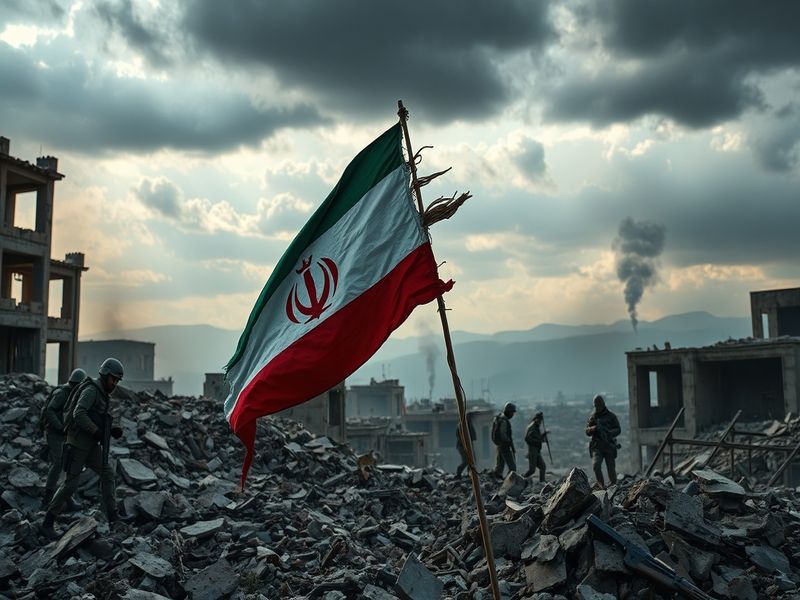
iran war
Iran’s Military Posture and Regional Tensions
The Islamic Republic of Iran continues to shape the geopolitical landscape of the Middle East through a combination of asymmetric warfare, proxy networks, and a robust domestic arms industry. While Tehran insists its military programs are defensive, regional powers and Western observers frequently highlight the expansion of ballistic missile capabilities and support for allied militias as destabilizing forces. Iran’s strategic doctrine emphasizes deterrence through denial, leveraging geography, tunnels, and precision-strike systems to counter superior conventional forces.
Since the 1979 revolution, Iran has rebuilt its armed forces amid international isolation. The eight-year war with Iraq left deep scars and reinforced a survivalist mindset within Iran’s leadership. Today, the Islamic Revolutionary Guard Corps (IRGC) operates as both a military force and a parallel government entity, controlling vast economic and political networks. This dual structure complicates diplomatic engagement and fuels suspicions about the regime’s long-term intentions.
The Evolution of Iran’s Ballistic Missile Program
Iran’s ballistic missile program began in the 1980s during the Iran-Iraq War, when long-range strikes became a necessity. Initially reliant on foreign technology—particularly from North Korea and China—Iран gradually developed indigenous systems. The Shahab-3, introduced in the 1990s, marked a turning point, offering a 1,300-kilometer range capable of reaching Israel and U.S. bases in the Gulf.
By 2020, Iran had fielded the Sejjil-2, a two-stage solid-fuel missile with a range of 2,000 kilometers. The program’s expansion accelerated after the U.S. withdrawal from the Joint Comprehensive Plan of Action (JCPOA) in 2018. Satellite imagery has since documented new missile silos and underground facilities, suggesting a deliberate shift toward survivable, hardened launch sites.
International sanctions have not halted progress. Instead, Iran has relied on smuggling networks, dual-use technology imports, and reverse engineering to sustain production. Analysts note that each new missile test serves a dual purpose: enhancing deterrence and signaling resolve to both adversaries and domestic audiences.
Proxy Networks and the Shadow War Across the Region
Iran’s influence extends far beyond its borders through a network of allied militias. In Lebanon, Hezbollah remains the most powerful non-state actor, equipped with tens of thousands of rockets and drones. In Yemen, the Houthi movement has launched hundreds of ballistic missiles and drones toward Saudi Arabia and the UAE, often with guidance from IRGC advisors.
In Syria, Iran maintains a permanent military presence, supporting the Assad regime with advisors, weapons, and logistical hubs. In Iraq, militias like Kata’ib Hezbollah and Asa’ib Ahl al-Haq operate with varying degrees of autonomy, sometimes clashing with U.S. forces stationed in the country. This web of alliances allows Iran to project power without direct confrontation, a strategy known as “forward defense.”
The U.S. has responded with periodic airstrikes and targeted assassinations, including the 2020 killing of IRGC Quds Force commander Qasem Soleimani. Such actions underscore the asymmetric nature of the conflict: Iran avoids direct war but escalates through proxies, while the U.S. and Israel respond with covert operations and sanctions.
A Global Chessboard: Sanctions, Diplomacy, and Economic Resistance
The nuclear deal’s collapse in 2018 plunged Iran into economic crisis. The reinstatement of U.S. sanctions slashed oil exports from over 2 million barrels per day to less than 500,000. Inflation soared above 50 percent, and the Iranian rial lost more than 70 percent of its value against the dollar. Yet, Iran adapted. It expanded trade with China and Russia, deepened ties with Venezuela and Syria, and developed a robust domestic pharmaceutical and automotive industry.
Despite pressure, Iran has avoided total economic collapse. It has done so through a combination of smuggling, currency manipulation, and strategic partnerships. The IRGC, in particular, controls large segments of the economy, from construction to telecommunications, insulating itself from sanctions.
Diplomatic efforts have sputtered. The 2022 protests in Iran—sparked by the death of Mahsa Amini—further strained relations with the West. While some European nations pursued limited engagement, the U.S. maintained a policy of “maximum pressure.” Meanwhile, regional rivals like Saudi Arabia and Israel have increased security cooperation, viewing Iran’s rise as an existential threat.
Cultural and Technological Dimensions of Iran’s Military Strategy
Iran’s military innovations are not confined to hardware. The IRGC has pioneered the use of drones in asymmetric warfare. The Shahed-129, a medium-altitude long-endurance drone, has been deployed in Syria and Yemen. More recently, the Mohajer-6 and the domestically produced Arash-2 have expanded Iran’s surveillance and strike capabilities.
Cyber warfare has also become a critical domain. Iranian hackers, linked to the IRGC, have targeted Israeli infrastructure, U.S. government networks, and even global shipping companies. These operations blend military objectives with ideological messaging, often framing cyberattacks as acts of resistance against Western dominance.
Culturally, Iran’s military narrative emphasizes martyrdom and resistance. Public parades, murals of fallen commanders, and state media glorify the IRGC and Basij forces. This messaging resonates domestically, reinforcing the regime’s legitimacy amid economic hardship and political repression.
Regional Alliances and the Future of Conflict
Iran’s relationships with regional actors have evolved into a de facto anti-Western coalition. The 2023 China-brokered agreement between Iran and Saudi Arabia signaled a pragmatic shift, reducing direct tensions and allowing both sides to focus on internal priorities. Yet, the underlying rivalry persists, particularly in Yemen and Lebanon.
Israel remains the most vocal opponent of Iran’s military advances. A series of covert operations—including the 2020 assassination of nuclear scientist Mohsen Fakhrizadeh—have demonstrated Israel’s willingness to disrupt Iran’s nuclear and missile programs. Meanwhile, Iran has vowed retaliation, raising fears of a broader regional war.
The Biden administration has pursued a nuanced approach: re-engaging diplomatically while maintaining sanctions and supporting Israel’s deterrence efforts. However, the absence of a clear strategy has left allies uncertain about U.S. commitment.
The Path Forward: Diplomacy or Escalation?
The trajectory of Iran’s military posture depends on several factors: the outcome of the 2024 U.S. election, the stability of regional partners, and Iran’s internal political dynamics. A return to the JCPOA appears unlikely, but limited agreements on missile testing or regional de-escalation could ease tensions.
For now, the Middle East remains caught between two competing visions: one of a rising Iran projecting power through proxies and missiles, and another of a coalition of Arab states and Israel seeking to contain that influence. The risk of miscalculation—whether in the Strait of Hormuz, the Golan Heights, or cyberspace—looms large.
As the world watches, Iran continues to maneuver within a tightening circle of sanctions and hostility. Its strategy remains unchanged: survive, resist, and outlast. Whether this approach will ultimately secure its interests—or lead to further isolation—remains an open question.
One thing is certain: the shadow war will endure, fought not on traditional battlefields, but in the corridors of power, the skies above the Gulf, and the digital networks that connect them all.