Background of the Incident
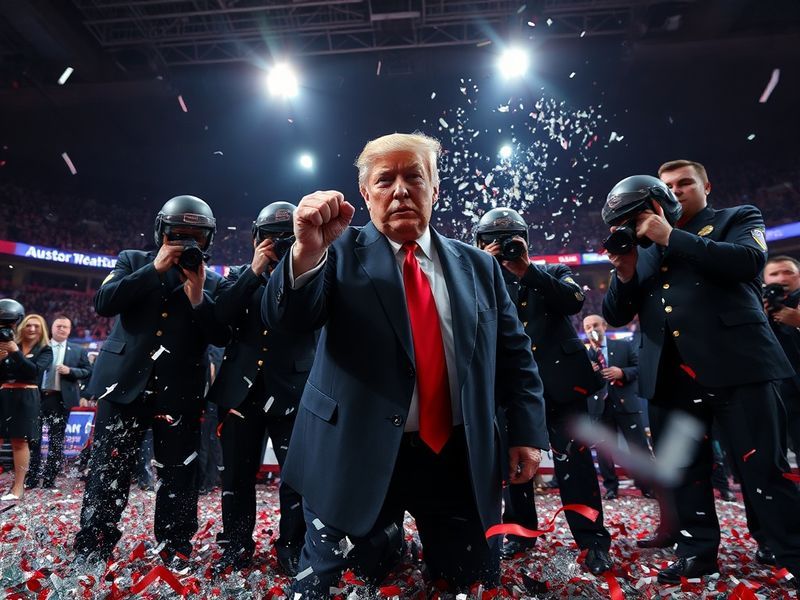
The assassination attempt on former U.S. President Donald Trump unfolded during a campaign rally in Butler, Pennsylvania, on July 13, 2024. The incident occurred as Trump addressed a crowd of supporters, with the shooting taking place in close proximity to the stage. A single gunman, identified as 20-year-old Thomas Matthew Crooks, opened fire from a rooftop approximately 150 yards away. The attack resulted in the deaths of one attendee and the shooter, while two others were critically injured.
Security protocols at political events have faced renewed scrutiny following the attack. The assailant, armed with a semiautomatic rifle, bypassed initial security measures, raising concerns about vulnerabilities in event protection. Local law enforcement and Secret Service agents responded within seconds, neutralizing the threat. The swift intervention prevented further casualties, though the psychological impact on attendees and the public remains significant.
Global Reactions and Political Consequences
The assassination attempt triggered immediate responses from world leaders and political figures. Leaders from Europe, Asia, and the Americas condemned the violence, emphasizing the importance of democratic stability. French President Emmanuel Macron stated that “violence has no place in the democratic process,” while German Chancellor Olaf Scholz called for unity in the face of political extremism.
In the United States, bipartisan condemnation emerged, though political divisions persisted over security failures. Democrats and Republicans alike called for investigations into how the assailant evaded detection. Senate Majority Leader Chuck Schumer emphasized the need for “comprehensive reforms” to prevent future threats. Meanwhile, Trump’s campaign suspended activities temporarily before resuming with heightened security measures.
Social media platforms experienced a surge in activity as users shared footage and opinions about the event. Platforms like X (formerly Twitter) and Facebook implemented temporary restrictions to curb misinformation. The incident reignited debates about the role of social media in spreading political violence.
Security Failures and Systemic Issues
Investigations into the attack revealed multiple lapses in security protocols. Reports indicated that the shooter had exhibited suspicious behavior prior to the event, including purchasing ammunition and making threats online. Despite these red flags, no direct action was taken to prevent his presence near the rally site.
- Local law enforcement had received prior warnings about the shooter’s online activity.
- The Secret Service’s counter-sniper team was reportedly delayed in responding.
- Event organizers failed to conduct thorough background checks on nearby structures.
Former Secret Service Director Kimberly Cheatle resigned amid public backlash, acknowledging “serious deficiencies” in protection protocols. The agency announced an internal review to address systemic weaknesses. Critics argue that political polarization has strained security resources, making it increasingly difficult to mitigate threats.
The incident also highlighted the role of mental health in preventing violence. Crooks had no prior criminal record but exhibited signs of instability online. Experts suggest that better coordination between law enforcement, social services, and intelligence agencies could help identify high-risk individuals before they act.
Cultural and Psychological Impact
The attack has left a lasting imprint on American political culture. Polls indicate that 68% of Americans now fear political violence as a growing threat. The event has intensified divisions, with some supporters viewing Trump as a victim of systemic bias, while opponents condemn his rhetoric as incitement.
Psychologists warn that such incidents can normalize violence in political discourse. A study by the Pew Research Center found that 42% of Americans believe political violence is justified under certain circumstances. The erosion of trust in institutions has further complicated efforts to heal societal fractures.
Globally, the incident has been compared to historical political assassinations, such as the shootings of Robert F. Kennedy in 1968 and Gabrielle Giffords in 2011. Analysts note that the digital age amplifies such events, turning them into viral spectacles that shape public perception instantaneously.
For more on political security measures, visit our Politics category, where we analyze how nations protect their leaders in an era of rising extremism.
Conclusion
The assassination attempt on Donald Trump serves as a stark reminder of the fragility of democratic processes. While immediate security reforms are necessary, the deeper challenge lies in addressing the cultural and psychological undercurrents that fuel political violence. As nations grapple with these issues, the need for unity and vigilance has never been more urgent.
The global response underscores a shared commitment to condemning violence, yet the path forward remains uncertain. Only through collective action—combining improved security, mental health support, and responsible discourse—can societies hope to prevent such tragedies in the future.