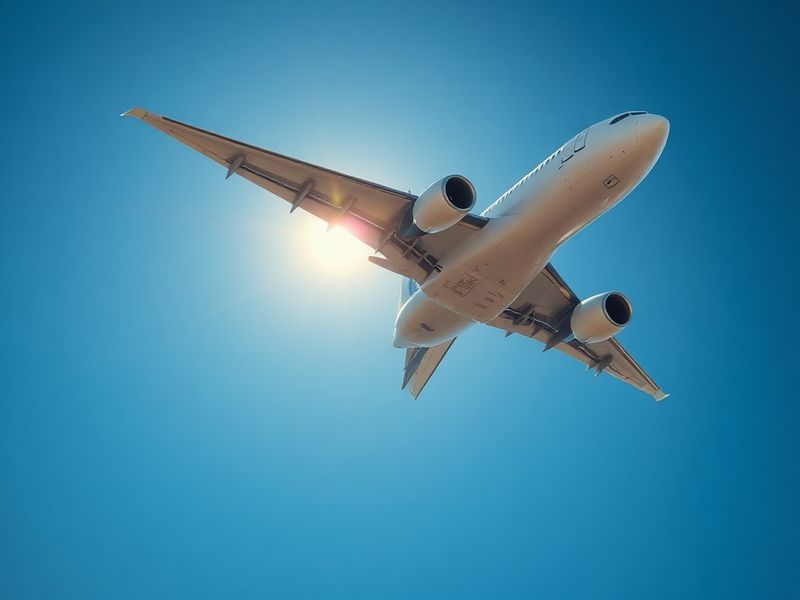
Air travel has long been the backbone of global connectivity, shrinking distances that once took weeks into mere hours. In 2024, the industry faces a paradox: more passengers than ever demand efficient, affordable flights, yet climate concerns and operational challenges push innovation in every direction. Airlines, manufacturers, and regulators are racing to redefine what air travel looks like in the 21st century. This evolution isn’t just about getting from point A to B faster—it’s about doing so responsibly, affordably, and reliably in an increasingly interconnected world.
The State of Air Travel Today
Globally, air travel has rebounded strongly since the pandemic, with 2024 passenger numbers approaching pre-2019 levels. According to the International Air Transport Association (IATA), over 4.7 billion people are expected to fly this year—a 10% increase from 2023. While this surge reflects pent-up demand, it also strains aging infrastructure at major hubs like London Heathrow, Los Angeles International, and Dubai International, where delays and congestion remain persistent issues.
On the pricing front, average fares have stabilized after the volatility of 2022–2023, though inflation and fuel costs keep costs elevated for airlines and passengers alike. Fuel, which accounts for nearly 30% of operating expenses, remains a wildcard. Despite efforts to adopt sustainable aviation fuels (SAF), supply is limited and costs remain high—about two to four times more than conventional jet fuel. The result? Airlines are caught between financial sustainability and environmental responsibility.
Key Trends Shaping Modern Air Travel
- Digital Integration: From AI-powered chatbots to biometric boarding, airlines are leveraging technology to streamline check-in, security, and in-flight experiences. Baggage tracking is now GPS-enabled in many cases, reducing lost luggage incidents.
- Premium Economy Expansion: Airlines are investing heavily in premium economy cabins, offering more legroom, better dining, and priority boarding to attract business and leisure travelers who want comfort without full first-class prices.
- Ultra-Long-Haul Flights: New aircraft like the Airbus A350-900ULR and Boeing 787-9 are enabling nonstop routes over 18 hours, connecting cities like Singapore to New York or Sydney to London without layovers.
- Sustainability as a Competitive Edge: Airlines like JetBlue and KLM now offer carbon offset programs at booking, while Lufthansa and Air France have increased SAF usage in corporate contracts. Sustainability isn’t just ethical—it’s becoming a marketing necessity.
The Environmental Equation: Can Air Travel Really Go Green?
The aviation industry contributes roughly 2.5% of global CO₂ emissions—a figure that could rise to 22% by 2050 if unchecked, according to the International Council on Clean Transportation. While this pales in comparison to sectors like energy or transport, the lack of viable alternatives makes the challenge uniquely difficult.
SAF is currently the most promising near-term solution, capable of reducing lifecycle emissions by up to 80%. However, production remains at less than 0.1% of total jet fuel demand. Governments are stepping in: the U.S. Inflation Reduction Act offers tax credits for SAF producers, and the EU mandates blending 2% SAF by 2025, rising to 70% by 2050. But scaling up requires massive investment in feedstock—sustainable sources like waste oils, algae, and agricultural residues.
Electric and hydrogen-powered aircraft are on the horizon, but limited by battery weight and energy density. Companies like Heart Aerospace and ZeroAvia are testing 19- to 50-seat electric planes for short-haul routes, yet commercial deployment before 2030 remains unlikely. Until then, efficiency improvements—lighter materials, optimized flight paths, and engine enhancements—are the primary tools for reduction.
“The path to net-zero aviation isn’t a single breakthrough—it’s a mosaic of innovation across fuels, operations, and infrastructure. We’re in the most transformative era since the jet age began.” — Grazia Vittadini, Chief Technology Officer, Rolls-Royce
Challenges Beyond Carbon: Delays, Disruptions, and Demand
Air travel isn’t just about carbon footprints. Operational reliability remains a persistent pain point. In 2023, the U.S. alone saw over 20% of flights delayed, with weather, air traffic control shortages, and crew unavailability as major culprits. Europe faces similar challenges, especially during peak summer months.
Labor shortages continue to haunt the sector. Pilots, mechanics, and ground staff are in high demand, with training pipelines struggling to keep pace. The global pilot shortage is projected to reach 60,000 by 2030, according to Boeing’s Pilot Outlook. Airlines are responding with higher wages, signing bonuses, and cadet programs—moves that add to operational costs and ticket prices.
Then there’s the issue of over-tourism. Popular destinations like Venice, Barcelona, and Bali are grappling with the environmental and social strain of mass air travel. In response, some cities are introducing tourist taxes, limiting cruise ships, or even restricting certain flight routes. The question arises: Should air travel be regulated not just for climate, but for community health?
What’s Next for the Traveler?
For the average passenger, the future of air travel will likely mean more choices, more transparency, and more responsibility. Booking platforms are beginning to display carbon impact alongside price and duration. Some airlines now offer “eco-flags” on itineraries, letting travelers opt for lower-emission routes when possible.
Regional carriers are also seeing a resurgence. Budget airlines like Ryanair and Spirit continue to expand intra-European and domestic U.S. routes, making air travel accessible to a broader audience. Meanwhile, private aviation—once the domain of the ultra-wealthy—is experiencing a democratization through programs like NetJets and Wheels Up, offering fractional ownership at lower entry points.
One emerging trend is “slow travel by air”—longer layovers in connecting cities to reduce flight frequency and environmental impact. Airlines like Emirates and Singapore Airlines promote stopover programs with complimentary hotel stays, turning delays into mini-vacations.
Conclusion: A Journey Worth Taking
Air travel remains one of humanity’s greatest achievements—a testament to engineering, ambition, and global connection. But in 2024, it stands at a crossroads. The industry must balance growth with stewardship, speed with sustainability, and accessibility with accountability. While challenges loom large—climate change, infrastructure strain, labor shortages—the response is not retreat, but reinvention.
Passengers today are more informed and more demanding. They want convenience, comfort, and conscience. The airlines that thrive will be those that listen—not just to market demands, but to the planet’s limits. The future of flight isn’t just about getting there faster. It’s about getting there better.
As we look ahead, one thing is clear: the sky is not the limit. It’s the starting point.
For more insights into travel trends and industry shifts, explore our Travel and Technology sections on Dave’s Locker.