<h2>Lost Boys: Broadway’s Darkly Playful Return to the Stage</h2>

<p>Theatergoers in New York and beyond have rediscovered a cult classic this season, as <em>Lost Boys</em> makes its Broadway debut after nearly four decades of off-stage lore. The musical adaptation of the 1987 vampire film <em>The Lost Boys</em>—directed by Alex Brightman and with music by Justin Levine—has drawn attention not only for its faithfulness to the original but also for its bold reinterpretation of the story’s themes of youth, rebellion, and the supernatural.</p>

<p>Set in 1980s Santa Carla, California, the show follows the Emerson brothers, Michael and Sam, as they move to the coastal town and encounter a gang of teenage vampires led by the charismatic David. The production blends high-energy rock anthems with a darker, more introspective tone, reflecting the duality of adolescence itself—both seductive and dangerous. Critics have praised the show’s energetic choreography and strong performances, particularly from the ensemble, which captures the anarchic spirit of the original film.</p>

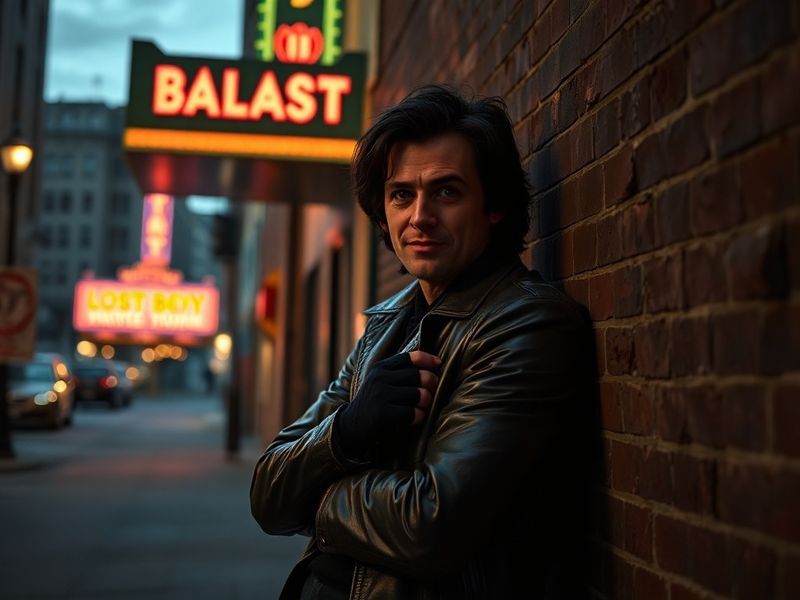
<p>What makes this revival especially noteworthy is its timing. In an era where nostalgia often drives theatrical success, <em>Lost Boys</em> doesn’t just rely on the film’s legacy. Instead, it reimagines the material for a modern audience, emphasizing themes of identity, addiction, and the search for belonging. The production’s use of neon-lit staging and synth-heavy score harks back to the 1980s aesthetic while feeling fresh and relevant today.</p>

<h3>A Global Homage to 1980s Counterculture</h3>

<p>The original <em>The Lost Boys</em> film became a defining artifact of 1980s American subculture—a time when punk rock, surfing, and existential teenage angst collided on the silver screen. But its influence stretched far beyond U.S. borders. In Europe, the film developed a devoted following among goth and alternative youth movements, often screened at midnight movie events and punk clubs. In Japan, it became a symbol of rebellious Western cool, inspiring fashion trends and music tastes.</p>

<p>This Broadway adaptation leans into that global resonance. The creative team drew inspiration from international productions of the musical, including a well-received 2022 staging in London’s West End. That version emphasized the vampires’ predatory allure and the story’s queer undertones—elements that resonate strongly with LGBTQ+ audiences and have been amplified in the Broadway production. By framing David and his gang as both seductive and predatory, the show invites audiences to question who, exactly, are the real “lost boys” of the story.</p>

<p>The cultural translation is evident in the casting. The role of David, originally played by Kiefer Sutherland in the film, is portrayed by a diverse ensemble, reflecting the multiculturalism of modern theater. This choice underscores a broader shift in how classic stories are recontextualized for contemporary audiences—one that values inclusivity without erasing the source material’s roots.</p>

<p>In regions where vampire lore has deep historical roots—such as Eastern Europe and parts of Latin America—the story of immortal youths preying on the living takes on additional layers. Some audiences there might see parallels to local folklore, such as the Romanian <em>strigoi</em> or the Mexican <em>chupacabra</em> myths. While the Broadway production doesn’t explicitly reference these traditions, its themes of eternal youth and forbidden desire tap into archetypes that resonate worldwide.</p>

<h3>Staging the Night: Visual and Musical Innovation</h3>

<p>The production’s design team has crafted a world that feels both nostalgic and immersive. The set, designed by Donyale Werle, uses modular platforms and neon signage to evoke the neon-lit streets of Santa Carla. Projections of crashing waves and flickering streetlights create a sense of perpetual motion, mirroring the characters’ restless energy. The lighting, by Ben Stanton, shifts from warm amber tones in the human world to eerie ultraviolet hues in vampire territory, reinforcing the duality of the story.</p>

<p>The music, composed by Justin Levine, blends original songs with reimagined versions of the film’s iconic soundtrack. The score retains tracks like “Cry Little Sister” and “Good Times,” but infuses them with a modern rock edge. The ensemble’s choreography, led by director Alex Brightman, channels the raw energy of 1980s music videos and skate culture, making the vampire gang feel like a real, dangerous clique rather than a stylized fantasy.</p>

<p>The cast’s performances are central to the show’s success. Andrew Barth Feldman, star of Broadway’s <em>Hello, Dolly!</em>, plays Michael, bringing a mix of innocence and vulnerability to the role. His chemistry with the vampire David—played by Jordan Donica—adds a layer of sexual tension that feels both thrilling and unsettling. The supporting cast, including the ensemble of “Frog Brothers” and the Emerson family, deliver strong vocals and physical comedy, grounding the supernatural elements in relatable human emotions.</p>

<h3>Reception and Legacy: Does It Capture the Magic?</h3>

<p>Early reviews of <em>Lost Boys</em> on Broadway have been mixed but largely positive. Critics praise the show’s energy, visual inventiveness, and the strong performances, particularly from the ensemble. However, some argue that the story lacks the emotional depth of other vampire narratives, such as <em>Interview with the Vampire</em> or <em>Let the Right One In</em>. Others feel the production leans too heavily on nostalgia, relying on the film’s reputation rather than standing on its own.</p>

<p>Yet, the show’s strongest moments come when it diverges from the original. The addition of a new song, “Eternal Youth,” for example, explores the vampires’ existential dread in a way the film never did. The choreography during the “Lost Boys” dance sequence—where the vampires perform a sinister, synchronized routine—has become a viral moment, earning praise for its originality and precision.</p>

<p>The show’s run on Broadway has also sparked conversations about the role of nostalgia in modern theater. While some purists argue that revivals should aim to recreate the original magic, others believe that reinterpretation is necessary to keep stories alive for new generations. <em>Lost Boys</em> leans into the latter camp, embracing its status as both a homage and a reinvention.</p>

<p>For fans of the original film, the Broadway production offers a chance to revisit familiar characters and scenes—but with added depth and complexity. For newcomers, it’s an opportunity to experience a story that feels both timeless and urgently modern.</p>

<h3>Why This Matters Beyond Broadway</h3>

<p>The success of <em>Lost Boys</em> on Broadway reflects broader trends in the theater world. As streaming and digital media continue to dominate entertainment, live performances must offer something unique—an experience that can’t be replicated at home. The show’s blend of music, dance, and immersive staging does just that, creating a night out that feels like a celebration of youth culture, both past and present.</p>

<p>Moreover, the production’s global appeal highlights the universality of its themes. Whether in Tokyo, London, or New York, audiences connect with stories about growing up, defying expectations, and the allure of danger. The vampire mythos, in particular, has always been a flexible metaphor for adolescence, addiction, and the fear of losing oneself. <em>Lost Boys</em> taps into that flexibility, making it resonate across cultures and generations.</p>

<p>For theatermakers, this production serves as a case study in how to adapt a beloved film for the stage without losing its essence. It’s a reminder that nostalgia can be a powerful tool—but it’s the innovation that keeps stories alive.</p>

<p>As the show continues its run, it remains to be seen whether <em>Lost Boys</em> will become a staple of the Broadway repertoire or remain a one-season sensation. Either way, its arrival on the Great White Way is a testament to the enduring power of storytelling—and the endless possibilities of live theater.</p>

<p>For those looking to dive deeper into the world of Broadway revivals and musical theater, be sure to explore our <a href="/category/entertainment/">Entertainment</a> section for more insights and reviews.</p>

---

<!-- METADATA -->
---
{
  "title": "Lost Boys Broadway Review: A Vampire Musical for the 1980s Nostalgic",
  "metaDescription": "Broadway’s Lost Boys musical blends nostalgia with modern flair, reimagining the 1980s cult classic for today’s stage.",
  "categories": ["Entertainment", "Culture"],
  "tags": ["Broadway revival", "Lost Boys musical review", "1980s vampire film adaptation", "vampire theater", "musical theater"],
  "imageDescription": "A vibrant stage scene from the Lost Boys Broadway production, featuring neon-lit set design, a group of dancers in punk-inspired vampire costumes, and a central figure in a leather jacket holding a lit cigarette, evoking 1980s counterculture with a dark, theatrical mood."
}
---END METADATA---