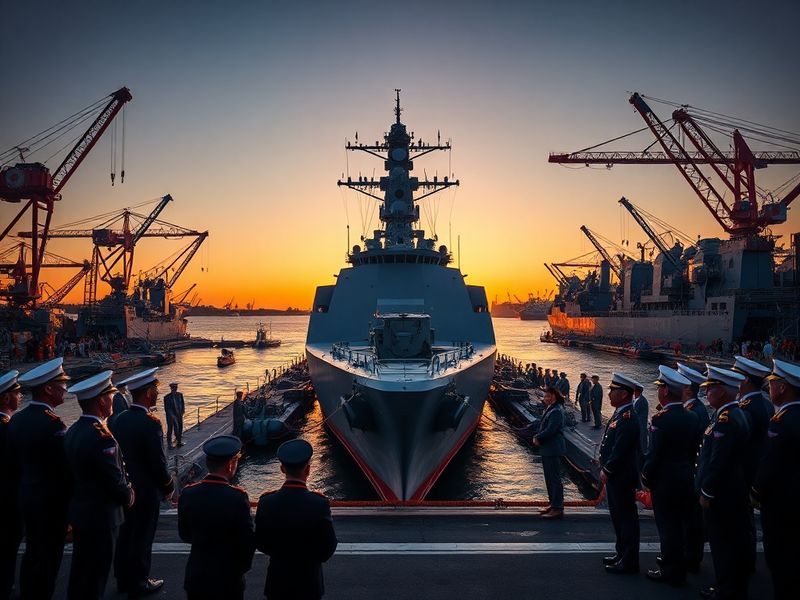
Australia and Japan Strengthen Defense Ties with New Frigate Deal
The recent agreement between Australia and Japan to jointly develop advanced frigates marks a significant step in regional security cooperation. This partnership highlights a growing alignment between two of Asia-Pacific’s most stable democracies, as they respond to shifting geopolitical dynamics. The deal, centered on designing and building next-generation naval vessels, reflects broader trends in defense collaboration across the Indo-Pacific.
Defense analysts view this initiative as part of a larger strategic shift. With regional tensions rising—particularly around maritime disputes in the South China Sea—countries are increasingly looking to strengthen their maritime capabilities. The Australia-Japan frigate program is not just about acquiring new ships; it represents a deeper integration of defense industries and operational doctrines.
The collaboration builds on years of bilateral cooperation. Both nations are members of the Quadrilateral Security Dialogue, alongside the United States and India, and have participated in joint military exercises such as Malabar. These interactions have laid the groundwork for more ambitious defense projects, including the frigate initiative.
Technical and Strategic Dimensions of the Frigate Program
The frigates will be based on Japan’s Mogami-class design, a modular platform known for its stealth features and adaptability. Australia’s Defence Science and Technology Group will work alongside Japan’s Mitsubishi Heavy Industries to customize the vessels for regional operational needs. The ships are expected to incorporate advanced radar systems, anti-ship missiles, and enhanced cybersecurity measures.
One of the most notable aspects of the deal is its focus on interoperability. The frigates are designed to operate seamlessly with allied navies, including the U.S. Navy. This standardization reduces logistical challenges during joint patrols or humanitarian missions. It also signals a move toward a more integrated regional defense architecture.
Key features of the frigate program include:
- Modular Design: Allows for rapid reconfiguration for anti-submarine, anti-air, or surface warfare missions.
- Stealth Technology: Reduced radar cross-section enhances survivability in contested environments.
- Long-Range Strike Capability: Integration of hypersonic missiles is under consideration for future upgrades.
- Unmanned Systems Compatibility: The design includes space for operating autonomous drones and underwater vehicles.
Defense experts argue that these capabilities will position both nations to respond more effectively to crises, from natural disasters to military provocations. The modular nature of the design also allows for cost-effective upgrades as new technologies emerge.
Geopolitical Implications in the Indo-Pacific
The frigate deal comes at a time of heightened rivalry between the U.S. and China. While neither Australia nor Japan has explicitly framed the agreement as a response to Beijing, the timing is hard to ignore. China’s rapid military modernization and assertive actions in the East and South China Seas have prompted neighboring countries to reassess their security postures.
Japan, in particular, has been expanding its defense capabilities in response to Chinese maritime aggression. The frigate partnership with Australia reinforces Japan’s strategy of “multi-layered deterrence,” which includes strengthening ties with like-minded nations. For Australia, the deal aligns with its 2023 Defence Strategic Review, which prioritizes long-range strike and naval power projection.
Yet, the agreement also carries diplomatic significance beyond security. Australia and Japan have deepened economic ties in recent years, with trade volumes exceeding $80 billion annually. The frigate deal could serve as a catalyst for further collaboration in cybersecurity, space technology, and supply chain resilience.
Regional reactions have been mixed. Some Southeast Asian nations view the partnership as a stabilizing force, while others express concerns about escalating tensions. Indonesia and Vietnam, for instance, have historically maintained balanced relationships with both China and Western allies. Their responses will likely depend on how the frigate program is framed in public discourse.
Economic and Industrial Benefits for Both Nations
Beyond strategic considerations, the frigate deal offers substantial economic advantages. For Japan, it provides an opportunity to export advanced defense technology at a time when domestic demand is limited. Mitsubishi Heavy Industries, the lead contractor, has already secured export orders for the Mogami-class to other partners, including Southeast Asia.
Australia stands to benefit from technology transfer and local job creation. The program will involve shipyards in Adelaide and Newcastle, supporting thousands of skilled workers. The government has also highlighted the potential for spin-off industries, such as advanced manufacturing and AI-driven maintenance systems.
Industry stakeholders emphasize the long-term value of this collaboration. A report by the Australian Strategic Policy Institute estimates that defense industry exports could triple by 2035 if such partnerships continue to expand. For Japan, the deal reinforces its position as a global leader in naval technology, particularly in an era where traditional defense contractors face increasing competition.
Challenges and Future Considerations
Despite the promise of the frigate program, several challenges remain. Cost overruns and delays are perennial issues in defense procurement. The project’s estimated budget of $35 billion will require careful fiscal management, especially as Australia grapples with competing priorities like healthcare and infrastructure.
Supply chain vulnerabilities have also emerged as a concern. The global shortage of semiconductors and specialized metals could disrupt production timelines. Both nations are exploring ways to secure critical components, including through partnerships with India and Australia’s Five Eyes allies.
Political continuity will be another factor. The frigate deal enjoys bipartisan support in both countries, but future governments could alter defense priorities. Japan’s upcoming leadership transition, for instance, may prompt a review of its military expansion plans.
Cultural differences between the two nations could also pose subtle challenges. Japan’s defense industry operates under strict export controls, while Australia’s procurement processes are subject to public scrutiny and parliamentary oversight. Navigating these differences will require sustained diplomatic effort.
Conclusion: A New Chapter in Indo-Pacific Defense
The Australia-Japan frigate deal represents more than a transaction; it is a testament to the evolving nature of regional security cooperation. By combining technical innovation with strategic foresight, both nations are taking concrete steps to address shared challenges. The program’s success could set a precedent for future collaborations, from missile defense to cyber warfare.
As the Indo-Pacific landscape continues to shift, partnerships like this one will become increasingly vital. They offer a middle path between unilateral militarization and reliance on distant allies. For Australia and Japan, the frigate deal is not just about building ships—it is about shaping the future of regional stability.
With careful execution, the initiative could serve as a model for how middle powers can leverage their strengths to navigate an era of uncertainty.