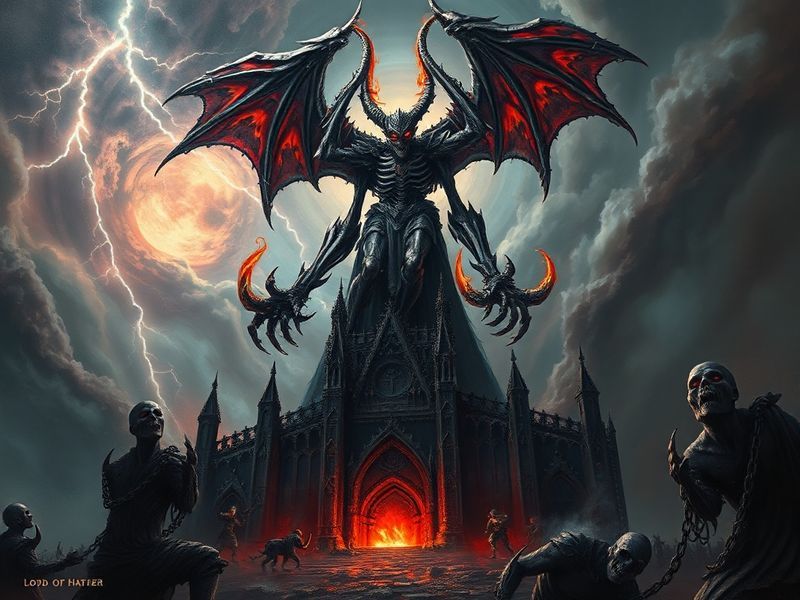
Diablo 4’s Lord of Hatred: A Dark Reflection of Human Obsession
Blizzard Entertainment’s Diablo 4 continues to expand its narrative depth with the latest Vessel of Hatred update, introducing players to a new demonic antagonist: the Lord of Hatred. This entity, steeped in theological and psychological symbolism, represents more than just another boss in the endless cycle of Sanctuary’s suffering. Instead, it embodies the destructive power of unchecked obsession—a theme that resonates globally, where fanaticism, whether religious, political, or personal, often leads to ruin.
The Lord of Hatred arrives not as a mere adversary, but as a manifestation of collective despair. Unlike the game’s traditional demon lords, who often revel in chaos for its own sake, this figure preys on the vulnerabilities of those who have lost their way. His presence forces players to confront the consequences of their own attachments, both in and out of the game. In a world where digital spaces increasingly mirror real-world conflicts, the character’s design feels eerily prescient.
Theological and Cultural Roots of Hatred in Gaming
The concept of a “Lord of Hatred” is not new in mythology or storytelling. Across cultures, hatred has been personified as a force that corrupts the soul. In Norse mythology, Loki’s jealousy and resentment lead to destruction. In Hindu traditions, the demon Krodha embodies wrath. Blizzard’s interpretation draws from these archetypes, blending them with modern gaming’s emphasis on player agency and consequence.
This fusion of ancient themes with interactive storytelling reflects a broader trend in gaming: the use of mythological frameworks to explore contemporary issues. Games like The Witcher 3 and Elden Ring have similarly used lore to tackle complex emotions. For Diablo 4, the Lord of Hatred serves as a bridge between classic demonology and the psychological toll of extremism in the digital age.
How the Lord of Hatred Challenges Players
The update introduces a new dungeon, Pandemonium Fortress: The Pit of Hatred, where players face trials designed to test their resolve. Unlike traditional combat encounters, these challenges force players to confront their own attachments—whether to power, revenge, or even the game itself. The dungeon’s mechanics reflect this theme: players must resist the temptation of instant gratification, mirroring real-world struggles with addiction and obsession.
Blizzard has also introduced new mechanics tied to the Lord of Hatred’s influence. For example, players who linger too long in certain areas risk becoming “corrupted,” a state that temporarily weakens their abilities. This mechanic isn’t just gameplay—it’s a commentary on how prolonged exposure to negativity can erode one’s strength, both mentally and emotionally.
A Global Lens: Hatred in the Digital Age
From a global perspective, the Lord of Hatred’s arrival feels timely. In an era where social media algorithms amplify outrage and division, the character’s design serves as a cautionary tale. The update’s narrative suggests that hatred, when left unchecked, consumes not just individuals but entire communities. This mirrors real-world phenomena, such as the rise of extremist ideologies fueled by online echo chambers.
Moreover, the game’s emphasis on consequence—rather than empty victory—resonates in cultures where personal and collective responsibility are increasingly scrutinized. In Japan, for instance, the concept of mottainai (a sense of regret over waste) aligns with the game’s themes of wasteful obsession. In Western contexts, the Lord of Hatred could be seen as a dark reflection of consumerist culture, where desire often leads to self-destruction.
What’s Next for Diablo 4 and Its Community
The introduction of the Lord of Hatred is more than a narrative expansion—it’s a statement about the game’s evolving identity. Blizzard has shifted from focusing solely on loot-driven gameplay to crafting a world where players’ choices have weight. This aligns with the growing demand for meaningful storytelling in gaming, a trend seen in titles like Baldur’s Gate 3 and Cyberpunk 2077.
For the global community of Diablo fans, the update offers both a challenge and an opportunity for reflection. The game’s lore has always been its strength, and the Lord of Hatred deepens that legacy. As players around the world tackle the new dungeon and its trials, they’re not just engaging with a fantasy world—they’re confronting the very real forces that shape their own lives.
For those interested in exploring more about the themes of obsession and consequence in gaming, check out our Analysis section for deeper insights into how modern titles tackle complex narratives.
Final Thoughts: A Demon Born of Human Weakness
The Lord of Hatred is a villain for our time—a reminder that the greatest demons are not those that lurk in the shadows, but those that we nurture within ourselves. Blizzard’s latest update doesn’t just add a new boss to Diablo 4; it invites players to examine the roots of their own passions and the dangers of unchecked desire.
As the update rolls out globally, its impact will be felt not just in the game’s leaderboards, but in the conversations it sparks. In a medium often criticized for mindless escapism, Diablo 4 continues to prove that the best games are those that challenge us to look inward.