Falcon Heavy Launch: A New Chapter in Space Exploration
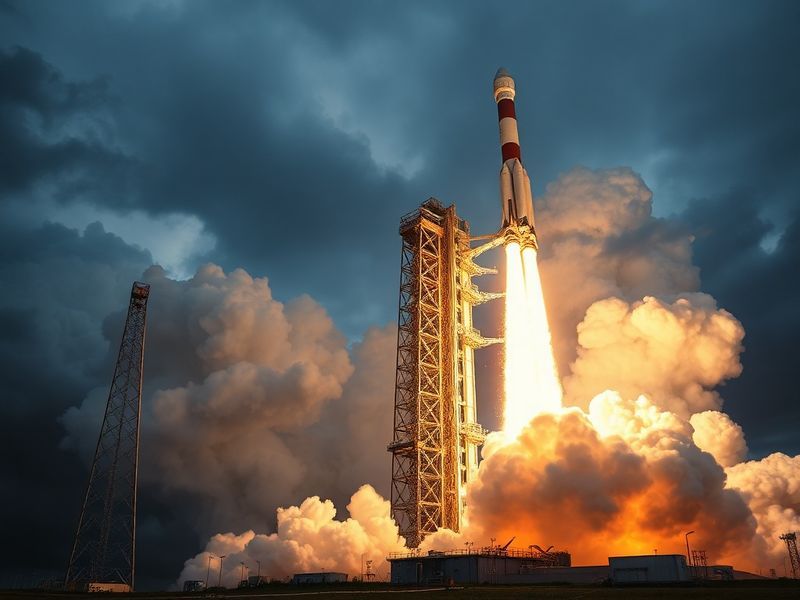
The Falcon Heavy launch by SpaceX in February 2018 marked a turning point in the global space industry. As the most powerful operational rocket in the world at the time, it demonstrated the growing influence of private companies in space travel. The launch wasn’t just a technical achievement—it was a cultural moment that captured the imagination of millions worldwide.
The Technical Marvel Behind the Rocket
Falcon Heavy’s design combines three Falcon 9 rocket cores, creating a total of 27 Merlin engines that generate over 5 million pounds of thrust. This configuration allows the rocket to carry payloads of up to 64 metric tons into low Earth orbit—twice the capacity of its closest competitor at the time. The successful launch proved that reusable rockets could drastically reduce the cost of space missions, a key factor in making space more accessible.
One of the most striking moments of the mission was the synchronized landing of two of the rocket’s boosters at Cape Canaveral. The precision required for such an operation highlighted the advancements in aerospace engineering. Meanwhile, the third booster attempted a landing on a drone ship in the Atlantic Ocean, though it missed its target and was lost. Despite this setback, the achievement resonated globally, inspiring both engineers and the public.
A Global Audience and Cultural Impact
The Falcon Heavy launch wasn’t just watched by aerospace enthusiasts—it became a worldwide spectacle. Streaming platforms saw record viewership, with millions tuning in to witness the historic event. Social media erupted with reactions, memes, and discussions about the future of space travel. The rocket’s payload—a Tesla Roadster with a mannequin dubbed “Starman” seated inside—added a touch of whimsy, blending technology with pop culture.
In countries like India and China, where space programs are rapidly expanding, the launch sparked debates about national space strategies. India’s ISRO, for example, had recently achieved a lunar mission, while China was making strides with its own heavy-lift rockets. The Falcon Heavy’s success underscored the competitive nature of the global space race, where private companies now play a pivotal role alongside government agencies.
In Europe, the launch prompted discussions about the continent’s lagging behind in heavy-lift capabilities. The Ariane 6 rocket, still under development, aims to compete with SpaceX, but the timeline for its completion remains uncertain. Meanwhile, in Russia, the launch was met with a mix of admiration and caution, as the country’s space agency, Roscosmos, faces budget constraints and delays in its own programs.
The Future of Space Travel
The Falcon Heavy launch set the stage for even more ambitious projects, including SpaceX’s Starship, designed for missions to Mars. The success of the Heavy validated the company’s approach to reusable rockets, which could eventually make interplanetary travel feasible. Governments and private companies alike are now exploring how to leverage this technology for scientific research, commercial ventures, and even space tourism.
For NASA, the Falcon Heavy’s capabilities align with the Artemis program, which aims to return humans to the Moon. The rocket’s power could enable larger payloads and more complex missions, reducing reliance on expensive government contracts. Meanwhile, companies like Blue Origin and United Launch Alliance are developing their own heavy-lift rockets, ensuring that competition in the sector remains fierce.
The economic implications are also significant. The cost savings from reusable rockets could lower the barrier to entry for smaller companies and research institutions, democratizing access to space. This shift could lead to breakthroughs in satellite technology, climate monitoring, and even asteroid mining.
Lessons and Challenges Ahead
Despite its success, the Falcon Heavy launch also highlighted the challenges of space exploration. The loss of the center core booster was a reminder of the risks involved, even with advanced technology. Regulatory hurdles, such as international agreements on space debris and satellite traffic, remain unresolved. Additionally, the environmental impact of rocket launches—particularly the carbon footprint of kerosene-based fuels—has become a growing concern.
As private companies take the lead, questions about sustainability and governance in space will only intensify. The Outer Space Treaty of 1967, which governs international space law, was drafted in an era dominated by nation-states. Today, with companies like SpaceX, Blue Origin, and others leading the charge, the treaty’s relevance is being tested.
For aspiring aerospace engineers and scientists, the Falcon Heavy launch was a beacon of possibility. It proved that space is no longer the exclusive domain of superpowers but a frontier where innovation and competition can thrive. The next decade will likely see even more groundbreaking developments, from lunar bases to missions to Mars.
As we look to the future, the lessons from Falcon Heavy extend beyond engineering. They remind us that space exploration is not just about reaching new destinations—it’s about redefining what’s possible for humanity.
For those inspired by the possibilities of space travel, Science and Technology sections on Dave’s Locker offer deeper insights into the innovations shaping our world.
Conclusion
The Falcon Heavy launch was more than a technological triumph—it was a cultural and economic catalyst. It demonstrated the power of private enterprise in driving progress and inspired a new generation to look toward the stars. As space becomes increasingly accessible, the lessons from this mission will shape the future of exploration, commerce, and even human civilization beyond Earth.
For now, the world watches as the next chapter in space exploration begins to unfold.