How Air Travel Transformed the World and What’s Next for Global Connectivity
“`html
From Propeller to Hypersonic: How Air Travel Became a Global Backbone
The first scheduled commercial airline flight took off in 1914, covering 23 miles between Tampa and St. Petersburg, Florida, in a flying boat with a single passenger. Over a century later, air travel has evolved into one of humanity’s most intricate and essential systems—moving over four billion passengers annually across continents and cultures. This transformation reflects not just technological progress, but also deep shifts in global economics, cultural exchange, and geopolitical connectivity.
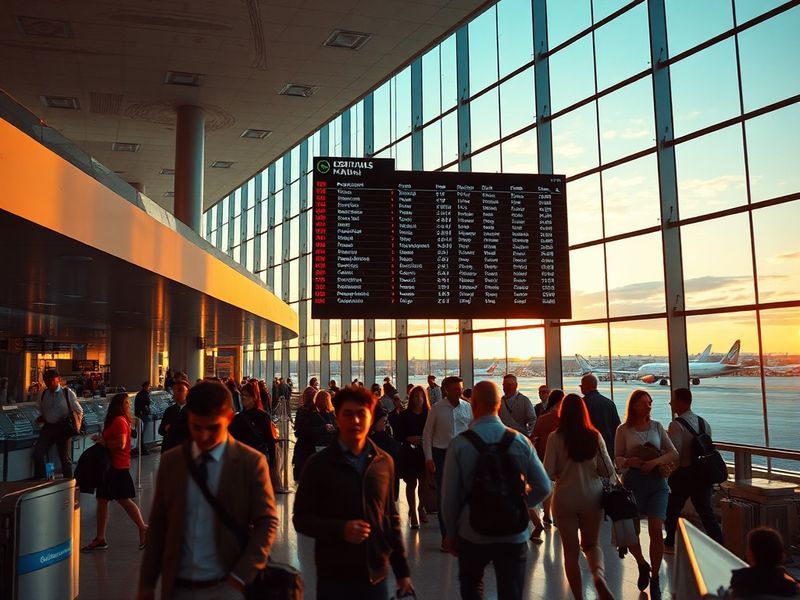
Today, air travel is more than transportation; it’s a lifeline for international trade, diplomacy, tourism, and migration. Unlike any other mode of transit, flying compresses vast distances into hours, shrinking the world and allowing people to experience multiple cultures in a single day. From Tokyo to Johannesburg, London to Lima, airports serve as modern-day crossroads where languages, cuisines, and customs converge. The experience of air travel—once a luxury reserved for elites—has become a shared rite of passage for millions, shaping identities, business ties, and even personal relationships across borders.
The Economic Engine of the Skies
The aviation industry contributes over $2.7 trillion to the global economy each year, supporting more than 65 million jobs worldwide. Airlines, airports, manufacturers, and service providers form an interconnected web that fuels growth in cities and regions far from traditional industrial centers. Airports like Dubai International, Hartsfield-Jackson in Atlanta, and London Heathrow are not just transit hubs—they are economic powerhouses, generating billions in revenue and attracting multinational investment.
Low-cost carriers such as Ryanair, AirAsia, and Southwest Airlines have democratized air travel, making it accessible to middle-class populations in Europe, Asia, and the Americas. This accessibility has spurred regional tourism, boosted local businesses, and even redefined urban development—with entire neighborhoods built around airport expansion. Meanwhile, cargo airlines like FedEx and Emirates SkyCargo keep global supply chains alive, transporting everything from fresh produce to life-saving medical equipment across continents in record time.
However, the industry’s growth comes with challenges. Fuel costs, labor disputes, and geopolitical tensions can destabilize operations overnight. The COVID-19 pandemic grounded fleets worldwide, revealing how fragile this interconnected system truly is. Recovery has been uneven, with some airlines returning to profitability while others struggle to rebuild trust in travel.
Cultural Crossroads: Airports as Modern-Day Plazas
Airports are more than just transit points—they are microcosms of global culture. Dubai International, one of the world’s busiest, hosts over 260 airlines serving 150 million passengers annually. Its terminals reflect the city’s cosmopolitan identity, with Arabic calligraphy on digital screens, prayer rooms, and food courts offering everything from sushi to shawarma. Similarly, Changi Airport in Singapore has become a tourist attraction in its own right, featuring a butterfly garden, rooftop pool, and 24-hour cinema.
In Europe, airports like Amsterdam’s Schiphol and Paris Charles de Gaulle serve as cultural gateways. Schiphol’s Rijksmuseum outpost allows travelers to view Dutch masterpieces between flights, while Charles de Gaulle’s satellite terminals house rotating art exhibitions. Even smaller airports in places like Reykjavik or Santiago de Chile double as cultural ambassadors, introducing visitors to local art, music, and cuisine before they reach their final destination.
Language, too, becomes a bridge in the skies. Flight attendants often speak multiple languages, and in-flight meals cater to diverse palates—whether it’s halal-certified meals on Middle Eastern flights or vegan options on European carriers. These small but deliberate choices reflect a broader trend: air travel has become a catalyst for intercultural understanding, albeit one that still faces challenges in accessibility and inclusivity.
Despite its global reach, air travel is not equally distributed. Citizens of wealthy nations fly far more frequently than those in developing countries, where airfare remains prohibitively expensive. This imbalance highlights broader inequalities in global mobility—a topic increasingly scrutinized by advocates for climate justice and equitable travel.
The Environmental Paradox: Speed vs. Sustainability
Aviation accounts for about 2.5% of global carbon emissions, a figure that could rise to 22% by 2050 if left unchecked. The industry’s reliance on fossil fuels creates a paradox: it enables rapid global connectivity while accelerating climate change. Airlines have responded with pledges to achieve net-zero emissions by 2050, but progress is slow. Sustainable aviation fuels (SAFs) and electric aircraft remain in early stages, while hydrogen-powered planes are still on the drawing board.
Consumer awareness is also growing. Protests at airports, such as those by climate activists targeting private jets, have drawn attention to the industry’s environmental impact. Meanwhile, travelers are increasingly seeking alternatives like high-speed rail for shorter distances, particularly in Europe and East Asia, where rail networks rival air travel in speed and convenience.
Yet, for many, flying remains essential. Medical emergencies, family reunions, and global business rely on air connections. The challenge lies in balancing this necessity with sustainability—a task that demands innovation not just in technology, but in policy and consumer behavior.
The Future: Where Are We Headed?
The next frontier of air travel includes supersonic commercial flights, autonomous aircraft, and even space tourism. Companies like Boom Supersonic aim to reintroduce commercial supersonic travel by 2029, reducing transatlantic flight times to just three and a half hours. Meanwhile, urban air mobility startups like Joby Aviation and Volocopter are developing electric air taxis to ease ground traffic in crowded cities.
On the ground, airports are evolving into smart hubs, integrating artificial intelligence for smoother passenger flow, biometric security, and personalized travel experiences. The use of blockchain technology could streamline ticketing, baggage handling, and loyalty programs, reducing fraud and inefficiencies.
But technological advancement must align with social and environmental responsibility. The future of air travel will depend on collaboration between governments, airlines, and passengers to create a system that is faster, cleaner, and more equitable than today’s model.
As we look ahead, one thing is clear: air travel will continue to shape our world—not just as a means of getting from point A to point B, but as a force that redefines how we connect, consume, and coexist across cultures and continents.
—