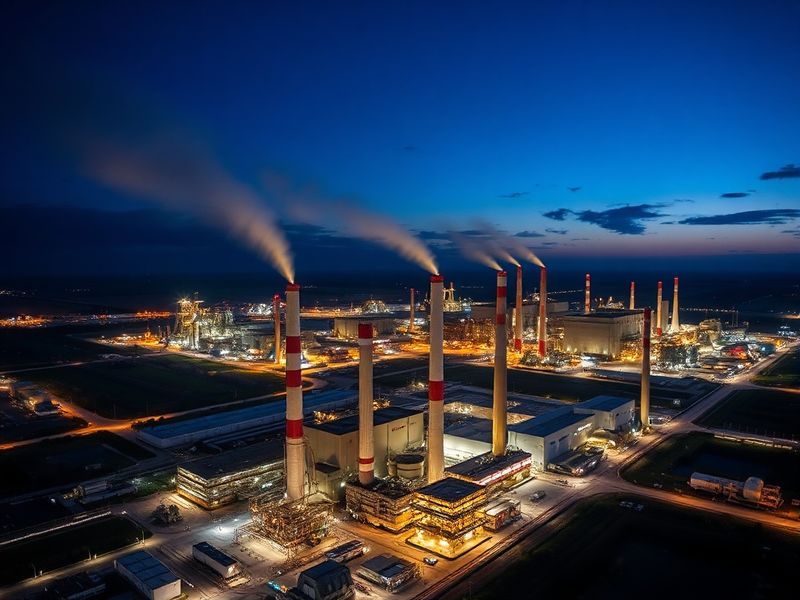
How NIPSCO Is Leading America’s Energy Transition with Renewables
“`html
NIPSCO: A Midwestern Utility’s Role in America’s Energy Transition
Northern Indiana Public Service Company, better known as NIPSCO, has quietly become one of the most influential regional utilities in the United States. While it operates in a sector often overlooked by the public, its decisions ripple through local economies, energy policies, and environmental debates. Founded in 1855 as the Fort Wayne Gas Light Company, NIPSCO has evolved from a gas utility into a major electricity and natural gas provider serving over 500,000 customers across 22 counties in northern Indiana.
What sets NIPSCO apart is not just its size or longevity but its aggressive push toward renewable energy. In an era where many utilities cling to fossil fuels, NIPSCO has committed to retiring all its coal-fired power plants by 2028 and replacing them with a mix of wind, solar, and battery storage. This transition isn’t just about corporate responsibility—it reflects broader shifts in American energy policy, consumer demand, and global climate commitments.
The Evolution of a Regional Powerhouse
NIPSCO’s journey mirrors the evolution of the U.S. energy sector. Originally a gas company, it expanded into electricity in the early 20th century as rural electrification swept across America. By the 1960s, coal became the dominant fuel source, a trend that persisted for decades. However, the 21st century brought new pressures: stricter environmental regulations, volatile coal prices, and the rise of renewable energy technologies.
The turning point came in 2018 when NIPSCO announced its Integrated Resource Plan, outlining a $6 billion investment in renewables and battery storage. This wasn’t just a business decision—it was a cultural shift. Northern Indiana, known for its manufacturing roots and conservative politics, was now becoming a leader in clean energy adoption. The move also positioned NIPSCO as a case study for other utilities grappling with the energy transition.
NIPSCO’s leadership recognized that the future of energy wasn’t just about keeping the lights on—it was about doing so sustainably. This mindset aligns with global trends. Countries like Germany and Denmark have shown that rapid renewable adoption is possible, even in regions with strong industrial bases. NIPSCO’s transition serves as a microcosm of these broader shifts, proving that even in the heartland of America, change is possible.
The Push for Renewables: A Global Perspective
Globally, the energy sector is undergoing a seismic shift. The International Energy Agency (IEA) reports that renewables accounted for nearly 30% of global electricity generation in 2022, up from just 20% a decade earlier. This growth is driven by falling costs, technological advancements, and increasing pressure to reduce carbon emissions. NIPSCO’s aggressive renewable plan places it at the forefront of this movement, even within a traditionally conservative region.
One of the most significant aspects of NIPSCO’s strategy is its reliance on wind energy. Indiana ranks among the top states in the U.S. for wind power capacity, thanks to its flat terrain and consistent wind patterns. NIPSCO’s 800-megawatt (MW) Indiana Crossroads Wind Project, completed in 2020, is one of the largest wind farms in the state. This project alone powers over 230,000 homes, reducing carbon emissions by more than 1.6 million tons annually—equivalent to taking 330,000 cars off the road.
But wind isn’t the only focus. NIPSCO is also investing in solar energy and battery storage. The company’s 2022 Integrated Resource Plan includes plans for 1,500 MW of new solar capacity and 400 MW of battery storage by 2025. These investments reflect a global trend toward diversifying energy portfolios. Countries like Spain and Australia are leveraging solar and storage to reduce reliance on fossil fuels, while nations like China are leading the charge in battery technology development.
NIPSCO’s approach also highlights the importance of local engagement. Unlike some utilities that face backlash from communities wary of renewable projects, NIPSCO has worked closely with landowners, local governments, and environmental groups. This collaborative approach has been critical in gaining public support, a lesson that resonates globally. In places like the UK, where wind farms have faced opposition, utilities are learning that community buy-in is essential for successful renewable projects.
The Challenges of Transitioning an Aging Grid
Despite its progress, NIPSCO’s transition hasn’t been without challenges. One of the biggest hurdles is modernizing an aging grid. Much of NIPSCO’s infrastructure dates back to the mid-20th century, and integrating large-scale renewables requires significant upgrades. These upgrades come with a hefty price tag—NIPSCO estimates that its clean energy investments will add about $3 per month to the average residential bill by 2025.
Another challenge is the intermittency of renewable energy. Wind and solar power are variable by nature, meaning they don’t produce energy consistently. To address this, NIPSCO is investing in battery storage solutions, which can store excess energy generated during peak production times and release it when demand is high. However, battery technology is still evolving, and large-scale storage remains expensive. Globally, utilities are experimenting with different solutions, from pumped hydro storage to green hydrogen, but none have yet proven to be a silver bullet.
NIPSCO is also navigating the political landscape. Indiana is a state with a strong coal industry, and while public support for renewables is growing, there are still pockets of resistance. Some lawmakers and advocacy groups argue that the transition to renewables is too rapid and could destabilize the grid. NIPSCO has countered these concerns by emphasizing reliability and affordability, pointing to the long-term benefits of reduced fuel costs and lower emissions.
The company’s efforts to balance these challenges have drawn attention from industry analysts. In 2023, NIPSCO was named one of the top utilities in the Midwest for its clean energy initiatives by the American Council for an Energy-Efficient Economy (ACEEE). This recognition underscores the significance of NIPSCO’s work—not just for Indiana, but as a model for other utilities in the U.S. and beyond.
The Broader Impact: Lessons for the World
NIPSCO’s story is more than just a regional success—it’s a blueprint for how utilities can navigate the energy transition. Its approach offers several key lessons for global energy providers:
- Long-term planning: NIPSCO’s Integrated Resource Plan provides a clear roadmap for its transition, allowing stakeholders to understand the company’s goals and timelines. This kind of long-term planning is essential for utilities worldwide, where short-term thinking often leads to delays and inefficiencies.
- Community engagement: By involving local communities in its projects, NIPSCO has minimized opposition and built trust. This is particularly important in regions where renewable projects face skepticism or outright resistance.
- Technological innovation: NIPSCO’s investments in battery storage and grid modernization demonstrate the importance of embracing new technologies. Utilities that lag in innovation risk falling behind as the energy landscape evolves.
- Policy alignment: NIPSCO’s transition aligns with both state and federal policies aimed at reducing emissions. By working within this framework, the company has avoided regulatory pitfalls and positioned itself as a leader in clean energy.
Globally, the energy transition is a complex and often contentious process. In Europe, utilities are grappling with the aftermath of Russia’s invasion of Ukraine, which exposed vulnerabilities in the region’s energy supply chains. In Asia, countries like Japan and South Korea are balancing their reliance on fossil fuels with ambitious renewable targets. NIPSCO’s story offers a glimmer of hope—a reminder that even in challenging regions, meaningful progress is possible.
For policymakers, energy executives, and environmental advocates, NIPSCO serves as a case study in what can be achieved when vision, planning, and collaboration come together. Its success is a testament to the fact that the energy transition isn’t just about technology—it’s about people, politics, and persistence.
What’s Next for NIPSCO?
Looking ahead, NIPSCO’s focus will remain on scaling up its renewable portfolio while ensuring grid reliability. The company has set a goal of achieving an 80% reduction in carbon emissions by 2030, a target that aligns with the Biden administration’s clean energy goals. To reach this milestone, NIPSCO plans to add another 1,000 MW of solar capacity and expand its battery storage capabilities.
There are also opportunities for NIPSCO to expand its influence beyond Indiana. As a member of the Midcontinent Independent System Operator (MISO), which manages the electric grid across 15 states, NIPSCO plays a key role in regional energy markets. Its clean energy initiatives could inspire neighboring utilities to follow suit, creating a domino effect of renewable adoption across the Midwest.
For consumers, the benefits of NIPSCO’s transition are becoming increasingly clear. Lower operating costs for renewables mean more stable energy prices in the long run. Additionally, the company’s investments in energy efficiency programs are helping customers reduce their own carbon footprints. Programs like the NIPSCO Energy Efficiency Program offer rebates and incentives for upgrades like LED lighting, smart thermostats, and high-efficiency appliances.
As NIPSCO continues to innovate, it stands as a reminder that the energy transition is not a distant dream—it’s a reality unfolding in real time. For a utility that has powered northern Indiana for over a century, the next chapter may well redefine its legacy, proving that even the most traditional industries can embrace change.