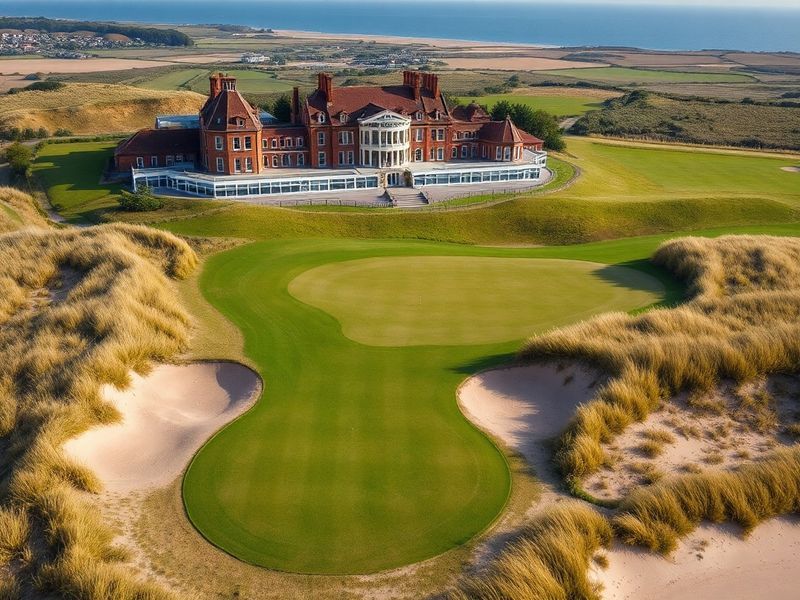
Nestled along the northwest coast of England in the seaside town of Lytham St Annes, Royal Lytham & St Annes Golf Club stands not just as a premier championship venue but as a living museum of golf’s enduring traditions. While the club is globally recognized as a host of The Open Championship—often referred to simply as “The Open”—its significance transcends the world’s oldest major tournament. Established in 1886, the course has evolved through generations of players, architects, and cultural shifts, each leaving an indelible mark on its fairways and bunkers.
The club’s origins trace back to a group of local enthusiasts who sought to create a dedicated space for the growing sport of golf. From its early days on the sand dunes near the Ribble Estuary, the course has been expanded, refined, and preserved by visionary figures in golf architecture, including George Lowe and later, the legendary Harry Colt. Today, Royal Lytham & St Annes is celebrated not only for its challenging layout but for its role in shaping the modern game.
From Humble Beginnings to Championship Grandeur
Royal Lytham & St Annes began as a nine-hole course in 1886, designed by members who laid out the initial layout using sheep-grazed dunes. The terrain was raw and unpredictable—ideal for early golfers who valued natural hazards over manicured perfection. By 1897, the course was expanded to 18 holes, and in 1926, King George V granted the club its royal prefix, cementing its status among the sport’s elite institutions.
The transformation of the course under Harry Colt in the 1920s marked a turning point. Colt, one of the most influential golf course architects of the 20th century, reimagined the layout with subtle contours, strategic bunkering, and a seamless integration with the natural dunes. His work elevated Royal Lytham from a regional gem to a national treasure, capable of hosting the highest level of competition.
The club’s first Open Championship came in 1926, won by amateur Bobby Jones, a moment that signaled its arrival on the global stage. Since then, Royal Lytham has hosted the tournament 11 times, most recently in 2023 when Brian Harman claimed victory in challenging conditions. Each edition adds another layer to the club’s legacy, with moments of triumph, heartbreak, and sheer brilliance etched into its history.
A Course Designed to Test Every Club in the Bag
Walking the 7,118-yard par-71 layout at Royal Lytham & St Annes is to experience golf in its most elemental form. The course demands precision, patience, and adaptability, with a layout that punishes wayward shots but rewards thoughtful play. The opening hole, a par-4 named “The Old Dipper,” immediately challenges players with its undulating fairway and a green set into a natural bowl. It sets the tone for a round where every decision matters.
The back nine is particularly iconic, featuring the par-3 17th, known as “The Road Hole.” This hole, inspired by the famed Road Hole at St Andrews, requires players to carry over a public road before navigating a green protected by deep bunkers and a steep false front. The 18th, “The Crow’s Nest,” offers a dramatic finish, with a green perched above a dune and a view of the clubhouse overlooking the 1st tee.
What makes Royal Lytham’s design enduring is its refusal to yield to modern trends. The course remains largely unchanged from Colt’s vision, preserving the original dune topography and strategic complexity that have defined its reputation for over a century. It is a rare example of a championship venue where the architecture serves the game—not the other way around.
The Open Championship: A Legacy of Drama and Prestige
Royal Lytham & St Annes has been a cornerstone of The Open Championship since 1926, hosting the tournament more frequently than all but two other venues. Its coastal location brings unpredictable weather, with wind and rain often shaping the outcome as much as the players themselves. The 2023 Open, won by Brian Harman, was a testament to the course’s enduring challenge, with the American proving that patience and solid ball-striking could overcome the elements.
Historically, the club has witnessed some of golf’s most legendary performances. In 1969, Tony Jacklin became the first Englishman in 18 years to win The Open at Royal Lytham, delivering a masterclass in pressure golf. More recently, in 2012, Ernie Els claimed his fourth major title in a playoff against Adam Scott, a victory that reinforced the club’s reputation as a true test of champion golfers.
The Open at Royal Lytham is more than a competition; it is a tradition. The week-long event transforms the quiet coastal town into a global hub for golf, with fans from around the world gathering to witness history. The club’s hospitality, rooted in centuries-old etiquette, ensures that the experience extends far beyond the 18 holes.
Beyond the Championship: A Living Club with a Rich Community
While The Open Championship brings international attention, Royal Lytham & St Annes remains first and foremost a club for its members. Founded on principles of camaraderie and shared passion, the club fosters a culture that balances exclusivity with inclusivity. Its junior program, one of the most respected in England, introduces young players to the traditions and challenges of links golf. Meanwhile, the club’s commitment to sustainability ensures that the course thrives alongside the local ecosystem.
The clubhouse, a blend of historic charm and modern amenities, serves as a gathering place for members and visitors alike. Its walls are adorned with memorabilia from The Open and other prestigious events, a visual reminder of the club’s place in golf history. The dining rooms, with views over the 1st and 18th holes, offer a taste of Lancashire hospitality that has been perfected over generations.
Royal Lytham & St Annes also plays a vital role in the local economy and community. The Open Championship injects millions into the region, supporting businesses from hotels to pubs, while the club’s charitable initiatives provide outreach to underprivileged youth and veterans. It is a testament to the club’s ethos: great golf is not just about the scorecard, but about the lives it touches.
Why Royal Lytham & St Annes Matters in Modern Golf
In an era where golf courses are often reshaped by technology and commercial demands, Royal Lytham & St Annes stands as a bastion of authenticity. Its continued reliance on natural features and strategic design offers a counterpoint to the homogenization of modern golf architecture. The club reminds us that the soul of the game lies not in pristine fairways or towering rough, but in the interplay between player, course, and environment.
Moreover, Royal Lytham’s commitment to preserving its heritage while embracing the future ensures its relevance in a rapidly changing sport. Recent renovations, led by architect Kyle Phillips, have restored Colt’s original bunkering patterns and rejuvenated the course without compromising its character. These efforts reflect a deep respect for history—a quality that resonates with purists and innovators alike.
The club’s influence extends beyond its fairways. It has inspired generations of golfers, from club professionals to future Open champions. Its alumni include legends like Tom Watson, who honed his skills on its links before becoming one of the game’s greatest competitors. Today, aspiring players still flock to Lytham St Annes, drawn by the opportunity to test themselves on a course that has shaped the legends of the game.
The Enduring Allure of Royal Lytham & St Annes
Royal Lytham & St Annes Golf Club is more than a venue; it is a living institution that embodies the spirit of golf. Its history is written in the dunes, bunkers, and greens that have challenged and inspired players for over a century. From its humble beginnings to its status as a global landmark, the club has remained true to its core values: tradition, challenge, and community.
For those who walk its fairways, Royal Lytham offers an experience that transcends the scorecard. It is a reminder of golf’s roots, a testament to the enduring power of a well-designed course, and a place where history and modernity coexist. Whether hosting The Open Championship or welcoming a new member for their first round, the club continues to write its story—one shot at a time.
As the sun sets over the Ribble Estuary and the shadows stretch across the 18th green, Royal Lytham & St Annes stands silent, waiting for the next generation of players to leave their mark. And in that moment, it is clear: this is not just a golf club. It is a sanctuary for the game itself.
For more insights into historic golf venues and championship courses, explore our Sports and Travel sections.