SpaceX Falcon Heavy Launch: How the Rocket Changed Spaceflight Forever
“`html
SpaceX Falcon Heavy Launch: The Rocket That Redefined Spaceflight
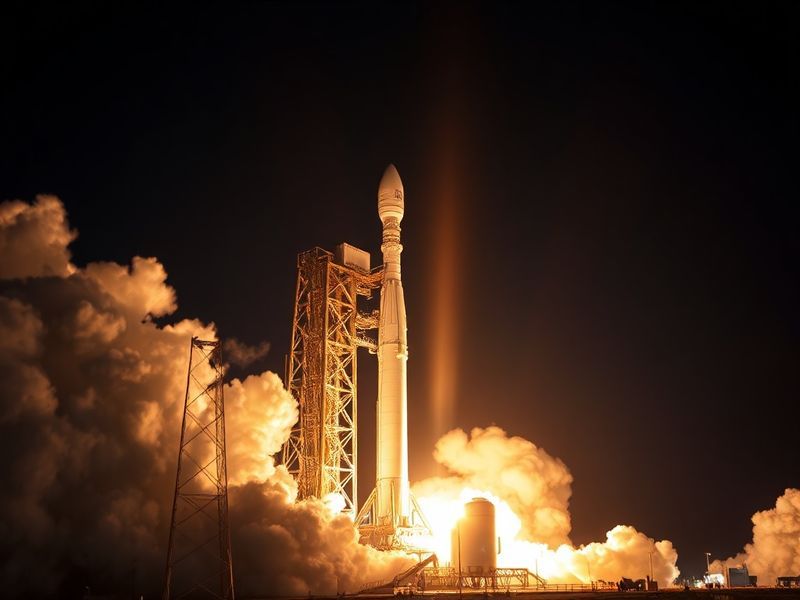
The SpaceX Falcon Heavy, often hailed as one of the most powerful operational rockets in the world, has consistently pushed the boundaries of aerospace innovation. Its maiden launch in February 2018 marked a pivotal moment in space exploration, demonstrating the potential for reusable heavy-lift vehicles. Unlike traditional rockets designed for single-use missions, the Falcon Heavy was engineered with reusability in mind, drastically reducing the cost of space travel.
The rocket’s development was not without challenges. SpaceX faced numerous technical hurdles, from structural integrity tests to perfecting the synchronized landings of its side boosters. Yet, despite these obstacles, the Falcon Heavy achieved what few rockets had before: a successful maiden flight that delivered a payload into orbit while also recovering two of its three boosters intact. This achievement underscored SpaceX’s commitment to innovation and cost-efficiency in an industry long dominated by high expenses and limited reuse.
Technical Specifications: Power and Precision
The Falcon Heavy stands out due to its sheer power and engineering sophistication. With a liftoff thrust of over 5 million pounds, it is capable of carrying payloads of up to 64 metric tons into low Earth orbit. This makes it one of the most capable rockets in operation today, second only to NASA’s Space Launch System (SLS) in terms of payload capacity.
Key components of the Falcon Heavy include:
- Three Falcon 9 cores: The rocket is essentially a fusion of three Falcon 9 first-stage boosters, each equipped with nine Merlin engines. This configuration allows for a combined 27 engines firing simultaneously at liftoff.
- Interstage and payload fairing: The interstage connects the side boosters to the central core, while the payload fairing protects satellites or other cargo during ascent. The fairing is designed to be reusable, further enhancing cost savings.
- Second stage and Merlin Vacuum engine: The second stage, powered by a single Merlin Vacuum engine, is responsible for delivering the payload to its intended orbit. Its restart capability allows for precise orbital insertions.
The rocket’s structural design also prioritizes reusability. Each booster is equipped with landing legs and grid fins, which guide the boosters back to Earth for controlled landings. This innovation has revolutionized the economics of spaceflight, enabling SpaceX to reuse components in multiple launches and significantly reduce costs.
Notable Missions and Milestones
The Falcon Heavy’s first mission, dubbed Test Flight (Falcon Heavy Demo Mission), took place on February 6, 2018. The rocket carried Elon Musk’s personal Tesla Roadster into space, complete with a dummy astronaut named “Starman” seated inside. The payload was sent into a heliocentric orbit, passing through the asteroid belt before eventually reaching Mars’ orbit. While the mission was primarily a demonstration, it captured global attention and showcased the rocket’s capabilities.
Since then, the Falcon Heavy has undertaken several high-profile missions, including:
- Arabsat-6A (April 2019): This was the rocket’s first commercial mission, successfully deploying a communications satellite for Saudi Arabia-based Arabsat. Both side boosters landed safely back at Cape Canaveral, while the central core was lost due to rough seas during recovery.
- STP-2 (June 2019): Conducted for the U.S. Department of Defense, this mission carried 24 satellites into three different orbits. It demonstrated the Falcon Heavy’s versatility in deploying multiple payloads for diverse missions.
- USSF-44 (November 2022): A classified mission for the U.S. Space Force, this launch carried multiple payloads into geostationary orbit. It marked the rocket’s return after a three-year hiatus and highlighted its role in national security space missions.
- Viasat-3 Americas (May 2023): This mission deployed a high-capacity communications satellite for Viasat, further cementing the Falcon Heavy’s reputation as a reliable heavy-lift vehicle for commercial clients.
Each of these missions underscored the Falcon Heavy’s adaptability, whether for commercial, scientific, or defense purposes. Its ability to carry large payloads to geostationary orbit and beyond has made it a preferred choice for customers seeking heavy-lift capabilities without the exorbitant costs associated with traditional rockets.
Competitive Landscape and Industry Impact
The Falcon Heavy’s success has intensified competition in the heavy-lift launch market. While NASA’s Space Launch System (SLS) remains the most powerful rocket currently in development, its high cost and infrequent launch schedule have limited its operational flexibility. In contrast, the Falcon Heavy offers a more affordable and reusable alternative, with a proven track record of successful missions.
Other players in the industry have taken note. Companies like Blue Origin, with its New Glenn rocket, and United Launch Alliance, with its Vulcan Centaur, are developing heavy-lift vehicles to compete with SpaceX. However, none have yet matched the Falcon Heavy’s combination of payload capacity, reusability, and operational experience.
The rocket’s impact extends beyond commercial launches. It has also played a role in advancing scientific research, such as the James Webb Space Telescope launch, which required precise orbital insertion to ensure the telescope’s success. Additionally, the Falcon Heavy’s ability to carry large payloads has opened new possibilities for deep-space missions, including potential crewed missions to the Moon and Mars.
Challenges and Future Prospects
Despite its achievements, the Falcon Heavy faces challenges. One of the most significant is the rise of SpaceX’s Starship, a fully reusable rocket designed to carry even larger payloads and support missions to the Moon and Mars. As Starship progresses through testing, questions have emerged about the Falcon Heavy’s long-term role in SpaceX’s broader strategy.
Another challenge is the increasing demand for medium-lift rockets, driven by the proliferation of small satellites and constellations like SpaceX’s own Starlink. While the Falcon Heavy excels in heavy-lift missions, its larger size and cost may limit its appeal for smaller payloads. SpaceX has addressed this by continuing to develop its Falcon 9 rocket, which remains the workhorse of the company’s launch lineup.
Looking ahead, the Falcon Heavy is poised to play a critical role in several upcoming missions, including potential lunar and Martian expeditions. NASA’s Artemis program, which aims to return humans to the Moon, could leverage the Falcon Heavy for cargo missions or even crewed flights. Additionally, commercial ventures such as lunar tourism and deep-space exploration may rely on the rocket’s heavy-lift capabilities.
The future of the Falcon Heavy will depend on several factors, including the success of Starship, the demand for heavy-lift launches, and SpaceX’s ability to maintain its competitive edge. However, given its proven track record and versatility, the rocket is likely to remain a cornerstone of spaceflight for years to come.
Conclusion: A Legacy of Innovation
The SpaceX Falcon Heavy has undeniably redefined the possibilities of spaceflight. From its groundbreaking maiden launch to its role in supporting commercial, scientific, and defense missions, the rocket has demonstrated the power of innovation and reusability in reducing the cost of space exploration. While challenges lie ahead, its legacy as a transformative force in aerospace is secure.
As SpaceX continues to push the boundaries of what is possible, the Falcon Heavy stands as a testament to the company’s vision and engineering prowess. Whether it ultimately gives way to newer, more advanced rockets or remains a vital part of SpaceX’s lineup, its impact on the industry is undeniable. For now, the Falcon Heavy remains a symbol of humanity’s quest to explore the cosmos, one launch at a time.