Alphonso Davies: Rising from Refugee Camps to Soccer’s Brightest Stage
Alphonso Davies arrived in Canada as a child refugee with little more than the clothes on his back and a burning passion for soccer. Today, he stands as one of the most recognizable athletes in North American sports, a testament to resilience, talent, and the unifying power of football. His journey from a Ghanaian refugee family resettled in Edmonton to becoming a Bayern Munich champion and Canada’s national team captain has captivated fans across continents. Davies’ story is not just about athletic achievement—it is about identity, belonging, and the role of sport in shaping global narratives.
Born in a refugee camp in Ghana in 1998, Davies’ early years were marked by displacement. His family, originally from Liberia, had fled civil war and found temporary refuge in Ghana before being accepted for resettlement in Canada in 2005. Settling in Edmonton, Alberta, the Davies family began a new chapter. For young Alphonso, soccer became both an escape and a calling. He played barefoot on local pitches, dreaming of a future beyond the challenges of his upbringing. His natural ability quickly caught the attention of coaches, and by his teenage years, he was already making waves in Canadian youth soccer.
From Whitecaps FC to Bayern Munich: A Rapid Ascent
Davies’ professional career began with the Vancouver Whitecaps FC in Major League Soccer (MLS) in 2016 at just 15 years old, making him the youngest player in league history at the time. His pace, technical skill, and fearless style of play set him apart. Within two years, he had established himself as one of the league’s most exciting young talents, earning MLS Newcomer of the Year honors in 2018. His performances did not go unnoticed in Europe, where top clubs began monitoring his progress closely.
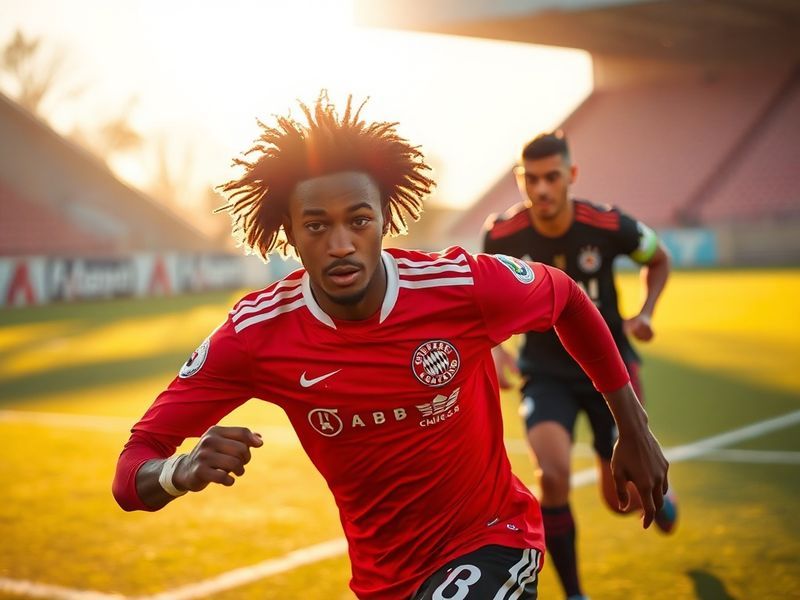
In January 2019, Bayern Munich secured Davies’ transfer for a reported fee of $13.5 million—at the time, the highest amount ever paid for an MLS player. The move to the Bundesliga represented a seismic shift not only in his career but in the perception of North American soccer players globally. Under the guidance of coaches like Niko Kovač and later Hansi Flick, Davies developed into a versatile and dynamic left-back, known for his blistering speed, crossing ability, and defensive awareness. His breakthrough season came in 2019–20, during which Bayern won a historic treble: Bundesliga, DFB-Pokal, and the UEFA Champions League. Davies played a pivotal role in the latter, contributing assists and solidifying his reputation as a modern full-back capable of influencing games in multiple phases.
His Champions League performances, particularly in the knockout stages, drew praise from football luminaries and solidified his status as a player of elite caliber. In the 2020 final against Paris Saint-Germain, Davies’ involvement in the buildup to Kingsley Coman’s winning goal underscored his growing confidence and maturity at the highest level. By 2023, he had earned over 150 appearances for Bayern, becoming a cornerstone of a team that consistently dominates European football.
The Cultural Impact of a Global Superstar
Beyond his on-field contributions, Davies has become a symbol of representation in global football. As the first Canadian men’s player to reach such heights, he has inspired a generation of young athletes from diverse backgrounds. His visibility has been especially significant for Black communities and immigrant families across North America and Europe, where representation in top-tier football has historically been limited. Davies’ rise challenges outdated stereotypes about where elite talent can emerge and who can excel in the sport’s most competitive environments.
Davies’ influence extends into cultural conversations about identity and belonging. As a Black man with Liberian heritage raised in Canada, he embodies multiple cultural narratives. He has spoken openly about his family’s refugee experience and the importance of using his platform to advocate for social justice. In 2020, during the global protests following the murder of George Floyd, Davies joined other athletes in calling for systemic change, using his social media presence to amplify messages of solidarity and action. His leadership on these issues has earned respect beyond the soccer pitch, positioning him as a voice for marginalized communities in sports.
In Canada, Davies has become a national icon. He was awarded the Order of Canada in 2022, one of the country’s highest civilian honors, recognizing his contributions to sport and his role as a cultural ambassador. His jersey has become one of the best-selling in MLS history, and his appearances draw significant media attention, reflecting his crossover appeal in a country where soccer is steadily growing in popularity.
The Role of Soccer in Shaping Diasporic Identity
Davies’ journey offers a compelling lens through which to examine the role of soccer in diasporic communities. For many immigrant families, football serves as both a cultural bridge and a vehicle for integration. It provides a shared language and set of values that transcend national and linguistic boundaries. In Davies’ case, soccer became a means of connecting with his heritage while building a new identity in Canada. His ability to honor his Liberian roots—through his family’s traditions and his celebration of his mother’s cooking—while excelling in German football culture highlights the fluid nature of modern athletic identity.
His story also reflects the globalization of football talent pipelines. Unlike traditional pathways that favored European academies or South American clubs, Davies’ development in Canada’s MLS system and subsequent move to Bayern Munich exemplify a new model: one where North America is increasingly seen as a legitimate launching pad for world-class careers. This shift is reshaping how clubs scout and develop talent, with more resources being invested in youth systems across the United States and Canada.
Moreover, Davies’ international career with the Canadian men’s national team has amplified his impact. He made his debut in 2017 at age 16 and quickly became a key figure in Canada’s resurgence on the global stage. As captain since 2022, he has led a young, ambitious team in their quest to qualify for and compete in major tournaments, including the 2022 FIFA World Cup in Qatar. His performances in qualifiers and friendlies have drawn international attention, further cementing his legacy as a player who elevates those around him.
Looking Ahead: Legacy and Leadership
At 26 years old, Davies is entering the prime of his career. While Bayern Munich remains his club home, speculation about potential moves to other European giants continues to follow him. Yet, regardless of where his career takes him, his influence on and off the field is already secure. He represents a new archetype of the modern footballer: one who is globally minded, socially conscious, and deeply connected to his roots. His journey from a refugee camp to the summit of world football is a narrative of hope, perseverance, and the transformative power of sport.
Looking to the future, Davies is poised to play a central role in Canada’s ambitions on the world stage. With the 2026 FIFA World Cup co-hosted by Canada, the United States, and Mexico, there is unprecedented opportunity for Canadian football to capture the world’s imagination. Davies, as captain and star, will be at the heart of this movement. His leadership will be crucial not only in performance but in inspiring a nation to rally behind its team.
Off the field, Davies has also ventured into business and philanthropy. He has partnered with global brands and launched initiatives supporting refugee resettlement and youth empowerment. His “Alphonso Davies Foundation” focuses on providing access to sports and education for underserved youth, reflecting his commitment to giving back to communities facing similar challenges to those he once experienced.
In an era where athletes are increasingly expected to be more than just performers, Davies exemplifies the holistic model of modern stardom. He uses his platform to drive meaningful change, challenge perceptions, and elevate the game he loves. His story reminds us that greatness is not solely measured in trophies or statistics, but in the lives touched and the barriers broken along the way.
As soccer continues to expand its global footprint, athletes like Alphonso Davies serve as bridges between cultures, generations, and continents. His journey from Edmonton to Munich—and from refugee to role model—is a powerful reminder of what is possible when talent meets opportunity, and when determination is matched by compassion. In the world of sports, where narratives often fade with time, Davies’ story is one that will endure.