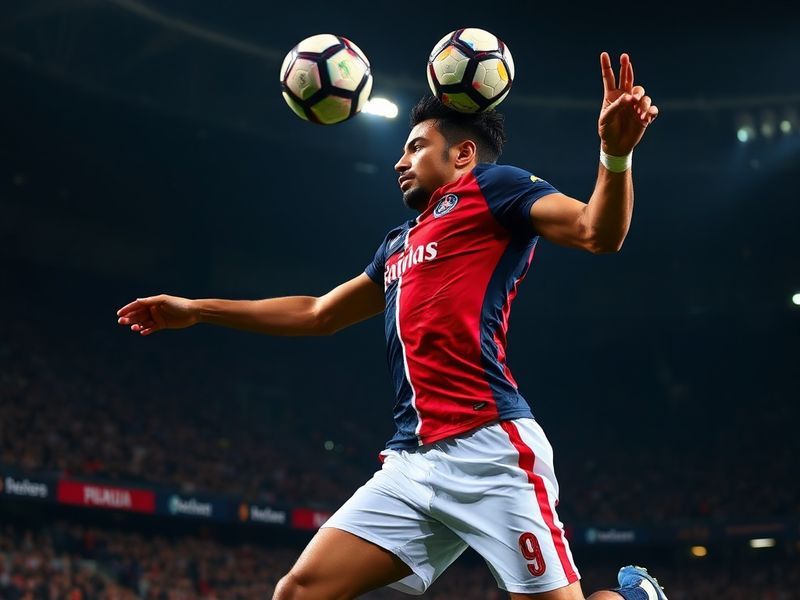
Marquinhos has spent over a decade at Paris Saint-Germain, evolving from a promising teenager into one of the most reliable defenders in modern football. His journey reflects broader trends in how center-backs are valued in today’s game, where technical ability often outweighs traditional defensive attributes. Beyond club football, his influence extends to the Brazilian national team, where he serves as a cornerstone of their defensive structure.
What sets Marquinhos apart is not just his consistency but his adaptability. Whether playing as a single pivot in a back three or anchoring a high defensive line, he demonstrates a rare blend of composure, leadership, and technical skill. His career offers a case study in how football has changed—and how defenders must now contribute far beyond their own penalty area.
From São Paulo to PSG: A Career Built on Steadiness
Born Marcos Aoás Corrêa in São Paulo, Brazil, in 1994, Marquinhos joined Corinthians’ youth academy at age 11. His talent was evident early, leading to a move to Roma in 2012 at just 17. The Italian club loaned him back to Brazil, where he refined his skills before making his Serie A debut in 2013. By 2013, PSG had already taken notice, signing him for €31.4 million—a fee that reflected his potential as much as his proven ability.
At PSG, Marquinhos initially struggled for consistent playing time behind established stars like Thiago Silva and David Luiz. However, his breakthrough came during the 2015-16 season when he became a regular starter under Laurent Blanc. His performances earned him the nickname “O Muro” (The Wall) for his defensive solidity and aerial dominance.
Marquinhos’ journey at PSG mirrors the club’s broader evolution. Initially seen as a project team built around individual brilliance, PSG has increasingly relied on structured, possession-based football under managers like Thomas Tuchel and Mauricio Pochettino. Marquinhos’ role has expanded accordingly, from a traditional stopper to a ball-playing defender who initiates attacks from deep.
Key Attributes That Define His Playstyle
Marquinhos’ success stems from a combination of technical and psychological strengths. Below are the core traits that define his playstyle:
- Ball-Playing Ability: Marquinhos ranks among Ligue 1’s most accurate passers, often completing over 90% of his short passes. His ability to break the first line of pressure has made PSG’s buildup play more fluid.
- Positional Discipline: Despite playing in high-pressing systems, he rarely steps out of line, reducing the risk of counterattacks. His defensive positioning is textbook, allowing teammates to maintain compactness.
- Aerial Dominance: Standing at 6’1″, Marquinhos is a constant threat in both defensive and offensive set pieces. His timing and leap make him a reliable target in both boxes.
- Leadership: Since Thiago Silva’s departure in 2016, Marquinhos has captained PSG in crucial matches, including Champions League knockout ties. His vocal presence organizes the defensive line and maintains focus under pressure.
- Versatility: While primarily a center-back, Marquinhos has played as a right-back and defensive midfielder, showcasing his tactical intelligence and adaptability.
Leadership and Legacy: More Than Just a Defender
Marquinhos’ influence extends beyond statistics. As PSG’s captain since 2023, he embodies the club’s identity—a blend of ambition, resilience, and professionalism. His leadership style contrasts with the flamboyance often associated with Brazilian football. Instead of relying on charisma alone, he leads by example: through consistent performances, tactical discipline, and a refusal to shy away from big moments.
This leadership has been tested repeatedly in the Champions League, where PSG have often faltered despite assembling a squad of superstars. Marquinhos has been a rare constant, starting 10 of the club’s last 12 UCL knockout matches. His ability to remain composed in high-stakes games—such as the 2020 final against Bayern Munich—underscores his mental fortitude.
Off the pitch, Marquinhos has used his platform to advocate for social causes, including education and racial equality in Brazil. His foundation, Instituto Reação, supports underprivileged youth, aligning with PSG’s broader community initiatives. This dual role—as both a world-class athlete and a social contributor—positions him as a role model in modern football.
The Broader Implications of His Career
Marquinhos’ career reflects broader shifts in football tactics and player valuation. A decade ago, center-backs were judged primarily on defensive metrics: tackles, interceptions, and aerial duels won. Today, technical attributes like passing accuracy, progressive carries, and press resistance are equally critical. Marquinhos embodies this evolution, proving that defenders can be creative hubs as much as defensive anchors.
His success also highlights the importance of longevity in modern football. In an era where transfers are increasingly prioritized over youth development, Marquinhos’ 11-year tenure at PSG is exceptional. It reflects a shift among top clubs toward building around homegrown or long-term talents, rather than chasing short-term success through marquee signings.
For aspiring defenders, Marquinhos’ career offers a blueprint: technical refinement, tactical versatility, and mental resilience. His ability to transition from a raw teenager into a world-class leader demonstrates that development is a marathon, not a sprint.
What’s Next for Marquinhos?
At 30 years old, Marquinhos remains in his prime, though questions about his future at PSG persist. With the club’s financial fair play constraints and the emergence of younger talents like Milan Škriniar, his role may evolve. Speculation about a return to Serie A or even a move to the MLS has surfaced, though Marquinhos has stated his desire to finish his career at PSG.
Regardless of where his career leads, Marquinhos’ legacy is secure. He has redefined what it means to be a modern center-back, blending defensive steel with technical elegance. His leadership will be crucial as PSG navigate a transitional period, both on and off the pitch.
For Brazilian football, Marquinhos represents a bridge between tradition and modernity. While the Seleção continues to produce flair players like Vinícius Jr. and Rodrygo, Marquinhos proves that defensive excellence can be just as influential. His career encourages a more holistic view of player development—one where intelligence, adaptability, and character matter as much as raw talent.
As football evolves, players like Marquinhos set the standard. They remind us that greatness is not confined to a single position or playing style. Instead, it is forged through consistency, adaptability, and the quiet determination to keep improving—match after match, season after season.
For fans and aspiring players alike, Marquinhos’ journey is a lesson in patience and persistence. In a sport often defined by fleeting moments of brilliance, his career stands as a testament to the power of steady, unwavering progress.
For more insights into football’s tactical evolution, visit our Sports section. To explore how defenders are adapting to modern demands, check out our Analysis category.