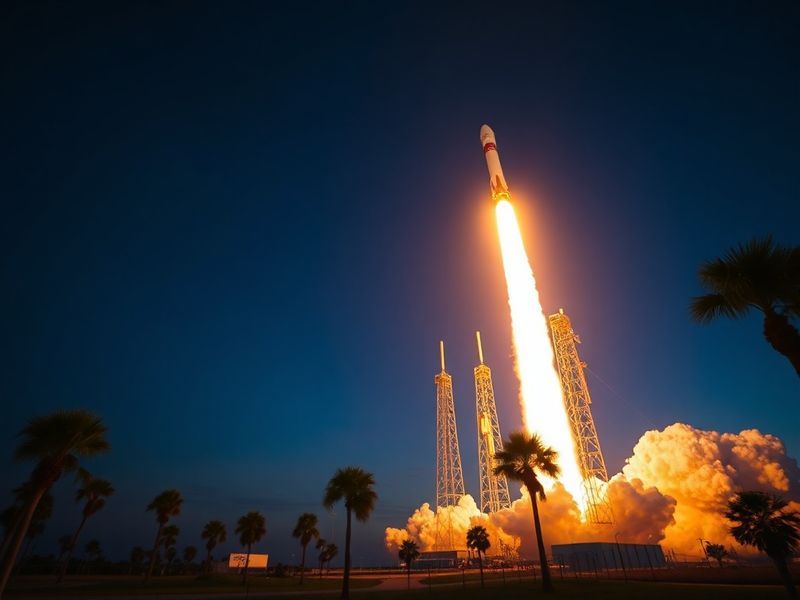
Amazon’s recent investment in low Earth orbit (LEO) satellite technology represents a bold step toward reshaping global logistics and internet connectivity. The company’s partnership with established aerospace firms to deploy a constellation of LEO satellites aims to enhance its delivery networks and provide faster, more reliable internet access to underserved regions. This initiative isn’t just about improving Amazon’s Prime deliveries—it’s a strategic move with far-reaching implications for the future of e-commerce, telecommunications, and space exploration.
While Amazon has not yet unveiled a formal timeline for the full deployment of its LEO satellite network, industry analysts speculate that the first phase could begin as early as 2025. The project builds on the company’s existing infrastructure, including its fleet of cargo planes, delivery vans, and warehouse automation systems. By integrating satellite technology, Amazon could potentially reduce delivery times for customers in remote or rural areas, where traditional logistics face significant challenges.
How Amazon’s LEO Satellite Network Could Transform Logistics
Amazon’s foray into LEO satellite technology is part of a broader trend where e-commerce giants are expanding beyond traditional retail models. The company’s ambition to control every aspect of its supply chain—from order placement to doorstep delivery—now includes a space-based component. This vertical integration could give Amazon a competitive edge over rivals like Walmart and Target, which rely on third-party logistics providers for last-mile delivery.
The LEO satellite network would enable real-time tracking and communication with delivery vehicles, drones, and even individual packages. For example, a package traveling through a remote region could transmit its location and condition via satellite, allowing Amazon to optimize routes and address delays proactively. This level of visibility is currently limited to urban and suburban areas, where cellular networks are robust.
Beyond logistics, the satellite network could also support Amazon’s growing cloud computing division, AWS. By providing low-latency internet connectivity to data centers worldwide, Amazon could enhance its cloud services, making them more competitive with offerings from Microsoft Azure and Google Cloud. This dual-purpose approach—serving both consumer and enterprise markets—demonstrates Amazon’s long-term vision for its space-based initiatives.
Key Features of Amazon’s LEO Satellite Network
- Global Coverage: LEO satellites orbit at altitudes between 160 and 2,000 kilometers, allowing them to provide internet access to nearly every corner of the globe, including areas without fiber-optic or cellular infrastructure.
- Low Latency: Because LEO satellites are closer to Earth than traditional geostationary satellites, they offer significantly lower latency, making them ideal for real-time applications like video streaming and online gaming.
- Scalability: Amazon can gradually expand its satellite constellation, adding more units as demand grows. This modular approach reduces upfront costs and allows for iterative improvements.
- Integration with Existing Systems: The satellite network is designed to complement Amazon’s existing logistics and cloud infrastructure, creating a seamless ecosystem for both consumers and businesses.
The Broader Implications for Space Technology and E-Commerce
Amazon’s entry into the LEO satellite market is not happening in a vacuum. Companies like SpaceX with Starlink, OneWeb, and Amazon’s own Kuiper Project are racing to deploy LEO constellations that promise to revolutionize global internet access. However, Amazon’s approach differs in its focus on integration with an existing, highly efficient logistics network. This could set a new standard for how tech companies leverage space technology to enhance terrestrial operations.
One of the most significant challenges facing LEO satellite networks is orbital congestion. With thousands of satellites already in orbit and more being launched every month, the risk of collisions and interference increases. Amazon’s deep pockets and technical expertise could help address these issues through advanced collision avoidance systems and partnerships with regulatory bodies like the FCC and ITU.
For e-commerce, the implications are profound. Faster and more reliable delivery options could drive further growth in online shopping, particularly in regions where logistics have historically been a bottleneck. Amazon’s ability to offer same-day or even same-hour delivery in previously underserved areas could redefine consumer expectations and force competitors to innovate or fall behind.
Challenges and Criticisms of Amazon’s LEO Ambitions
Despite the potential benefits, Amazon’s LEO satellite project faces several hurdles. Regulatory approval is a major concern, as international bodies must ensure that the deployment of thousands of satellites does not exacerbate space debris or interfere with existing communications systems. Additionally, the cost of deploying and maintaining a LEO constellation is astronomical—estimates suggest billions of dollars in upfront investment and ongoing operational expenses.
Critics also question whether Amazon’s focus on logistics and internet access aligns with its broader corporate goals. Some argue that the company’s expansion into space is a distraction from more pressing issues, such as labor practices and antitrust concerns. Others worry that Amazon’s dominance in e-commerce could be further entrenched, creating an even more uneven playing field for smaller retailers.
Environmental concerns have also been raised. The carbon footprint of launching thousands of satellites into orbit is substantial, and the long-term impact of space debris on Earth’s atmosphere remains poorly understood. Amazon will need to address these issues transparently to maintain public trust and secure regulatory approval.
What’s Next for Amazon in Space?
Amazon’s LEO satellite initiative is still in its early stages, but the company has already taken concrete steps to bring the project to fruition. In 2022, Amazon secured approval from the Federal Communications Commission (FCC) to launch 3,236 LEO satellites as part of its Kuiper Project. The first prototype satellites are expected to launch in the coming months, with full deployment anticipated by the end of the decade.
For consumers, the most immediate benefit may be improved internet access in rural and remote areas. For businesses, the integration of satellite technology with Amazon’s logistics and cloud services could unlock new opportunities for innovation and efficiency. However, the true impact of Amazon’s LEO ambitions will only become clear as the project unfolds over the next several years.
One thing is certain: Amazon’s push into space is not just about delivering packages faster. It’s a strategic maneuver that could redefine the company’s role in the global economy and set a new benchmark for how technology companies operate across multiple industries. As the LEO satellite network takes shape, the world will be watching closely to see whether Amazon can deliver on its promises—or if the challenges outweigh the rewards.
For those interested in the intersection of technology and logistics, Amazon’s LEO satellite project offers a fascinating case study in innovation, ambition, and the complexities of operating at the frontier of space and e-commerce.
To explore more about how Amazon is reshaping industries beyond space technology, check out our Technology and Business category pages for in-depth analysis and updates.