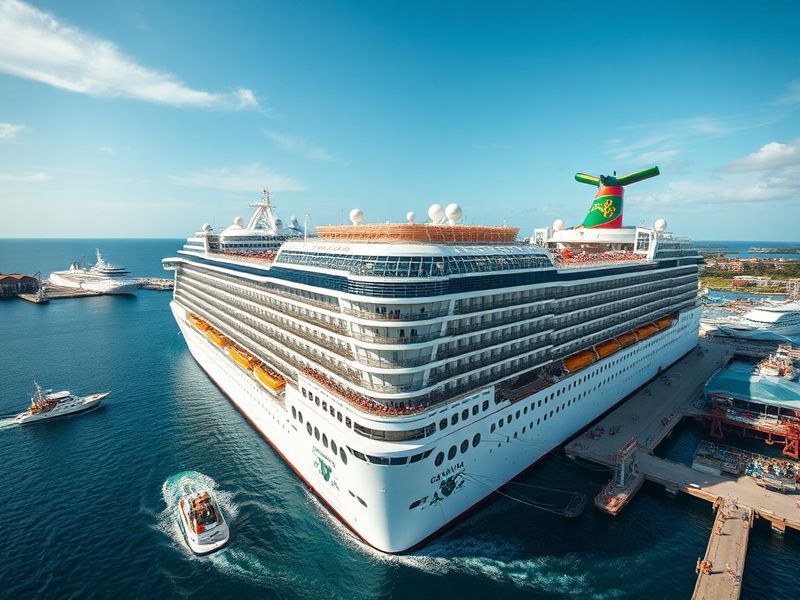
Carnival Corporation & plc: A Global Leader in Cruise Travel
Carnival Corporation & plc stands as the largest cruise company in the world, operating a fleet of more than 100 ships across 10 distinct brands. Founded in 1972 by Ted Arison, the company has grown into a global powerhouse, transporting millions of passengers annually to destinations spanning all seven continents. With a presence in nearly every major cruise market, Carnival has redefined leisure travel, blending entertainment, hospitality, and adventure into seamless vacation experiences.
The company’s structure is unique, operating as a dual-listed company with headquarters in both Miami, Florida, and London, England. This arrangement allows Carnival to leverage global financial markets while maintaining operational flexibility. Carnival Corporation is the American-listed entity, while Carnival plc is the U.K.-listed counterpart, both trading under the same corporate umbrella. This model has enabled the company to expand aggressively while navigating international regulatory and economic landscapes.
The Evolution of Carnival’s Brand Portfolio
Carnival’s success can be attributed in part to its diverse portfolio of cruise brands, each targeting different segments of the market. The company’s brands range from the budget-friendly Carnival Cruise Line, known for its rowdy, fun-loving atmosphere, to the ultra-luxurious Seabourn, which caters to high-end travelers seeking intimate, personalized service. Other notable brands include Princess Cruises, Holland America Line, and Cunard, each offering distinct experiences tailored to specific passenger preferences.
The following list highlights the key brands under Carnival Corporation & plc and their primary market focus:
- Carnival Cruise Line – Affordable, family-friendly cruises with a focus on entertainment and nightlife.
- Princess Cruises – Known for its “Come Back New” campaign, offering scenic voyages and immersive experiences.
- Holland America Line – Appeals to older, more discerning travelers with a focus on classic cruising and enrichment programs.
- Seabourn – Ultra-luxury small-ship cruising with all-inclusive amenities and personalized service.
- Cunard Line – The most traditional of Carnival’s brands, famous for transatlantic crossings and the iconic Queen Mary 2.
This multi-brand strategy allows Carnival to capture a wide range of travelers, from first-time cruisers to seasoned vacationers seeking luxury and exclusivity. The company’s ability to adapt its offerings to changing consumer preferences has been a key driver of its long-term success.
Cultural and Economic Impact of Carnival’s Operations
Beyond its role as a cruise operator, Carnival Corporation & plc holds significant cultural and economic influence. The company’s ships serve as floating resorts, bringing tourists to ports around the world and injecting billions into local economies. In the Caribbean, for example, cruise tourism accounts for a substantial portion of GDP in many island nations, with Carnival’s ships often being the largest single contributors to these economies.
However, Carnival’s operations are not without controversy. The environmental impact of large cruise ships has drawn criticism, particularly regarding air and water pollution. In response, the company has invested in liquefied natural gas (LNG) powered ships and other sustainability initiatives, though environmental groups argue that more needs to be done. Additionally, Carnival has faced legal and financial challenges, including a $20 million fine in 2019 for violating the terms of its probation following the 2013 Costa Concordia disaster, which highlighted lapses in safety protocols.
The COVID-19 pandemic posed an unprecedented challenge to Carnival and the entire cruise industry. With global travel restrictions in place, the company suspended operations for nearly a year, resulting in massive financial losses. Carnival’s resilience was tested as it navigated debt restructuring and implemented rigorous health protocols to reassure passengers of safe travel. The pandemic underscored the vulnerabilities of the cruise industry while also accelerating innovations in health and safety standards.
Innovation and the Future of Cruise Travel
Carnival Corporation & plc has consistently been at the forefront of innovation in the cruise industry. The company has pioneered advancements in ship design, onboard technology, and guest experiences. For instance, its Excel-class ships, introduced with the launch of Mardi Gras in 2020, feature the industry’s first roller coasters at sea, along with other cutting-edge attractions. These innovations are designed to attract younger travelers and diversify the cruise experience beyond traditional offerings.
The company is also investing in sustainability, with a goal of reducing carbon emissions by 40% by 2030. Initiatives include the adoption of shore power technology to reduce emissions in port, as well as the development of more energy-efficient ship designs. Carnival’s commitment to environmental responsibility reflects a broader shift in the industry toward greener operations, driven by both regulatory pressures and consumer demand for sustainable travel options.
Looking ahead, Carnival faces both opportunities and challenges. The resurgence of travel demand post-pandemic has bolstered the company’s financial recovery, but geopolitical tensions, rising fuel costs, and evolving consumer preferences will require continued adaptation. Carnival’s ability to innovate while addressing environmental and social concerns will determine its long-term viability in an increasingly competitive market.
Conclusion: A Legacy of Voyages and Vision
Carnival Corporation & plc has cemented its place as a titan of the global travel industry, shaping the way millions experience the world. From its humble beginnings as a single ship venture to its current status as a multi-brand empire, the company has demonstrated an uncanny ability to evolve with the times. While challenges remain, Carnival’s commitment to innovation, sustainability, and passenger satisfaction positions it well for the future.
As the world emerges from the pandemic and travel habits shift, Carnival’s role in defining the next era of cruise travel will be closely watched. Whether through technological advancements, environmental stewardship, or cultural exchanges, the company continues to redefine what it means to explore the globe by sea. For travelers and industry observers alike, Carnival remains a symbol of adventure, luxury, and the enduring allure of the open ocean.