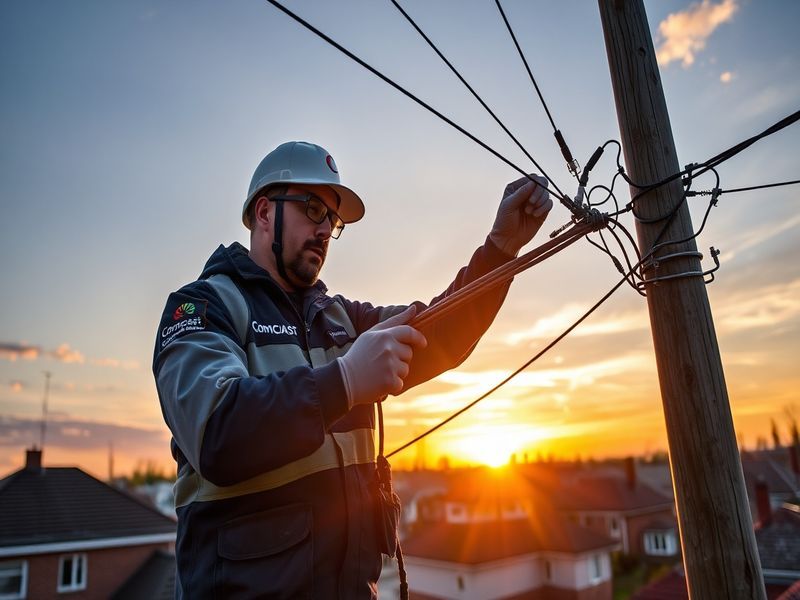
Comcast Cable: America’s Largest Internet Provider Explained
Comcast Corporation has grown from a small cable operator in Mississippi to become the largest provider of broadband internet in the United States. With over 32 million residential and business customers, Comcast’s Xfinity brand dominates the market, shaping how millions access the internet at home. The company’s expansion reflects broader trends in telecommunications, where infrastructure, pricing, and customer experience determine market leadership.
The Rise of Comcast in the Telecommunications Landscape
Founded in 1963 as American Cable Systems, Comcast began as a single-system operator with fewer than 2,000 subscribers. By the 1990s, aggressive acquisitions—including the 2002 purchase of AT&T Broadband—catapulted it to the top of the industry. Today, Comcast operates under two primary segments: Cable Communications and NBCUniversal, with the former generating over $60 billion in annual revenue.
The company’s growth strategy has relied on three pillars: infrastructure expansion, vertical integration, and bundling services. Comcast invested heavily in hybrid fiber-coaxial networks, enabling faster internet speeds and more reliable connections. This infrastructure advantage allowed it to offer competitive pricing while maintaining high profit margins. The acquisition of NBCUniversal in 2011 further solidified its position, giving it control over both internet distribution and content creation.
Key Services and Offerings from Comcast
Comcast’s Xfinity brand serves as the public-facing identity for its consumer services, which include:
- Internet Plans: Offering speeds from 75 Mbps to 3,000 Mbps (3 Gbps) under its Gigabit Extra plan, Comcast targets both casual users and power users with its tiered pricing structure.
- Xfinity Mobile: A mobile virtual network operator (MVNO) that leverages Verizon’s network, providing an alternative to traditional carriers with flexible data plans and potential savings for existing Comcast customers.
- Xfinity TV: A streaming and cable TV service that combines live channels, on-demand content, and integration with smart home devices through Xfinity X1 and Xfinity Stream platforms.
- Home Security: Xfinity Home offers professionally monitored security systems with smart home integration, competing directly with services like ADT and SimpliSafe.
Each service is designed to create a seamless ecosystem where customers can consolidate their internet, TV, and mobile needs under a single provider. This bundling strategy not only increases customer retention but also raises switching costs, as consumers face fewer incentives to explore competitors.
Controversies and Challenges Facing Comcast
Despite its market dominance, Comcast has faced persistent criticism over pricing, customer service, and regulatory battles. The company has been ranked among the worst in customer satisfaction by organizations like the American Customer Satisfaction Index (ACSI) for over a decade. Common complaints include unexpected price hikes, hidden fees, and difficulty canceling services.
Regulatory scrutiny has also been a recurring challenge. In 2018, Comcast’s attempted acquisition of 21st Century Fox was blocked by antitrust regulators, preventing further consolidation in the industry. The company has also clashed with local governments over franchise agreements, often leading to legal disputes over fees and infrastructure access.
Another issue is the digital divide. While Comcast offers low-cost internet options like Internet Essentials for qualifying households, critics argue that the program’s eligibility requirements exclude many who still struggle with affordability. The company’s participation in the Federal Communications Commission’s (FCC) Affordable Connectivity Program has helped, but gaps remain in rural and low-income urban areas.
The Future of Comcast in a Changing Market
Comcast’s future will be shaped by several key factors. The first is the continued rollout of fiber-optic infrastructure, which promises to deliver faster speeds and lower latency than traditional coaxial cables. The company has committed to upgrading its entire network to 10G technology, positioning itself for the next generation of internet demands.
Another factor is the rise of streaming services. With cord-cutting accelerating, Comcast has pivoted toward its Peacock streaming platform, which offers both free and premium tiers. Peacock has struggled to compete with Netflix and Disney+, but Comcast’s deep pockets and content library provide a foundation for growth.
Finally, competition from alternative providers like fiber networks (Google Fiber, AT&T Fiber) and municipal broadband initiatives could pressure Comcast’s market share. The company is responding by expanding its own fiber offerings in select markets, though the pace of deployment varies by region.
For consumers, the implications are clear: Comcast will remain a dominant force in broadband for the foreseeable future, but its dominance is not guaranteed. The company’s ability to innovate, improve customer service, and adapt to shifting consumer preferences will determine whether it maintains its leadership or faces disruption from more agile competitors.
As the internet becomes increasingly essential to daily life, the role of providers like Comcast extends beyond mere connectivity. They shape how we work, learn, and entertain ourselves, making their influence on society as significant as their financial impact. The choices Comcast makes today will reverberate for years to come.
For further reading on telecommunications trends, visit Dave’s Locker News or explore deeper analysis on Dave’s Locker Technology.