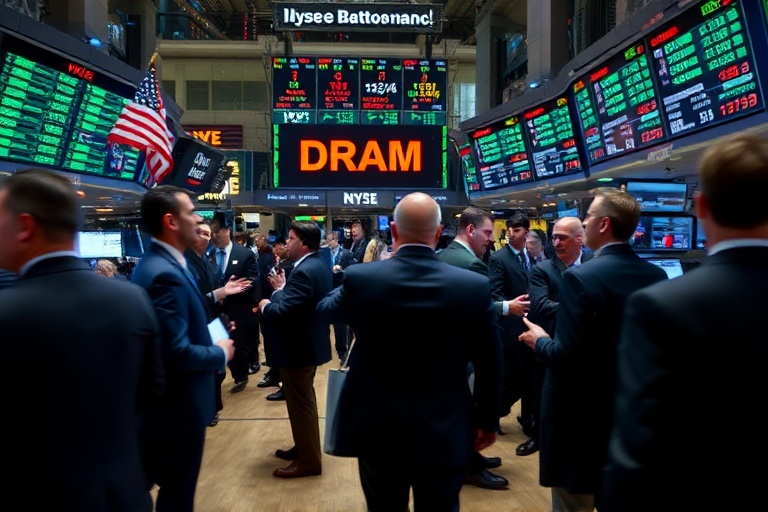
DRAM Stock: Why Memory Chips Drive Tech Markets in 2024
Memory chips are the silent backbone of modern technology. From smartphones to data centers, dynamic random-access memory (DRAM) powers nearly every digital interaction. This makes DRAM stock a critical indicator—not just for investors, but for the entire tech ecosystem. The sector has seen dramatic swings in recent years, driven by geopolitical tensions, supply chain disruptions, and shifting demand cycles. Understanding these dynamics offers more than just financial insight; it reveals the fragility and resilience of the global tech supply chain.
The Forces Shaping the DRAM Market
Several key factors influence DRAM pricing and stock performance. Supply contracts with major manufacturers like Samsung, SK Hynix, and Micron are renegotiated every quarter, creating predictable volatility. When demand surges—such as during AI infrastructure buildouts or smartphone refresh cycles—prices rise sharply, boosting revenue and stock valuations. Conversely, oversupply or demand dips, often tied to economic slowdowns, can trigger steep corrections.
Geopolitical factors add another layer of complexity. The U.S.-China trade war disrupted supply chains, while U.S. export controls on advanced semiconductor technology have limited China’s access to DRAM from non-domestic suppliers. This has led to stockpiling and strategic inventory adjustments, further amplifying price fluctuations.
Major Players and Market Share
The DRAM market is highly concentrated. The top three manufacturers control over 90% of global output:
- Samsung Electronics (005930.KS) – The market leader with a dominant share in both consumer and enterprise DRAM.
- SK Hynix (000660.KS) – A close second, particularly strong in high-bandwidth memory (HBM) used in AI and graphics.
- Micron Technology (MU) – The largest U.S.-based manufacturer, with significant presence in data center and automotive markets.
These companies operate on razor-thin margins. A 10% price fluctuation can swing annual profits by hundreds of millions of dollars. This volatility makes DRAM stock highly sensitive to macroeconomic signals, including inflation, interest rates, and consumer spending trends.
Why DRAM Stock Matters Beyond Wall Street
DRAM isn’t just a financial asset—it’s a barometer for the tech industry’s health. When DRAM prices rise, smartphone manufacturers delay new models. When prices fall, data centers accelerate cloud expansion. This ripple effect touches nearly every corner of the digital economy.
Consider the rise of AI. Training large language models requires massive memory bandwidth. As AI adoption accelerates, demand for high-performance DRAM—especially HBM—has surged. This has driven SK Hynix’s stock up nearly 60% in 2024, while Micron’s HBM revenue is expected to triple year-over-year. Investors aren’t just betting on chips; they’re betting on the future of intelligence itself.
Investment Risks and Rewards
Investing in DRAM stock offers high upside but comes with significant risk. The market is cyclical, with boom-and-bust cycles that can last 12 to 18 months. Timing these cycles is nearly impossible, even for seasoned analysts. Overproduction often leads to price wars, eroding margins across the board.
On the flip side, structural demand from AI, 5G rollouts, and automotive electrification continues to grow. Smartphone refresh cycles, though slowing in mature markets, remain a reliable revenue stream. Companies that innovate—such as Micron with its 1-beta DRAM process—can gain market share and command premium pricing.
For long-term investors, DRAM stocks represent a play on technological necessity. For short-term traders, they offer high-stakes volatility. Either way, understanding the underlying supply chain is essential.
Looking Ahead: What’s Next for DRAM?
The next phase of the DRAM market will be shaped by three major trends: AI integration, sustainability, and geopolitical realignment.
AI Integration will continue to drive demand for advanced memory solutions. HBM, with its stacked architecture and high bandwidth, is becoming the gold standard for AI accelerators. SK Hynix and Samsung are racing to scale production, but supply remains tight. Micron’s recent $2.5 billion HBM expansion in New York signals a strategic pivot toward U.S.-based AI memory supply.
Sustainability is no longer optional. DRAM manufacturing is energy-intensive, with a large carbon footprint. Companies are investing in renewable energy and water recycling to meet ESG goals. Micron, for example, has committed to 100% renewable energy by 2030. These initiatives may increase costs but can also attract ESG-focused investors.
Geopolitical Realignment will further fragment the market. The CHIPS Act in the U.S. and similar legislation in Europe and Asia are incentivizing local production. While this reduces dependency on single regions, it also increases capital expenditures and could lead to overcapacity in the medium term.
Key Takeaways for Investors
If you’re considering DRAM stock, keep these points in mind:
- Follow the product cycle: HBM demand is peaking, while DDR5 for PCs is stabilizing. Watch inventory levels closely.
- Monitor geopolitical headlines: U.S.-China tensions, export controls, and local manufacturing incentives all impact supply and pricing.
- Focus on innovation: Companies investing in next-gen memory (e.g., DDR6, GDDR7) are better positioned for long-term growth.
- Diversify within tech: DRAM is volatile. Pair it with more stable semiconductor segments like NAND flash or analog chips.
- Watch interest rates: High borrowing costs slow tech spending, reducing DRAM demand.
For deeper context on how DRAM fits into the broader tech economy, explore our Technology and Finance sections. These pages offer ongoing analysis of market trends, regulatory changes, and investment strategies.
Conclusion: Memory as a Mirror
DRAM stock is more than a ticker symbol. It reflects the pulse of the digital age—where progress is measured in gigabytes and speed is currency. The companies that thrive in this market will be those that balance innovation with resilience, adapt to geopolitical shifts, and meet the insatiable demand for faster, smarter memory.
For investors, the challenge isn’t just predicting the next price move—it’s understanding the forces that drive it. And in a world where every click, swipe, and AI query depends on DRAM, those forces are only growing stronger.