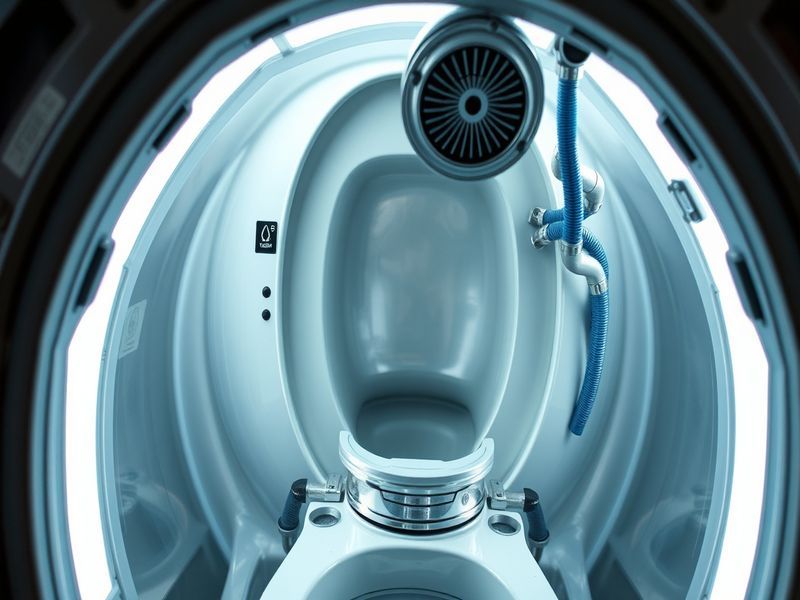
NASA’s Artemis 2 Toilet: How Space Toilets Work Beyond Earth
When astronauts blast off on NASA’s Artemis 2 mission—scheduled for September 2025—they’ll carry more than scientific equipment and survival gear. Among the most critical yet often overlooked components is the spacecraft’s waste management system, particularly the toilet. Unlike the Apollo missions or even the International Space Station (ISS), Artemis 2 represents a new era in space sanitation, blending cutting-edge engineering with the harsh realities of deep-space travel.
The Artemis program aims to return humans to the Moon, including the first woman and person of color, while preparing for future missions to Mars. With longer durations in space and more complex missions, reliable life support systems are non-negotiable. This includes the toilet—a device that must function efficiently in microgravity while maintaining hygiene and crew morale.
How Space Toilets Work: The Science Behind Artemis 2’s Waste System
Space toilets aren’t just scaled-down versions of Earth-bound models. They operate on fundamentally different principles due to the absence of gravity. On Earth, gravity pulls waste downward, making toilets relatively straightforward. In space, waste must be actively directed and contained to prevent it from floating around the cabin—a potential health hazard and sanitation nightmare.
The Artemis 2 toilet, officially known as the Universal Waste Management System (UWMS), builds on technology tested aboard the ISS. It uses a combination of airflow and suction to pull waste into the proper receptacles. Urine is filtered and recycled into drinking water—a process familiar to ISS astronauts—while solid waste is compacted and stored for disposal upon return to Earth.
Key features of the UWMS include:
- Dual receptacles: Separate openings for urine and feces, each with its own airflow system to prevent cross-contamination.
- Automated odor control: Activated carbon filters and airflow systems neutralize smells, a critical feature for long-duration missions.
- Hygiene considerations: Astronauts use thigh straps and handholds to stabilize themselves, while specialized wipes and cleansing gels maintain personal hygiene.
- Compact design: The UWMS is roughly the size of a standard Earth toilet but optimized for the Orion spacecraft’s limited space.
NASA has also incorporated astronaut feedback from previous missions. The UWMS features improved ergonomics and a more intuitive interface, reducing the time and effort required to use it—a small but vital improvement for crew efficiency.
The Challenges of Deep-Space Sanitation: Why Artemis 2’s Toilet Matters
Toilets may seem like a minor detail in the grand scheme of space exploration, but their reliability is paramount. A malfunctioning toilet could jeopardize an entire mission, as seen in 2008 when a clogged toilet aboard the ISS required emergency repairs. On Artemis 2, which will last approximately 10 days, any failure in the waste system could lead to contamination, health risks, or even mission abort scenarios.
One of the biggest challenges is managing waste in a closed-loop environment. Unlike the ISS, which receives regular resupply missions, Artemis 2’s Orion spacecraft has limited storage capacity. The UWMS must efficiently process and contain waste without overwhelming the life support systems. Engineers at NASA’s Johnson Space Center have addressed this by incorporating advanced filtration and storage solutions, ensuring that waste doesn’t become a limiting factor for mission duration.
Another critical consideration is psychological comfort. Astronauts on long-duration missions face immense physical and mental stress. A reliable, user-friendly toilet can significantly boost morale and focus. NASA’s psychological support teams emphasize the importance of normalcy in space, and a functional toilet—one that doesn’t require excessive effort or cause discomfort—is a small but meaningful step toward that goal.
For a deeper look at how space toilets have evolved, check out our Technology section, where we explore the history of waste management in space, from the early days of the Apollo missions to the sophisticated systems aboard the ISS.
Innovations and Future Implications: What Artemis 2’s Toilet Means for Mars Missions
The UWMS isn’t just a stopgap solution for the Moon; it’s a proving ground for technologies that will be essential for Mars missions. A round-trip to Mars could take up to three years, meaning waste management systems must be even more robust, efficient, and self-sustaining. The Artemis 2 toilet serves as a testbed for several innovations that could shape the future of deep-space exploration.
One such innovation is the integration of advanced recycling systems. The UWMS recycles urine into drinking water, a process that could be scaled up for longer missions. NASA’s Environmental Control and Life Support System (ECLSS) already recovers about 90% of water from urine and humidity in the ISS. Future iterations aim for 98% efficiency, which would be critical for missions where resupply isn’t an option.
Another area of focus is waste reduction and resource utilization. Solid waste from the UWMS is currently stored for disposal, but future systems may incorporate methods to convert waste into usable resources, such as fertilizer for growing food in space. This would be a game-changer for Mars missions, where every gram of payload matters.
The Artemis 2 mission will also test the UWMS under varying conditions, including the Orion spacecraft’s unique environment. Unlike the ISS, which orbits Earth in microgravity, Orion will experience partial gravity during lunar flybys. Engineers are keen to see how the toilet performs in these conditions, as future Mars missions will involve partial gravity landings and surface operations.
Beyond the Toilet: The Broader Impact of Artemis 2’s Life Support Systems
While the toilet may be the most visible component of Artemis 2’s life support systems, it’s part of a larger ecosystem designed to keep astronauts alive and healthy. The Orion spacecraft is equipped with advanced air revitalization systems, thermal control, and radiation shielding—all of which contribute to the mission’s success. The UWMS is a microcosm of this broader effort, highlighting the importance of seemingly mundane details in the grand scheme of space exploration.
For space agencies and private companies alike, the lessons learned from Artemis 2’s toilet will inform the design of future spacecraft, including those intended for commercial spaceflight. Companies like SpaceX and Blue Origin are already developing their own life support systems, and the UWMS could serve as a benchmark for reliability and efficiency. As space tourism grows, the demand for comfortable, functional waste management systems will only increase.
Moreover, the Artemis program represents a shift toward sustainable space exploration. By recycling water and minimizing waste, NASA is reducing the environmental impact of its missions—a consideration that will become even more important as humanity ventures deeper into space. The toilet, in its own small way, is a testament to this commitment.
For those interested in the intersection of technology and space exploration, our Science section offers in-depth analysis of the innovations driving the Artemis program and beyond.
Conclusion: A Small Device with Big Implications
The toilet aboard NASA’s Artemis 2 mission may not grab headlines like the rocket or the lunar lander, but its role is indispensable. It embodies the challenges and triumphs of space exploration—where even the most basic human needs must be reimagined for the harsh environment of space. As humanity prepares to return to the Moon and eventually set foot on Mars, systems like the UWMS will be the unsung heroes of the journey.
For engineers, astronauts, and space enthusiasts alike, the Artemis 2 toilet is a reminder that innovation isn’t just about the extraordinary; it’s also about mastering the ordinary. In the vastness of space, even the smallest details can make the difference between success and failure.