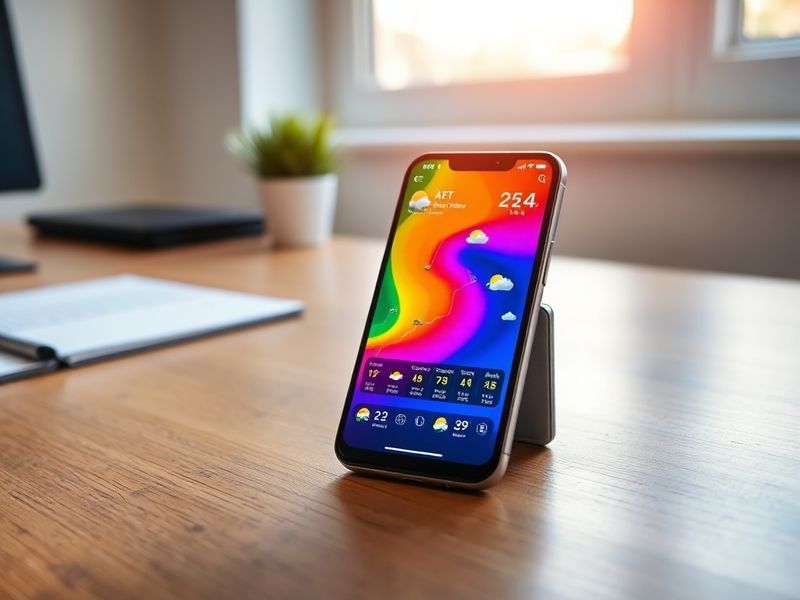
Weather apps have quietly become some of the most indispensable tools on our smartphones. While they started as simple digital replacements for the morning newspaper’s weather section, they’ve evolved into sophisticated platforms that influence decisions from what to wear to whether to book a flight or cancel an outdoor event. The transformation reflects broader shifts in how we interact with data, prioritize convenience, and even shape urban infrastructure.
The Evolution of Weather Technology
The first weather apps emerged in the early 2000s as mobile internet became widespread. Early versions were basic, offering static forecasts updated once or twice a day. Today’s apps, however, leverage real-time satellite data, machine learning, and hyper-local sensors to deliver minute-by-minute updates. Companies like Weather Underground and AccuWeather pioneered this space, but the real breakthrough came when tech giants entered the fray. Apple’s integration of Weather into iOS and Google’s acquisition of Weather Channel’s data streamlined access, embedding forecasts directly into operating systems.
What changed most dramatically was accuracy. Older models relied on regional weather stations that could be miles away, leading to discrepancies between predicted and actual conditions. Modern apps now pull from thousands of personal weather stations, crowd-sourced data points, and even airplane sensor feeds. This granularity allows for forecasts tailored to specific neighborhoods rather than entire cities.
Key Innovations in Modern Weather Apps
- Hyper-local forecasting: Apps like Dark Sky (now part of Apple Weather) use GPS and historical patterns to predict rain within a 15-minute window for your exact location.
- Integration with smart home devices: Many apps now sync with thermostats, sprinkler systems, and even car dashboards to automate responses to weather changes.
- Air quality and pollen tracking: Beyond temperature and precipitation, apps now monitor environmental factors like UV index and wildfire smoke, which have direct impacts on public health.
- Augmented reality overlays: Some apps project weather visualizations onto live camera views, letting users see how a storm might move through their street.
Beyond the Forecast: The Unexpected Uses of Weather Data
Weather apps have transcended their original purpose, influencing industries far beyond meteorology. Retailers use weather data to adjust inventory—stocking more umbrellas before a storm or switching to summer clothes during an unexpected heatwave. Energy companies rely on apps to predict demand surges, while airlines adjust flight paths to avoid turbulence detected in real time. Even farmers use hyper-local forecasts to time irrigation and harvesting, reducing water waste and improving crop yields.
Public health is another area where weather apps play a critical role. During allergy season, apps like Pollen.com help users track pollen counts and adjust medication schedules. In regions prone to extreme heat, apps issue warnings that prompt community centers to open cooling stations. The COVID-19 pandemic highlighted another use case: weather conditions affect virus transmission rates, and some apps began incorporating this data to advise on outdoor vs. indoor activity risks.
There’s also a growing trend of “weather hacking”—using app data to optimize daily life. Commuters check apps to decide whether to take the train or drive, while event planners use them to schedule outdoor weddings or cancel concerts hours before a storm hits. The apps have become silent advisors, shaping routines without users realizing how deeply they’re integrated into decision-making.
The Privacy Paradox: Convenience vs. Data Collection
The same features that make weather apps so useful raise significant privacy concerns. To deliver hyper-local forecasts, apps often request access to precise location data, which can be sold to advertisers or stored indefinitely. A 2022 study by the Norwegian Consumer Council found that popular weather apps shared user data with tech giants like Facebook and Google without clear consent. This has led to regulatory scrutiny, particularly in Europe under GDPR, where users must now opt in explicitly for location tracking.
Some apps have responded by offering “privacy modes” that limit data sharing. For example, Windy.com allows users to disable location services entirely, defaulting to city-level forecasts instead. Others, like WeatherBug, offer paid subscriptions that promise anonymized data handling. Yet the tension remains: the more personalized the forecast, the more data the app must collect. Users must weigh convenience against the risk of their movements being tracked.
There’s also the issue of misinformation. While professional meteorologists emphasize accuracy, some apps prioritize engagement over precision. A 2019 study by the American Meteorological Society found that apps with gamified elements—like rewarding users for checking forecasts daily—sometimes exaggerated weather threats to boost interaction. This creates a feedback loop where users become conditioned to expect dramatic weather, even when conditions are mild.
The Future: AI, Climate Change, and Personalized Weather
Looking ahead, weather apps are poised to become even more predictive and personalized. Artificial intelligence is already being used to analyze patterns in climate data, allowing apps to forecast not just tomorrow’s weather but potential extreme events weeks in advance. IBM’s The Weather Company, for instance, uses AI to integrate data from 200,000 weather stations with global climate models, improving accuracy for long-range predictions.
Climate change is another driving force behind innovation. As weather patterns grow more erratic, apps are adding features like “climate normals” that show how current conditions deviate from historical averages. This helps users understand whether a heatwave or cold snap is part of a larger trend. Some apps, like Tomorrow.io, are even developing tools to help cities prepare for flooding or heat islands, providing municipal-level forecasts that guide infrastructure planning.
On the consumer side, the next frontier is voice integration. Smart speakers like Alexa and Google Home already deliver weather updates on command, and apps are experimenting with conversational interfaces. Imagine asking your phone, “Should I water my garden today?” and receiving a response that factors in soil moisture, recent rainfall, and upcoming storms. This level of integration could make weather apps invisible yet indispensable, woven into daily interactions without requiring a screen.
What to Look for in a Weather App
- Data sources: Prioritize apps that aggregate from multiple sources, including government satellites, personal weather stations, and professional meteorologists.
- Customization: Look for options to adjust alerts, choose between metric and imperial units, and toggle features like air quality or pollen tracking.
- Privacy policy: Review how the app handles location data. Opt for those that offer granular controls or anonymized data options.
- Additional features: Beyond basic forecasts, consider apps that provide radar maps, historical data, or integration with smart home devices.
- Advertising: Free apps often rely on ads for revenue. Check if these are unobtrusive or if they interfere with usability.
Conclusion: The Unsung Heroes of the Digital Age
Weather apps may not dominate headlines like social media platforms or gaming apps, but their impact is undeniable. They’ve redefined how we plan our days, allocate resources, and even perceive our environment. As climate change accelerates and cities grow more complex, these tools will only become more critical—not just for avoiding rain on a commute, but for making data-driven decisions that affect health, safety, and sustainability.
The next time you check your phone for the day’s forecast, consider the layers of technology and data behind that simple notification. From the satellites orbiting Earth to the AI models crunching numbers in real time, weather apps are a testament to how far we’ve come—and a reminder of how deeply technology shapes our daily lives. Whether you’re a farmer, a commuter, or simply someone trying to decide if you need an umbrella, these apps have quietly become the unsung heroes of the digital age.
For more on how technology intersects with daily life, explore our Technology and News sections on Dave’s Locker. Stay informed, stay prepared, and let the apps do the heavy lifting.