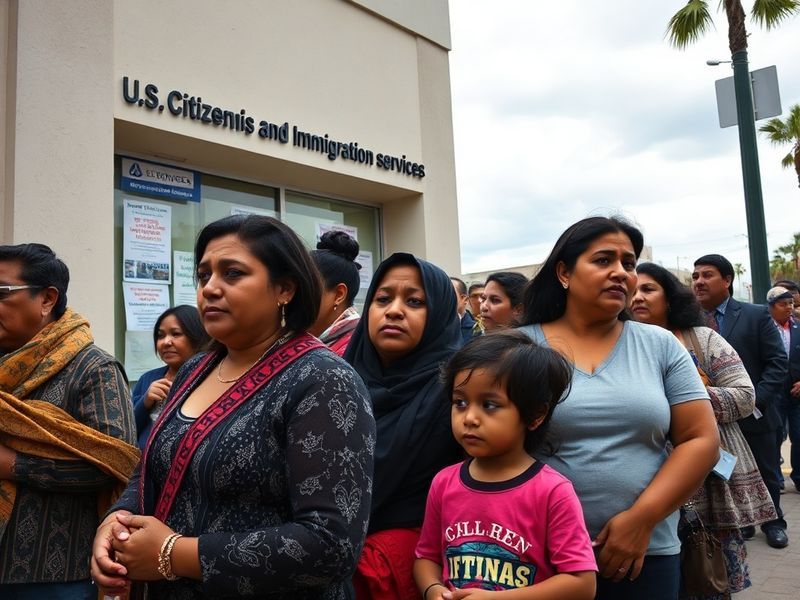
Temporary Protected Status (TPS) is a humanitarian program that allows citizens of designated countries facing armed conflict, environmental disasters, or other extraordinary conditions to live and work in the United States temporarily. Administered by the U.S. Citizenship and Immigration Services (USCIS), TPS provides protection from deportation and work authorization for eligible individuals. The program reflects broader debates about immigration policy, humanitarian obligations, and the role of the U.S. in global crises.
The Origins and Purpose of TPS
TPS was established by Congress in 1990 as part of the Immigration Act. Its purpose was to address situations where returning nationals to their home countries would pose a risk due to temporary but severe conditions. The program allows the U.S. government to designate countries for TPS when conditions in those nations meet specific criteria, such as ongoing armed conflict, environmental disasters like hurricanes or earthquakes, or extraordinary temporary conditions.
When a country is designated for TPS, nationals of that country who are already in the U.S. can apply for protection. If granted, they receive a work permit and are protected from deportation for a set period, typically 6 to 18 months, though extensions are common. The Department of Homeland Security (DHS) periodically reviews conditions in designated countries to determine whether TPS should be extended, terminated, or redesignated.
This flexibility is central to TPS’s design. Unlike permanent immigration pathways, TPS is explicitly temporary and tied to the conditions that warranted the designation. It’s a stopgap measure designed to address immediate humanitarian concerns without altering long-term immigration policy.
Who Qualifies and How the Process Works
To qualify for TPS, individuals must meet several requirements. First, they must be nationals of a country designated for TPS or a person without a nationality who last habitually resided in a designated country. They must also have been continuously physically present in the U.S. since the effective date of the most recent designation. Additionally, applicants must have continuously resided in the U.S. since a specified date, which varies by country.
Applicants must file Form I-821, Application for Temporary Protected Status, and may also request work authorization by submitting Form I-765. The process includes background checks and biometric screening. Fees apply, though fee waivers are available in certain circumstances. Once approved, TPS beneficiaries can live and work legally in the U.S. for the duration of the designation.
Notably, TPS does not provide a pathway to permanent residency or citizenship. However, individuals with TPS may be eligible for other immigration benefits, such as asylum or adjustment of status, if they qualify under separate provisions. The program also allows beneficiaries to travel abroad with advance parole, enabling them to return to the U.S. after temporary trips.
Key Considerations for TPS Applicants
- Continuous Residence: Applicants must prove they’ve lived in the U.S. continuously since the specified date for their country’s TPS designation.
- No Serious Criminal Record: Individuals convicted of certain crimes or who pose a security threat are ineligible for TPS.
- Timely Filing: Applications must be filed during the open registration period, though late initial filings may be accepted under limited circumstances.
- Work Authorization: TPS beneficiaries can apply for work permits, but approval is not automatic and depends on timely filing and eligibility.
Controversies and Political Debates
Despite its humanitarian intent, TPS has become a flashpoint in broader immigration debates. Critics argue that the program allows for prolonged stays without offering a clear path to permanent status, creating a de facto semi-permanent population. Others point out that TPS designations are subject to political influence, with decisions sometimes reflecting foreign policy priorities rather than purely humanitarian concerns.
The Trump administration’s approach to TPS drew particular scrutiny. In 2017 and 2018, DHS announced the termination of TPS for several countries, including El Salvador, Haiti, Nicaragua, and Sudan. These decisions were met with legal challenges, with courts temporarily blocking some terminations. Advocates argued that conditions in these countries had not improved sufficiently to justify ending protections, while opponents contended that TPS had outlived its original purpose.
The Biden administration has taken a more expansive approach, redesignating several countries for TPS and extending protections for others. This shift reflects a broader change in immigration policy priorities, emphasizing humanitarian protections and family reunification. However, the program’s future remains uncertain, as legal challenges and political debates continue to shape its implementation.
Broader Implications and the Future of TPS
TPS plays a significant role in the U.S. immigration system, offering a lifeline to hundreds of thousands of individuals facing dire conditions abroad. As of 2023, more than 400,000 people from 16 countries hold TPS status, according to USCIS data. The program’s impact extends beyond the individuals directly protected, influencing communities, labor markets, and diplomatic relations.
For many TPS beneficiaries, the program is a critical source of stability. It allows them to support families, contribute to local economies, and avoid returning to environments plagued by violence, natural disasters, or political instability. In states like California, Texas, and Florida—home to large immigrant populations—TPS beneficiaries fill essential roles in industries such as healthcare, construction, and hospitality.
However, the temporary nature of TPS creates uncertainty. Beneficiaries often live in a state of limbo, unsure whether their protections will be extended or if they’ll be forced to leave the U.S. This uncertainty can hinder long-term planning, from career development to family decisions. Advocacy groups continue to push for legislative solutions, such as the proposed American Dream and Promise Act, which would provide a pathway to permanent residency for TPS holders and Dreamers.
The program also raises questions about the U.S.’s role in global humanitarian crises. TPS designations often reflect the U.S.’s assessment of conditions abroad, but these assessments can be influenced by political considerations. For example, some advocates argue that TPS has been underutilized for countries facing severe crises, while others contend that it’s been overused in cases where conditions have stabilized.
Looking ahead, the future of TPS will likely depend on legislative action. While the program provides critical protections, it was never intended to serve as a long-term solution. Comprehensive immigration reform could address the challenges faced by TPS beneficiaries, offering them a pathway to permanent status and reducing the uncertainty that has defined their experience in the U.S.
What’s Next for TPS Beneficiaries?
For now, TPS remains a vital but imperfect tool in the U.S. immigration system. Beneficiaries must navigate a complex and often unpredictable process, relying on legal assistance and advocacy to secure their status. As political and legal battles continue, the program’s role in addressing global humanitarian crises will remain a subject of intense debate.
The stories of TPS beneficiaries highlight the human impact of immigration policy. Behind the legal and political discussions are individuals and families who have built lives in the U.S., contributed to their communities, and faced the constant threat of displacement. Their experiences underscore the need for policies that balance humanitarian obligations with the practical realities of immigration governance.
For more insights on immigration policy and related topics, visit Dave’s Locker Immigration Reform and explore the broader conversation about how the U.S. responds to global crises.
As the debate over TPS continues, one thing is clear: the program’s impact extends far beyond the individuals it directly protects. It challenges the U.S. to confront its role in the world, its obligations to those fleeing danger, and the balance between temporary relief and lasting solutions.