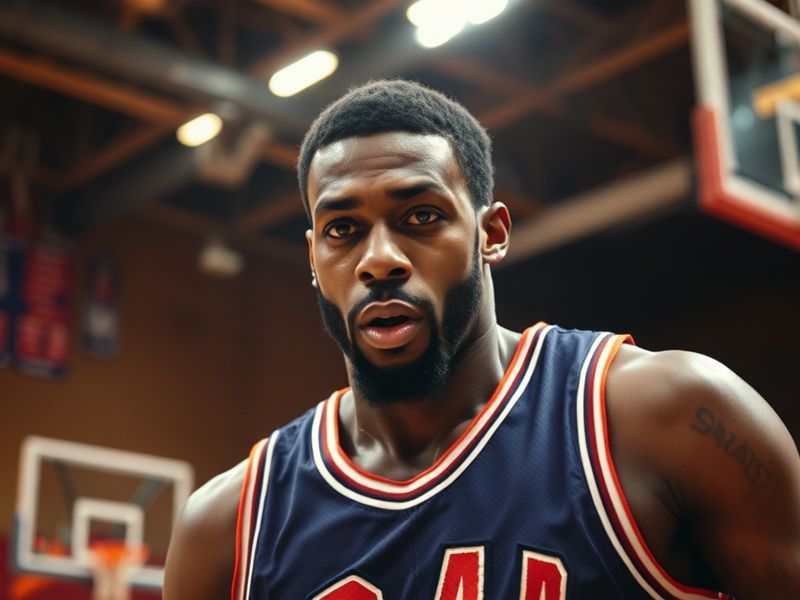
Jamal Cain has quietly emerged as one of the most intriguing young talents in professional basketball, carving out a distinct identity in an era dominated by flashy superstars and highlight-reel plays. While names like Ja Morant and Paolo Banchero dominate headlines, Cain’s steady rise reflects a different kind of excellence—one built on versatility, adaptability, and relentless work ethic. His journey from a relatively unknown prospect to a key contributor in the NBA offers a compelling narrative about the evolving demands of modern basketball.
Born on March 20, 1999, in Pontiac, Michigan, Cain grew up in a region rich with basketball tradition. The Rust Belt city has produced NBA players like Renell Robinson and Terry Mills, but it’s not typically associated with elite prospects. Cain attended Pontiac High School, where he quickly distinguished himself not through gaudy statistics but through his physicality and basketball IQ. His ability to guard multiple positions and contribute without demanding the ball set the tone for his future career.
The Making of a Two-Way Player
Cain’s collegiate career at Marquette University further refined his game. Under coach Steve Wojciechowski, he developed into a defensive anchor, earning Big East All-Defensive Team honors twice. His 6’7” frame and 6’11” wingspan allowed him to guard wings and even some power forwards, a rarity for players who don’t fit the traditional mold. Offensively, Cain was never a primary scorer, but his improved shooting range and cutting ability made him a strategic weapon.
His senior season in 2021-22 was particularly notable. Cain averaged 9.6 points, 6.3 rebounds, and 1.5 steals per game while shooting 36.9% from three-point range. More importantly, he led Marquette in defensive rating, a testament to his impact beyond the box score. Scouts took notice not because he fit a specific archetype, but because he embodied the modern NBA’s emphasis on positionless basketball.
After going undrafted in the 2022 NBA Draft, Cain signed a two-way contract with the Miami Heat, a franchise known for developing versatile role players. His rookie season in the NBA was modest statistically—10 games played, averaging 2.1 points and 1.6 rebounds—but it was the intangibles that stood out. In practices and G League assignments with the Sioux Falls Skyforce, Cain honed his craft, focusing on shooting mechanics and defensive rotations.
A Global Perspective on Positionless Basketball
The NBA’s evolution toward positionless basketball has reshaped how teams evaluate talent. Players like Giannis Antetokounmpo and Jayson Tatum have blurred traditional positional lines, making Cain’s skill set increasingly valuable. In Europe, where basketball has long emphasized fundamentals over flash, players like Tornike Shengelia and Axel Toupane have thrived in similar roles. Cain’s success reflects a global trend: the premium on athletes who can adapt to multiple positions without sacrificing efficiency.
In the EuroLeague and other international leagues, teams prioritize players who can switch defensively, space the floor, and facilitate without being primary playmakers. Cain’s development aligns with this philosophy. His ability to guard 1 through 4 in pick-and-roll situations and knock down open threes mirrors the versatility seen in European basketball’s top prospects.
This global perspective also highlights the changing scouting landscape. Traditional NBA scouts once favored high-scoring guards or rim-protecting bigs. Today, teams invest in players who can fill multiple roles, a shift driven by the success of European leagues and the analytics-driven approach to roster construction.
Key Attributes of Cain’s Game
- Defensive Versatility: Cain’s length and lateral quickness allow him to guard multiple positions. His defensive rating of 103.5 in his rookie season with the Heat’s G League affiliate was elite for his position.
- Three-Point Shooting: While not a high-volume shooter, Cain’s 34.4% three-point shooting in the G League last season opened up driving lanes for teammates.
- Basketball IQ: His understanding of rotations and offensive spacing reflects a mature approach to the game, rare for a player with limited NBA minutes.
- Work Ethic: Teammates and coaches consistently praise his dedication to skill development, particularly in refining his jump shot and defensive footwork.
The Road Ahead: Can Cain Break Into the NBA Rotation?
For Cain to secure a permanent NBA role, he must continue improving in areas that often separate role players from starters. Shooting consistency remains a focal point. While his mechanics are solid, he must increase his volume from three to become a true floor-spacer. Additionally, his playmaking instincts—currently underdeveloped—could unlock new opportunities as he gains experience.
The Heat’s culture under Erik Spoelstra emphasizes player development and defensive versatility, making it an ideal environment for Cain. Other teams in need of wing depth, such as the Orlando Magic or Detroit Pistons, could also benefit from his skill set. The NBA’s expansion to 30 teams and the growing emphasis on international scouting further increase his chances of finding a niche.
One potential path for Cain lies in Europe. If he struggles to crack an NBA rotation, a high-level EuroLeague contract could provide the minutes and visibility needed to refine his game. Players like Donta Hall and Chris Johnson have parlayed G League and international success into NBA opportunities, and Cain’s profile fits this trajectory.
Comparisons and Contrasts
Cain’s game draws comparisons to players like Stanley Johnson and Dorian Finney-Smith, but with a higher ceiling due to his shooting potential. Unlike traditional “3-and-D” wings, Cain’s offensive role is more fluid. He isn’t a high-usage scorer, but his ability to operate without the ball makes him a valuable complementary piece.
In contrast to players like Josh Okogie, who rely heavily on athleticism, Cain’s game is built on fundamentals. This makes him a safer bet for long-term roles, particularly in systems that prioritize defense and spacing.
The Bigger Picture: The Changing Face of Basketball Talent
Jamal Cain’s journey underscores a broader shift in how basketball talent is identified and developed. The NBA’s global reach has democratized scouting, allowing players from non-traditional basketball hotbeds to thrive. Programs like Marquette’s emphasis on player development have also played a role in shaping athletes who can adapt to professional demands.
Moreover, Cain’s story reflects the growing importance of role players in an era of superstar-driven basketball. Teams no longer rely solely on high-scoring guards or dominant bigs. Instead, they seek athletes who can fill specific, often unglamorous roles with excellence. This evolution has created opportunities for players who might have been overlooked in past decades.
As the NBA continues to prioritize versatility, players like Cain will become increasingly valuable. His ability to guard, shoot, and contribute without demanding the ball aligns perfectly with the league’s current trends. Whether he becomes a rotation staple or a key contributor in Europe, his career trajectory offers a blueprint for the modern basketball player.
The next few years will be critical for Cain. With the right development path, he could carve out a long and successful career as a specialist who elevates any team he joins. His story is a reminder that in basketball, as in life, consistency and adaptability often outweigh raw talent.