Colorado Rockies and Cincinnati Reds: Two Teams, Two Cities, One Shared Story
The Colorado Rockies and Cincinnati Reds represent more than just two Major League Baseball teams. They are institutions deeply woven into the cultural fabric of their respective cities, each carrying a legacy that spans decades. While they rarely face off in high-stakes postseason battles, their regular-season matchups offer a fascinating contrast between two distinct baseball philosophies. One team thrives in the thin air of the Rockies, while the other plays in the historic confines of Great American Ball Park. Beyond the box scores, these teams reflect broader themes of identity, ambition, and resilience in American sports culture.
The Ballparks: Where Geography Shapes the Game
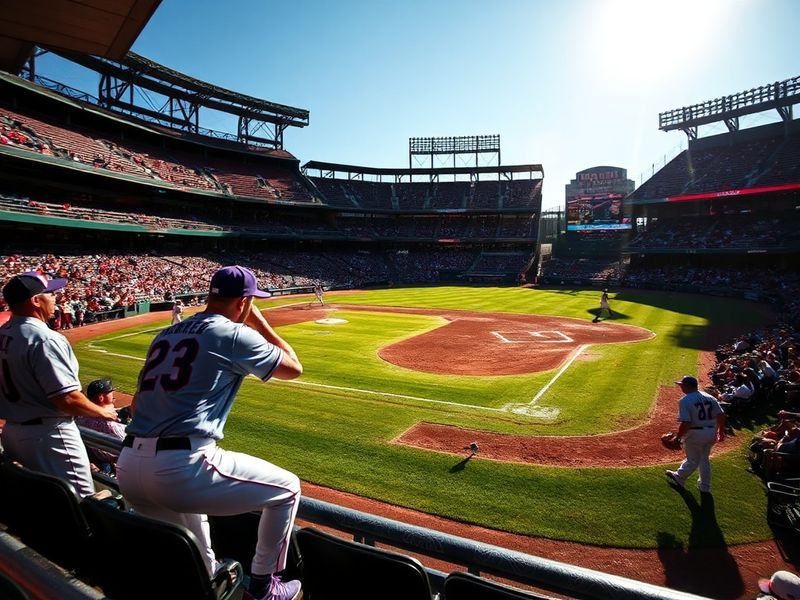
Coors Field in Denver and Great American Ball Park in Cincinnati are more than just venues—they are characters in the story of each franchise. Coors Field, opened in 1995, was designed to take advantage of the high altitude, with its spacious outfield and hitter-friendly conditions. The ballpark sits at an elevation of 5,280 feet, making it the highest stadium in MLB. This elevation affects everything from pitching dynamics to player conditioning, creating a unique challenge for visiting teams. The thin air reduces drag on the ball, leading to longer fly balls and higher scoring games, a phenomenon famously dubbed the “Coors Field effect.”
Great American Ball Park, opened in 2003, offers a stark contrast. Located along the Ohio River, the stadium blends modern amenities with classic baseball charm. Its asymmetrical outfield walls and the iconic smokestack in center field pay homage to Cincinnati’s industrial heritage. While not as extreme as Coors Field’s altitude, the park’s design and location contribute to a more balanced playing field, where pitching and defense often play a more significant role. The contrast between these two ballparks highlights how geography and architecture shape the very nature of the game.
A Tale of Two Cities
Denver and Cincinnati are cities with distinct identities, and their baseball teams reflect that. Denver, a young, fast-growing city with a vibrant outdoor culture, has embraced the Rockies as a symbol of its modern ambitions. The team’s arrival in 1993 coincided with Colorado’s economic and cultural boom, and the Rockies quickly became a point of pride for the city. The team’s purple and silver colors, inspired by the state flag, evoke the rugged beauty of the Rocky Mountains, reinforcing a connection to Colorado’s natural landscape.
Cincinnati, one of America’s oldest cities, has a baseball tradition that dates back to the 1860s. The Reds, originally known as the Cincinnati Red Stockings, were the first fully professional baseball team in history. This legacy of innovation is reflected in the city’s blue-collar ethos and the team’s enduring fanbase. Great American Ball Park is a testament to Cincinnati’s ability to blend history with modernity, offering a nostalgic yet contemporary experience for fans. The Reds’ red and white uniforms are a nod to the team’s storied past, evoking memories of legends like Johnny Bench and Joe Morgan.
On the Field: Style of Play and Rivalry Dynamics
When the Rockies and Reds meet, the games often highlight the differences in their approaches to baseball. The Rockies, with their offensive firepower and reliance on home runs, embody the modern, high-scoring style of play. Players like Nolan Arenado and Charlie Blackmon have thrived in the hitter-friendly environment of Coors Field, where power and consistency are rewarded. The team’s pitching staff, however, often faces an uphill battle, with the thin air making it difficult to generate ground balls or induce weak contact.
The Reds, on the other hand, have built their identity around pitching, defense, and small-ball tactics. Under manager David Bell, the team has emphasized a balanced approach, blending young talent like Elly De La Cruz with experienced veterans. Cincinnati’s pitching staff, led by Luis Castillo and Hunter Greene, benefits from the more forgiving environment of Great American Ball Park, where fly balls are less likely to turn into home runs. The Reds’ style of play reflects a more traditional, methodical approach to baseball, where pitching and situational hitting often decide games.
Key Matchup Factors
Several factors typically influence the outcome of Rockies vs. Reds games:
- Pitching Matchups: The Reds’ pitching staff often has an advantage in games played in Cincinnati, where their ground-ball tendencies and ability to induce weak contact are more effective. In Denver, the Rockies’ hitters can exploit the thin air, making it difficult for Reds pitchers to generate outs.
- Home Runs vs. Small Ball: The Rockies’ power hitters thrive in Denver, while the Reds rely on timely hitting and aggressive baserunning to manufacture runs. This contrast often leads to high-scoring games in Colorado and more tactical, low-scoring affairs in Cincinnati.
- Defensive Adjustments: Coors Field’s spacious outfield can be both a blessing and a curse for the Rockies’ defense. The Reds, with their strong infield defense, often capitalize on the Rockies’ tendency to hit line drives that find gaps. In Cincinnati, the Reds’ outfielders benefit from playing in a more compact space, reducing the impact of extra-base hits.
- Bullpen Depth: Both teams rely heavily on their bullpens, but the Rockies’ relievers often face more pressure due to the high-scoring environment. The Reds’ bullpen, led by Alexis Díaz, has been one of the best in baseball, providing a stabilizing force in close games.
Global Perspective: Baseball’s Place in the World
While the Rockies vs. Reds rivalry may not have the global recognition of historic MLB matchups like Yankees vs. Red Sox, it reflects broader trends in the sport’s international appeal. Baseball’s popularity has grown beyond its traditional strongholds in the United States and Japan, with teams like the Rockies and Reds playing a role in expanding the game’s reach. In countries like Canada, Australia, and various Latin American nations, MLB games are increasingly accessible through streaming services and international broadcasts, exposing new audiences to the nuances of the sport.
The Rockies, in particular, have become a team of international interest due to their diverse roster and the allure of playing at Coors Field. Players from Latin America, such as Germán Márquez and Ezequiel Troncoso, have thrived in Colorado, adding to the team’s global appeal. The Reds, too, have embraced international talent, with players like Aristides Aquino and José Barrero making an impact. These connections highlight how MLB teams serve as ambassadors for the sport, bridging cultures and communities through the universal language of baseball.
The global perspective also extends to the business side of baseball. The Rockies and Reds, like all MLB teams, operate in an increasingly international market. Sponsorships, merchandise sales, and fan engagement strategies are tailored to appeal to diverse audiences. For example, the Reds have actively promoted their Latin American heritage through heritage nights and bilingual content, while the Rockies have leveraged Colorado’s outdoor culture to attract fans who may not traditionally follow baseball.
The Future of the Rivalry
As both teams look to the future, the Rockies vs. Reds rivalry is likely to evolve. For the Rockies, the challenge will be to balance their offensive firepower with improved pitching, particularly in high-leverage situations. The team’s investment in young arms like Germán Márquez and Ryan Feltner suggests a commitment to addressing this weakness. Meanwhile, the Reds are focused on building a sustainable contender, with a core of young talent that includes De La Cruz, Matt McLain, and Spencer Steer.
On the field, the rivalry may never reach the intensity of classic MLB matchups, but it offers a compelling contrast between two distinct baseball philosophies. Off the field, the cultural and geographic differences between Denver and Cincinnati add depth to the narrative. Whether it’s the high-flying offense of Coors Field or the methodical approach of Great American Ball Park, the Rockies vs. Reds matchups provide a microcosm of the broader trends shaping baseball today.
For fans, these games are more than just wins and losses—they are a celebration of baseball’s diversity and its ability to bring people together, regardless of where they come from. As the sport continues to grow globally, teams like the Rockies and Reds will play a crucial role in shaping its future, one game at a time.
Learn more about baseball history and culture by exploring our Sports category, or dive deeper into team dynamics and player profiles on Analysis.