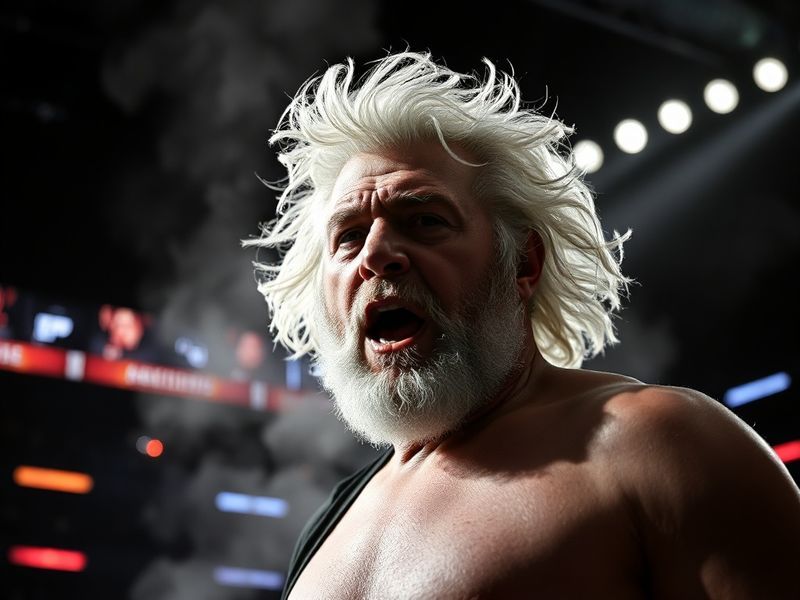
Scott Steiner carved his name into wrestling history not just through brute strength or technical skill, but through a persona that blended raw athleticism with an unapologetic, in-your-face attitude. Born Scott Carl Rechsteiner in 1962, Steiner emerged from the wrestling boom of the 1980s and 1990s, a period when sports entertainment was evolving into a global spectacle. His career spanned multiple decades and promotions, but it was his work in WWE and WCW that cemented his legacy as one of the most polarizing yet unforgettable figures in the industry.
Steiner’s influence extended beyond the ring. He was part of a wave of performers who helped transition wrestling from regional territory systems to a mainstream cultural phenomenon. His character—part brawler, part showman—reflected the shifting tastes of audiences who craved more intensity, more drama, and more unpredictability. To understand Steiner’s impact, it’s necessary to look at the broader wrestling landscape of his time, where the lines between sport and theater were constantly being redrawn.
The Steiner Brothers: A Tag Team Revolution
Scott Steiner’s earliest and most enduring success came as half of the Steiner Brothers, alongside his real-life brother Rick. The duo debuted in the late 1980s and quickly became a dominant force in tag team wrestling. Their style was a fusion of amateur wrestling pedigree—both were collegiate standouts—and high-flying athleticism. This combination was rare in an era when tag teams were often defined by brute force or comedic gimmicks.
The Steiners’ rise coincided with a global expansion of wrestling. They competed in Japan’s All Japan Pro Wrestling, where their technical prowess and physicality earned them respect in a market known for its demanding audience. Their matches against teams like The Road Warriors and The Fabulous Freebirds became instant classics, drawing sell-out crowds and proving that tag team wrestling could be both competitive and entertaining.
Their time in WCW during the early 1990s further solidified their legacy. The Steiner Brothers became a cornerstone of the promotion’s tag team division, which was growing in prominence. Their feuds with teams like The Nasty Boys and Harlem Heat showcased their ability to blend power moves with storytelling, a formula that would later define Steiner’s solo career.
- Innovative Style: The Steiners blended amateur wrestling with high-flying moves, a rare combination in the late 1980s and early 1990s.
- Global Reach: They competed in Japan, the U.S., and Europe, helping to globalize wrestling’s appeal.
- Tag Team Pioneers: Their matches set a new standard for what tag team wrestling could be—technical yet explosive.
Solo Career and the Steiner Recharger Gimmick
After the Steiner Brothers disbanded in the mid-1990s, Scott Steiner embarked on a solo career that would take his career—and his persona—to new extremes. His transformation was as much physical as it was psychological. By the late 1990s, Steiner had adopted a look that was part biker, part mad scientist: long hair, a goatee, and an ever-present mouthpiece that became his signature. This was the era of the “Steiner Recharger,” a character who embodied the edgier, more unpredictable side of wrestling.
This gimmick wasn’t just a fashion statement. It reflected a broader shift in wrestling towards characters who were more volatile, more dangerous. Steiner’s in-ring style evolved to match his persona. He became known for his explosive power moves, including the devastating “Steiner Driver,” a move that combined the unpredictability of a powerbomb with the ferocity of a piledriver. His promos were just as intense, filled with threats, taunts, and a level of aggression that resonated with audiences tired of overly polished characters.
His run in WWE during the Attitude Era was particularly notable. Steiner’s feud with Triple H and his participation in high-profile matches like the 1999 Royal Rumble and Survivor Series showcased his ability to thrive in wrestling’s most chaotic period. While some critics dismissed his gimmick as over-the-top, fans embraced it. Steiner’s character was a reflection of the era’s appetite for spectacle, where the line between wrestling and performance art was often blurred.
This period also highlighted the global nature of Steiner’s appeal. His matches were broadcast to millions worldwide, and his character resonated in markets as diverse as North America, Europe, and parts of Asia. Steiner became a symbol of wrestling’s ability to adapt, to push boundaries, and to give audiences exactly what they wanted—even if it wasn’t always what critics expected.
Cultural Impact and Legacy in Wrestling
Scott Steiner’s career unfolded during a transformative era for wrestling. The 1990s and early 2000s were a time when the industry transitioned from a regional, almost underground sport to a global entertainment juggernaut. Steiner’s career mirrored this evolution. From his early days as part of a pioneering tag team to his solo run as a solo act, he was at the forefront of wrestling’s most dynamic period.
One of Steiner’s most lasting contributions was his role in popularizing the “extreme” wrestler archetype. Characters like Steiner, along with contemporaries such as Stone Cold Steve Austin and The Undertaker, helped redefine what it meant to be a wrestling star. These performers weren’t just athletes; they were antiheroes, rebels who thrived on defiance and unpredictability. Steiner’s persona, with its emphasis on raw power and unfiltered aggression, fit perfectly into this mold.
Steiner’s influence extended beyond his in-ring work. His interviews and promos were a masterclass in cutting-edge wrestling psychology. He didn’t just talk at his opponents; he talked down to them, making audiences feel like they were part of an inside joke. This approach foreshadowed the rise of “mic skills” as a key component of wrestling success, a trend that continues to this day.
In Japan, Steiner’s impact was particularly significant. Japanese wrestling fans are known for their high standards and appreciation for technical skill, and Steiner’s ability to blend American powerhouse style with Japanese-style wrestling earned him a dedicated following. His matches in promotions like New Japan Pro-Wrestling remain some of the most celebrated in his career, a testament to his versatility and global appeal.
From the Ring to the Screen: Steiner’s Post-Wrestling Life
Steiner’s retirement from wrestling in 2022 marked the end of an era, but his influence continues to be felt. Since stepping away from the ring, he has remained active in the wrestling community, making appearances at conventions, podcasts, and wrestling events. His insights into the industry, particularly its evolution over the past four decades, have made him a sought-after voice among fans and analysts alike.
Steiner’s post-wrestling career also reflects a broader trend in the industry: the rise of wrestlers as multimedia personalities. Former performers are leveraging their fame to build careers in commentary, acting, and digital media. Steiner’s presence on platforms like YouTube and podcasts has allowed him to connect with younger audiences who may not have experienced his in-ring work firsthand. These platforms have given him a space to share his experiences, offer advice, and even poke fun at the industry’s quirks.
Steiner’s legacy is also evident in the next generation of wrestlers. Many performers cite him as an inspiration, particularly those who value a blend of athleticism and charisma. His influence can be seen in the careers of wrestlers like Samoa Joe and Keith Lee, who have adopted a similar mix of power and intensity. Even in an era dominated by social media and viral moments, Steiner’s approach to wrestling—authentic, unpredictable, and unapologetic—remains a blueprint for success.
As wrestling continues to evolve, Scott Steiner’s career serves as a reminder of the industry’s capacity for reinvention. He wasn’t just a product of his time; he helped shape it. From the Steiner Brothers to the Steiner Recharger, his career is a testament to the power of personality in sports entertainment. His story is one of adaptation, resilience, and an unwavering commitment to giving the audience what they want—no matter how loud, how intense, or how unexpected that might be.
For fans of wrestling, Scott Steiner isn’t just a name from the past. He’s a symbol of an era when wrestling was raw, unpredictable, and unapologetically in your face. And as the industry continues to change, his legacy endures as a reminder that at its core, wrestling is about storytelling—whether through a perfectly executed move or a single, unforgettable line.