the white house
“`html
The White House: Seat of Power, Symbol of Democracy
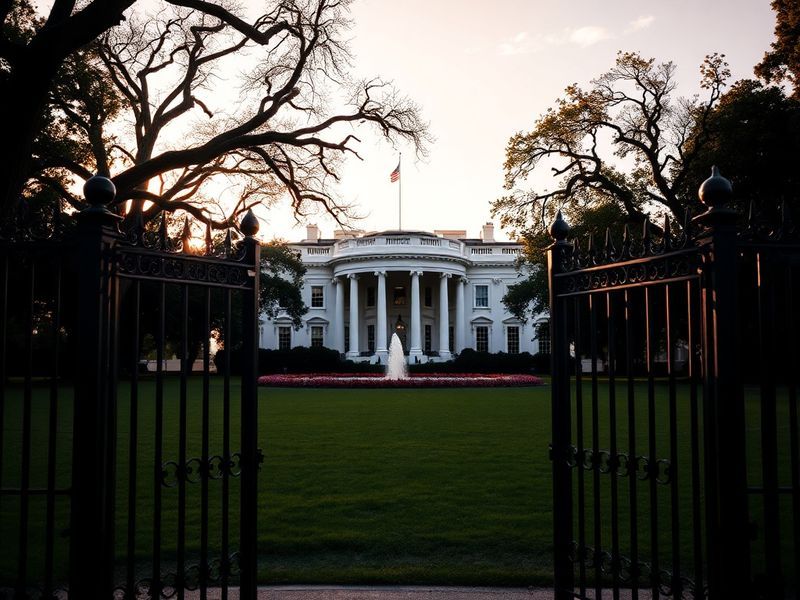
The White House stands not only as the official residence and workplace of the President of the United States but also as a living symbol of American democracy. Completed in 1800 after a decade of construction, this neoclassical building at 1600 Pennsylvania Avenue NW in Washington, D.C., has witnessed more than two centuries of political history, crisis, and resilience. Designed by Irish-born architect James Hoban, the White House reflects European architectural influences while embodying the ideals of a new republic.
Its distinctive white sandstone façade, which gives the building its name, was not originally intended. The sandstone was chosen for durability and availability, but it was later painted white to cover damage from the War of 1812, when British forces set fire to the structure. Reconstruction took three years, and the building was repainted white—a decision that cemented its iconic identity.
A Living Museum of American Leadership
The White House is more than just a building; it is a museum of executive power. Each room tells a story. The Oval Office, with its distinctive curved walls and unmistakable Resolute Desk, is the most recognizable space, where presidents make critical decisions that shape global events. The Resolute Desk itself, crafted from timber salvaged from the HMS Resolute, a British ship recovered by an American whaler in 1855, symbolizes cooperation and resilience across national lines.
Other notable rooms include the East Room, used for large receptions and ceremonies, and the Blue Room, where the president hosts diplomatic dignitaries. The White House also houses the Situation Room, a secure conference space for national security discussions, and the Family Dining Room, where first families often gather privately. The building’s 132 rooms, including 16 family and guest rooms, six levels of basement, and 35 bathrooms, support both the demands of governance and the personal lives of its occupants.
Public tours, though limited and security-screened, allow visitors to glimpse this historic site. However, access is tightly controlled, reflecting the dual role of the White House as both a working government facility and a national treasure.
The Architecture Behind the Icon
James Hoban’s design was selected in a competition that drew 10 entries. His winning plan drew inspiration from Leinster House in Dublin and the Palladian style popular in 18th-century America. The building’s north and south porticos were added later—President Andrew Jackson installed the South Portico in 1824, and the North Portico was completed in 1829, giving the White House its balanced, symmetrical appearance.
The White House has undergone multiple renovations. In 1902, President Theodore Roosevelt commissioned a major expansion, adding the West Wing, which now houses the Oval Office and staff offices. The East Wing was later added in 1942 to provide additional office space and a secure entrance for visitors.
Perhaps the most dramatic transformation occurred between 1948 and 1952, when President Harry Truman ordered a full structural renovation. Engineers discovered that the interior walls were made of wood—not stone as originally believed—and the building was structurally unsound. The entire interior was gutted, and steel reinforcements were installed. The White House was rebuilt using modern materials while preserving its original exterior and classic rooms. The reconstructed interiors were designed in the Federal style, restoring the grandeur of the 19th century.
Today, the White House remains a blend of historical preservation and modern functionality, a testament to adaptive design over time.
Security, Symbolism, and Public Perception
The White House is one of the most secure buildings in the world. The U.S. Secret Service, along with the White House Police Force (now part of the Secret Service Uniformed Division), protects the premises 24/7. Surrounded by wrought-iron fencing, monitored by surveillance systems, and patrolled by armed officers, the building is a fortress wrapped in symbolism.
Yet its symbolic power often outweighs its physical defenses. Protests frequently occur along Pennsylvania Avenue, with demonstrators gathering to voice dissent or support. The fence itself has become a canvas for messages—sometimes peaceful, sometimes controversial. In 2020, during nationwide protests over racial justice, the White House was briefly boarded up, and murals were painted on the surrounding fence in Lafayette Square.
Public perception of the White House varies widely. For some, it represents hope, leadership, and democratic ideals. For others, it embodies political division, inequality, or imperial overreach. The building’s image is carefully managed through official photography, tours, and media coverage, yet its meaning is shaped by events beyond its walls.
The White House lawn, known as the South Lawn, serves as a stage for major events: the annual Easter Egg Roll, military arrivals, and public addresses. The North Lawn hosts the Marine One helicopter landing zone, a familiar sight in news footage. These images reinforce the building’s role as both a private residence and a global stage.
Beyond Politics: The Human Side of the White House
Behind the headlines, the White House is a home. First families have raised children there, celebrated birthdays, and mourned losses. President John F. Kennedy and his wife, Jacqueline, restored much of the interior decor, bringing art and antiques that reflected their cultural vision. The White House became a center of arts and culture under their leadership, hosting poets, musicians, and artists.
More recently, the Biden administration has emphasized accessibility and inclusivity. In 2022, the White House hosted its first Diwali celebration on the South Lawn, reflecting a commitment to cultural representation. Such gestures underscore that the White House, despite its grandeur, is a place of human experience and evolving identity.
The staff—from chefs and housekeepers to advisors and florists—work tirelessly to maintain both the building and the presidency. Many are career civil servants who serve through multiple administrations, providing continuity in an environment defined by change.
The White House also faces challenges. Aging infrastructure, rising security costs, and debates over preservation versus modernization continue to shape its future. In 2023, the Biden administration announced plans to restore the historic indoor tennis court, built in 1902 and used by several presidents, into a new workspace. Such projects highlight the tension between honoring history and meeting modern needs.
For Americans and people around the world, the White House remains a powerful image—a place where decisions that affect millions are made, where history is lived, and where democracy is both performed and questioned.
Key Facts at a Glance
- Location: 1600 Pennsylvania Avenue NW, Washington, D.C.
- Completed: 1800
- Architect: James Hoban
- Rooms: 132 (including 16 family/guest rooms, 35 bathrooms)
- Style: Neoclassical with Palladian influences
- Major Renovations: 1902 (West Wing), 1948–1952 (full interior rebuild)
- Security: Managed by the U.S. Secret Service
Whether viewed as a political monument, an architectural masterpiece, or a stage for national life, the White House endures as a cornerstone of American identity. Its walls have echoed with the voices of 46 presidents, and its image continues to shape how the world sees—and debates—the United States.
For those interested in the intersection of power and culture, the White House offers a compelling lens through which to examine leadership, history, and democracy itself. Explore more on American politics and governance, or dive into historical perspectives on leadership to deepen your understanding.
—
METADATA
{
“title”: “The White House: History, Architecture, and Symbolism Explained”,
“metaDescription”: “Discover the history, architecture, and political significance of the White House, from its design to its role in American democracy.”,
“categories”: [“Politics”, “History”],
“tags”: [“White House history”, “Presidential residence”, “American democracy”, “Washington D.C. landmarks”, “White House architecture”],
“imageDescription”: “A daytime exterior view of the White House in Washington, D.C., showing its neoclassical facade, north portico, and American flag, with a clear sky and well-manicured lawn. The image captures the building’s grandeur, symmetry, and enduring symbol of U.S. leadership.”
}
—END METADATA—
“`