Antoine Griezmann: France’s Tactical Genius Redefining Football
“`html
Antoine Griezmann: The French Forward Redefining Modern Football
Antoine Griezmann stands as one of football’s most versatile and influential forwards of the past decade. His career spans top European clubs and the French national team, where he has delivered moments of brilliance that transcend tactics and borders. More than just a goal scorer, Griezmann represents a new breed of footballer—one who blends creativity, intelligence, and relentless work ethic across multiple roles on the pitch.
Born on March 21, 1991, in Mâcon, France, Griezmann’s journey from the lower leagues of French football to global stardom is a testament to perseverance and adaptability. His rise mirrors the evolution of modern football itself: a shift toward fluid attacking systems where players are expected to contribute beyond their primary position. Today, he is not only a star in La Liga with Atlético Madrid but also a key figure in the resurgence of French football on the world stage.
The Making of a Modern Footballer: Career Path and Evolution
Griezmann’s professional career began at Real Sociedad’s youth academy after a brief stint in Montpellier. It wasn’t long before his technical skill, vision, and composure in front of goal caught the attention of scouts. By 2009, he made his senior debut and quickly became a linchpin in the team’s attack. His performances in La Liga—particularly during the 2012–13 season, when he scored 10 goals and provided 7 assists—caught the eye of Europe’s elite clubs.
In 2014, Griezmann joined Atlético Madrid for a reported fee of €30 million. This move marked a turning point. Under Diego Simeone, he flourished as a false nine, a role that allowed him to drop deep, link play, and exploit space behind opposing defenses. His intelligence in movement and ability to combine with midfielders redefined what it meant to play as a forward in a counter-attacking system.
His crowning achievement at Atlético came in the 2017–18 UEFA Europa League, where he captained the team to victory, scoring four goals and providing three assists on their way to the title. That campaign solidified his reputation as a big-game player capable of delivering in high-pressure European finals.
- Key Career Milestones:
- 2009: Professional debut with Real Sociedad
- 2014: Moved to Atlético Madrid for €30 million
- 2016: Led France to the Euro 2016 final
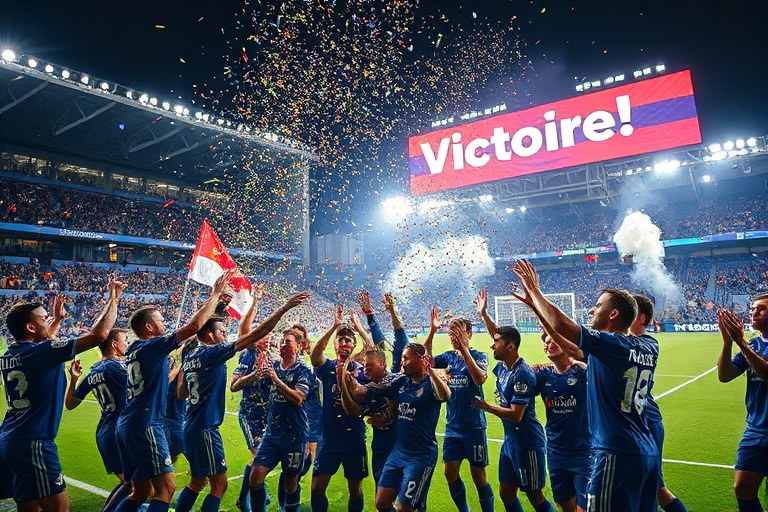
- 2018: FIFA World Cup winner with France
- 2019: Joined FC Barcelona for €120 million
- 2021: Returned to Atlético Madrid
Playing Style and Tactical Intelligence: Beyond the Striker’s Role
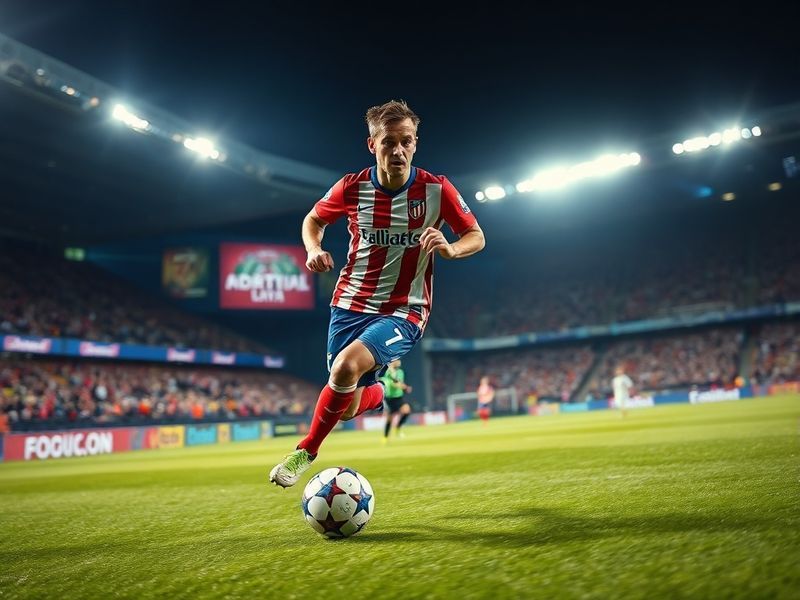
What sets Griezmann apart is his refusal to be pigeonholed. Early in his career, he was often labeled a traditional winger. Over time, however, he has evolved into a complete attacking midfielder, second striker, and even a false nine. His ability to read the game—anticipating passes, drifting into half-spaces, and creating overloads—mirrors the tactical awareness of midfield maestros more than traditional forwards.
Griezmann’s dribbling, though not explosive, is efficient and purposeful. He uses close control and subtle changes of pace to evade pressure, often drawing fouls in dangerous areas. His left foot is particularly dangerous, and his knack for scoring from outside the box has made him a constant goal threat. Defenders struggle to mark him because he rarely stays in one position for long.
This positional fluidity has made him a favorite in systems that prioritize positional interchange, such as those used by Didier Deschamps with France and Simeone with Atlético. In both cases, Griezmann’s role is to confuse the opposition: at times acting as a creator, at others as a finisher, and often as a decoy to free up teammates.
Cultural Impact: A Global Icon in Football’s Multicultural Era
Griezmann’s influence extends beyond the pitch. As one of the most recognizable French athletes, he embodies the multicultural identity of modern France. With a Portuguese father and Spanish mother, he grew up in a bilingual household in Burgundy, far from the football academies of Paris or Marseille. This background has shaped a player who is both cosmopolitan and grounded—able to adapt to different cultures and footballing philosophies.
His appeal transcends borders. In Spain, he is revered at Atlético Madrid, where fans affectionately call him “Grizi.” In France, he is a national hero, celebrated for his role in the 2018 World Cup triumph. Even in Argentina, where he played briefly on loan during the COVID-19 pandemic, he earned respect for his professionalism and skill.
Griezmann has also used his platform to address social issues. He has spoken openly about racism in football and supported campaigns promoting diversity and inclusion. His 2020 donation of €1 million to help fight the COVID-19 crisis further cemented his image as a socially conscious athlete—a trait increasingly valued in modern sports.
Legacy and Future: What’s Next for the French Maestro?
At 33 years old, Griezmann remains a key figure for both Atlético Madrid and the French national team. While his pace has naturally declined, his footballing IQ has only sharpened. He continues to be a vital playmaker, especially in tournaments where tactical discipline outweighs physicality.
His future beyond club football is still unwritten. With France preparing for Euro 2024 and the 2026 World Cup on the horizon, Griezmann could extend his international career if fitness and form allow. At club level, a return to France—perhaps to Lyon or PSG—has been rumored, though he remains deeply connected to Atlético.
Regardless of where his career leads, Griezmann’s legacy is already secure. He has redefined the role of the modern forward, proving that success in football is not solely measured in goals or trophies, but in vision, adaptability, and the ability to elevate those around him.
In an era where footballers are often reduced to highlight-reel moments, Griezmann stands out for his consistency, intelligence, and humanity. He is a player who understands the game’s soul—and that is what makes him truly special.