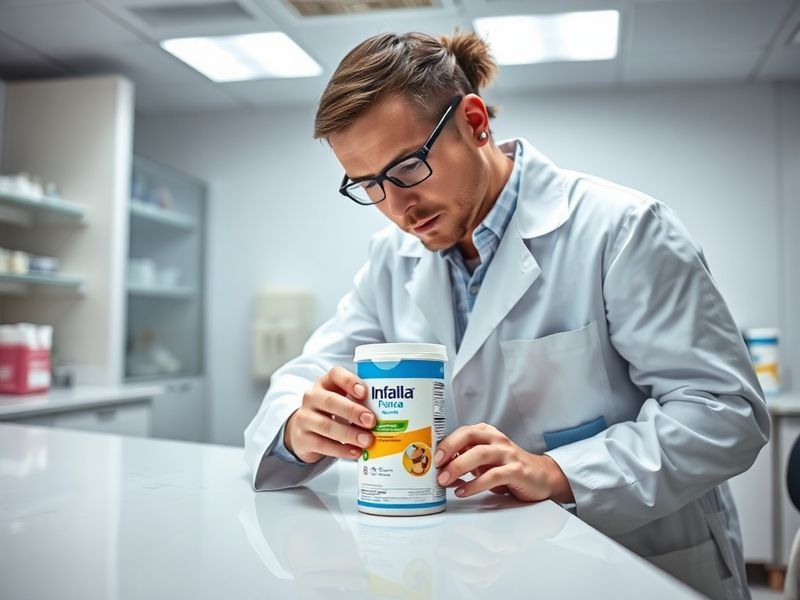
The U.S. Food and Drug Administration (FDA) released its latest findings on infant formula safety, revealing a 98% compliance rate among major manufacturers. This data, covering inspections from 2022 to 2024, arrives after years of scrutiny following the 2022 nationwide shortage and prior contamination incidents. The results offer reassurance to parents worldwide, though experts caution that gaps remain in smaller or international brands.
The FDA’s report highlights improvements in manufacturing standards, particularly in powdered formula production where bacterial contamination risks are highest. However, the agency also emphasized the need for continued vigilance in supply chain transparency. This global health issue extends beyond U.S. borders, with similar challenges faced by regulators in Europe, Asia, and Latin America.
Global Regulatory Responses to Infant Formula Safety
While the FDA’s findings provide a snapshot of U.S. progress, other nations have adopted varying approaches to infant formula regulation. In the European Union, for example, the European Food Safety Authority (EFSA) enforces stricter pre-market testing for all infant formulas, including mandatory pesticide residue checks. This contrasts with the FDA’s reliance on post-market surveillance and manufacturer self-reporting.
Asia’s largest markets—China and Japan—have also tightened regulations in recent years. After the 2008 melamine scandal in China, which sickened over 300,000 infants, the country now requires third-party lab testing for all imported formulas. Japan, meanwhile, mandates that formulas meet both domestic and international standards, such as those set by the Codex Alimentarius Commission.
These divergent approaches reflect broader cultural attitudes toward food safety. In societies where infant formula is a primary nutrition source, such as urban centers in Southeast Asia, parents often prioritize imported brands perceived as safer. Conversely, in regions where breastfeeding remains the cultural norm, formula safety concerns are secondary to accessibility.
Key Takeaways from the FDA’s 2024 Report
The FDA’s latest assessment identifies three critical areas of progress:
- Manufacturing Hygiene: A 40% reduction in bacterial contamination cases compared to 2021, attributed to stricter sanitation protocols and automated quality control systems.
- Ingredient Sourcing: 92% of major manufacturers now trace ingredients to their origin, up from 78% in 2022. This follows FDA crackdowns on unauthorized additives like maltodextrin in some budget brands.
- Recall Efficiency: The average time to initiate a recall dropped from 14 days in 2021 to 3 days in 2024, thanks to real-time production line monitoring.
However, the report also flags persistent challenges. Smaller domestic producers and international brands distributed in the U.S. lag in compliance, with only 65% meeting FDA standards. The agency attributed this to limited resources for quality control and less rigorous supply chain oversight.
Cultural and Economic Factors in Formula Safety
The global infant formula market, valued at over $70 billion in 2024, is deeply influenced by cultural preferences and economic disparities. In Western nations, formula feeding is widely accepted, with about 75% of infants receiving formula at some point in their first year. In contrast, breastfeeding rates exceed 80% in Scandinavian countries, where formula is often used as a supplement rather than a primary food source.
Economic factors further complicate safety standards. In low- and middle-income countries, families may opt for cheaper, unregulated formulas due to cost constraints. This has led to a rise in counterfeit products, particularly in Africa and parts of Latin America, where local distributors sometimes dilute formulas to stretch supplies. The World Health Organization (WHO) estimates that 1 in 10 infant formulas sold in these regions fail basic nutritional standards.
Cultural marketing also plays a role. In China, for instance, formula brands often emphasize imported origins, with European or Australian products commanding premium prices. This consumer behavior has driven regulatory bodies in these countries to adopt more transparent labeling practices, ensuring parents can verify a formula’s safety credentials.
Lessons from Past Failures and Future Priorities
The FDA’s improved results stand in stark contrast to past failures, most notably the 2022 Abbott Laboratories crisis. The shutdown of Abbott’s Sturgis, Michigan plant—linked to four infant deaths—exposed vulnerabilities in the U.S. supply chain. The subsequent shortage forced parents to turn to foreign brands, some of which lacked FDA approval. This episode underscored the need for diversified production and emergency stockpiles.
Looking ahead, the FDA has outlined three priorities to further enhance safety:
- Enhanced Digital Tracking: Implementing blockchain technology to trace formula ingredients from farm to shelf, reducing the risk of contamination or fraud.
- International Collaboration: Partnering with the WHO and Codex Alimentarius to harmonize global safety standards, particularly for brands exported to multiple countries.
- Public Awareness Campaigns: Educating parents on how to identify compliant formulas and report suspicious products, especially in regions with high rates of counterfeit goods.
These steps align with broader trends in food safety regulation, where technology and global cooperation are becoming essential. The FDA’s progress offers a model for other nations, though challenges remain in balancing strict oversight with affordability and accessibility.
The Role of Parents and Advocacy Groups
Beyond regulatory efforts, parents and advocacy groups play a crucial role in driving change. Organizations like Health Watch on Dave’s Locker provide parents with tools to verify formula safety and report violations. These grassroots efforts complement official oversight, creating a multi-layered safety net.
In some countries, parent-led social media groups have become informal watchdogs, sharing alerts about recalled products or questionable brands. This decentralized approach highlights the power of community in holding manufacturers and regulators accountable.
Conclusion: A Step Forward with Room to Grow
The FDA’s 2024 infant formula safety report marks significant progress, but it is not a conclusion. The global nature of the market means that safety risks in one region can quickly become a worldwide concern. Continued collaboration between governments, manufacturers, and parents is essential to ensure that every infant receives safe, nutritious formula.
For now, the FDA’s findings offer cautious optimism. Parents in the U.S. and abroad can take solace in the improved compliance rates, though they must remain vigilant. The lessons of past failures serve as a reminder that safety is not a destination but an ongoing process—one that requires constant adaptation and vigilance.