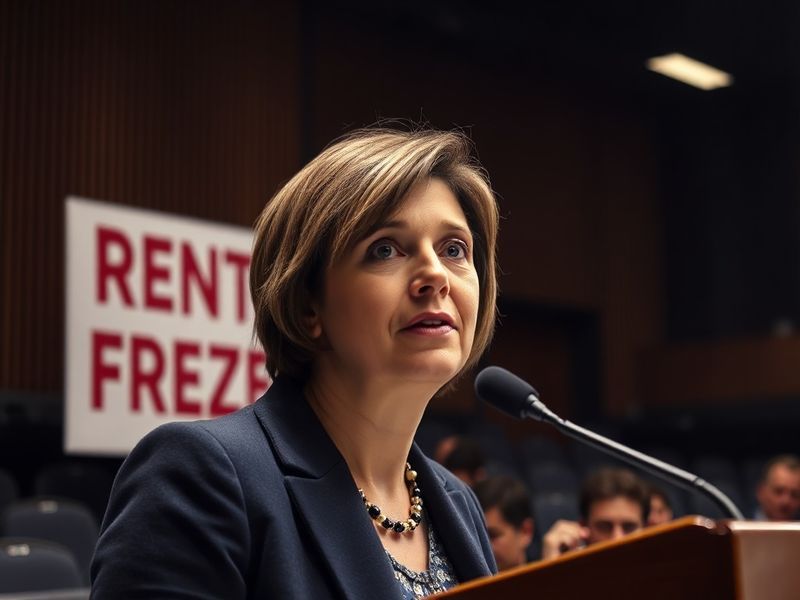
Rachel Reeves Rent Freeze: UK Housing Policy Explained
“`html
Rachel Reeves Rent Freeze: Economic Strategy or Political Gamble?
Rachel Reeves, Britain’s first female Chancellor of the Exchequer, has proposed a controversial plan to freeze residential rents across the UK. The policy aims to address the growing housing crisis, but critics argue it could distort markets and discourage investment. As global housing costs continue to rise, Reeves’ proposal reflects a broader debate about government intervention in housing markets.
Housing affordability has become a defining issue of the 21st century. In cities like London, New York, and Berlin, renters face skyrocketing costs that outpace wage growth. Reeves’ rent freeze is not an isolated move; similar policies have been tested in Berlin and New York with mixed results. The question remains: Can a government effectively control rents without unintended consequences?
The Economic Rationale Behind the Rent Freeze
Reeves’ proposal is rooted in economic theory that suggests rent controls can stabilize housing markets by preventing price gouging. Proponents argue that a freeze would provide immediate relief to tenants struggling with high rents, particularly in urban areas where housing shortages are most acute. The policy is also seen as a way to reduce inflationary pressures, as housing costs are a significant component of the Consumer Price Index (CPI).
However, economists remain divided on the effectiveness of rent controls. A 2019 study by the International Monetary Fund (IMF) found that while short-term rent controls can lower rental prices, they often lead to long-term reductions in housing supply. Landlords may exit the rental market, converting properties into short-term vacation rentals or selling them outright. This reduces the availability of rental units, driving prices even higher in the long run.
The UK’s housing crisis is particularly acute. According to the Office for National Statistics, average private rents in England rose by 9.2% in the year leading up to February 2024. In London, the increase was even steeper at 10.5%. Reeves’ plan seeks to curb this trend, but the success of such a policy depends on its implementation and enforcement.
Global Precedents: Lessons from Berlin and New York
Reeves’ rent freeze is not the first attempt to regulate rental prices at a national level. Berlin implemented a five-year rent cap in 2020, freezing rents at 2019 levels. The policy was initially popular but faced legal challenges and was eventually struck down by Germany’s constitutional court in 2021. The court ruled that the law overstepped federal authority and interfered with property rights.
New York has had rent control laws in place for decades, with mixed results. While the policy has helped some tenants afford housing, it has also contributed to a decline in the quality and availability of rental properties. Landlords in rent-stabilized buildings often struggle to maintain their properties due to limited revenue, leading to deteriorating living conditions.
- Berlin: Rent cap introduced in 2020, struck down in 2021 due to legal challenges. Resulted in a temporary stabilization of rents but also discouraged new housing investments.
- New York: Rent control laws have been in place since the 1940s. While they provide stability for some tenants, they have also led to housing shortages and neglected properties.
- Sweden: Rent controls are tied to property values, but critics argue they discourage new construction and maintain high rents in desirable areas.
These global examples highlight the challenges of rent control policies. Reeves’ proposal must navigate similar legal and economic hurdles if it is to succeed. The Chancellor has indicated that the freeze would be temporary, but the timeline and conditions for lifting it remain unclear.
Political Motivations and Public Reception
Reeves’ rent freeze is as much a political move as it is an economic one. With the Labour Party seeking to distance itself from its traditional socialist roots, the policy represents a cautious approach to addressing public concerns about housing affordability. Polls suggest that a majority of Britons support some form of rent regulation, particularly among younger voters who are most affected by high housing costs.
However, the proposal has faced criticism from both sides of the political spectrum. Conservative MPs argue that rent controls will discourage landlords from investing in their properties, leading to a decline in housing quality. Meanwhile, some left-wing activists argue that the freeze does not go far enough, calling for more radical measures such as mass public housing construction.
The policy also reflects broader shifts in global housing policy. In countries like Canada and Australia, governments are experimenting with tax incentives and subsidies to encourage affordable housing development. Reeves’ plan, while more interventionist, is part of a growing trend toward government-led solutions to housing crises.
The Way Forward: Balancing Short-Term Relief with Long-Term Solutions
Reeves’ rent freeze is a bold step, but its success will depend on several factors. First, the government must ensure that the policy is implemented fairly and transparently. Landlords and tenants alike need clarity on how the freeze will work, particularly in cases where rents are already below market rates.
Second, the freeze must be part of a broader housing strategy. Without investment in new housing construction, any short-term relief from rent controls could be undermined by long-term supply shortages. The UK government has pledged to build 1.5 million new homes over the next five years, but critics argue this target is insufficient given the scale of the crisis.
Finally, Reeves must address the legal challenges that similar policies have faced in other countries. The UK’s housing market is already under strain from high interest rates and inflation. A poorly designed rent freeze could exacerbate these issues, leading to unintended consequences for both landlords and tenants.
For now, the debate over Reeves’ rent freeze is far from settled. As other countries watch closely, the UK’s experiment with rent controls could set a precedent for housing policy worldwide. Whether it succeeds or fails, the policy underscores the urgent need for solutions to the global housing crisis.
For more insights on housing policy and economic trends, explore our Finance and Politics sections. The conversation about housing affordability is far from over, and the outcomes of this policy will shape the future of urban living in the UK and beyond.