What Is the Flower Moon? Meaning, Viewing Tips & Cultural Roots
“`html
The Flower Moon: A Celestial Event with Deep Roots
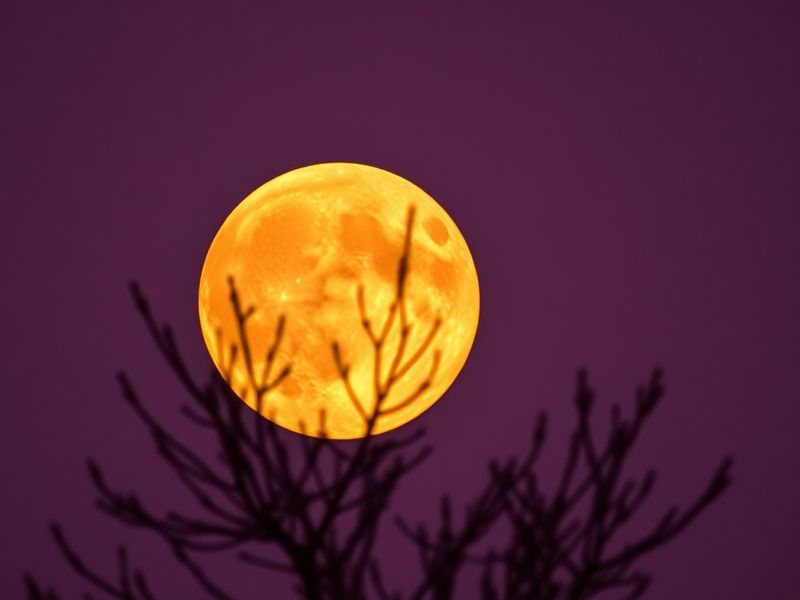
The full moon of May, known as the Flower Moon, arrives each year to mark the peak of spring’s bloom across the Northern Hemisphere. This celestial event carries both astronomical significance and cultural weight, woven into traditions that stretch back centuries. Unlike more widely publicized lunar phenomena, the Flower Moon offers a quieter but equally profound connection to nature’s rhythms and human history.
Named by Indigenous peoples of North America, the Flower Moon reflects the season when blossoms carpet forests and meadows. Tribes such as the Ojibwe, Algonquin, and Dakota drew on seasonal observations to name each full moon, creating a lunar calendar that aligned with planting, hunting, and gathering cycles. For these communities, the moon was not just a marker of time—it was a guide for survival and ceremony.
The Origin and Meaning Behind the Name
The term “Flower Moon” first appeared in colonial-era almanacs that borrowed from Native American lunar naming traditions. Each full moon carried a descriptive title reflecting the environment or activities of the time. For May, the abundance of blooming wildflowers—such as violets, trilliums, and bluebells—inspired the name. Other tribes used different but equally evocative titles, including the Corn Planting Moon (Potawatomi) and the Milk Moon (Ojibwe), referencing both agriculture and lactation cycles in livestock.
European settlers later adopted these names, integrating them into folk traditions. The Flower Moon also aligns with Beltane, a Gaelic festival celebrating fertility and the height of spring. Bonfires, floral crowns, and dancing around maypoles became part of the seasonal observance, linking the moon’s appearance to ancient rites of renewal. Today, the name endures not only in astronomy but in poetry, art, and seasonal festivals across North America and Europe.
Astronomical Highlights of the Flower Moon
The Flower Moon is often the last full moon before the summer solstice, making it one of the brightest and most accessible lunar events of the year. While not classified as a supermoon in most years, it can appear unusually large when it rises low on the horizon, an optical effect known as the “moon illusion.” During this phase, the moon rises in the east around sunset and remains visible throughout the night, providing ample opportunity for observation.
In 2025, the Flower Moon reaches peak illumination on May 12 at 12:56 PM EDT, though it will appear full for about three days centered on that date. For skywatchers, this timing offers flexibility for viewing. Unlike meteor showers or eclipses, no special equipment is required—only a clear sky and a bit of patience. Urban areas with light pollution may dim the view, but even faint glows can reveal the moon’s craters and maria when viewed through binoculars or a small telescope.
Occasionally, the Flower Moon coincides with a penumbral lunar eclipse, as it did in 2023. During such events, the moon passes through Earth’s outer shadow, causing a subtle dimming that is often difficult to detect with the naked eye. While not as dramatic as a total eclipse, these occurrences add another layer of rarity to the Flower Moon’s observation cycle.
Where to See the Flower Moon in 2025
Visibility depends largely on local weather and geography. In the United States, the best views are typically found in rural areas away from city lights. National parks such as Joshua Tree, Great Basin, and Acadia offer ideal vantage points, where low horizons and minimal artificial light enhance the experience. Coastal regions also provide dramatic backdrops, especially when the moon rises over the ocean, creating a mirror-like reflection on calm waters.
Internationally, the Flower Moon is visible across Europe, Asia, Africa, and Australia, though its timing shifts slightly due to time zones. In the Southern Hemisphere, where May marks the onset of autumn, the moon’s name varies—some cultures refer to it as the Beaver Moon or Frost Moon, reflecting seasonal transitions in those regions.
Cultural Traditions and Modern Celebrations
Across North America, communities continue to honor the Flower Moon through festivals, art, and storytelling. In Canada, the Métis people celebrate with jigging and fiddle music during the spring powwows, often timed to the full moon. In the United States, botanical gardens hold “Moonlight Garden” events, pairing floral displays with guided moonlit tours and astronomy talks.
Social media has amplified the Flower Moon’s visibility in recent years. Platforms like Instagram and TikTok feature time-lapse videos of moonrises over landmarks, from the Grand Canyon to urban skylines. Hashtags such as #FlowerMoon and #MayFullMoon trend annually, drawing millions of views and user-generated content that blends science with creativity.
Artists and writers also draw inspiration from the Flower Moon. Poets like Mary Oliver have referenced it in works celebrating the ephemeral beauty of spring, while painters like Georgia O’Keeffe captured the luminous glow of moonlight on desert landscapes. These cultural expressions ensure that the Flower Moon remains more than an astronomical event—it is a symbol of connection to nature and the passage of time.
The Science Behind the Moon’s Influence
While the Flower Moon itself does not have a measurable physical impact on Earth, folklore and modern pseudoscience often link lunar phases to natural phenomena. Tides, for instance, are significantly influenced by the moon’s gravitational pull. During a full moon, high tides are slightly higher due to the alignment of the Earth, moon, and sun—a phenomenon known as spring tides (though they occur monthly, not just in spring).
Some studies suggest that lunar cycles may subtly affect animal behavior. Nocturnal creatures like moths and owls may alter their activity patterns during full moons, possibly due to increased visibility or changes in predator-prey dynamics. However, research on human behavior remains inconclusive. While emergency rooms and birth centers have reported slight increases in activity during full moons, statistical analyses often debunk these claims as coincidental or influenced by reporting bias.
Environmentally, the Flower Moon serves as a reminder of seasonal transitions. For gardeners, it signals the ideal time to transplant seedlings, as soil temperatures rise and frost risks diminish. Farmers use lunar planting calendars, an ancient practice that some modern agriculturalists still follow, believing that planting during certain moon phases improves crop yield and vitality.
How to Experience the Flower Moon Fully
To make the most of the Flower Moon, consider these tips:
- Time your viewing: Check local moonrise and moonset times using apps like Time and Date or The Photographer’s Ephemeris. Arriving 30 minutes early allows you to watch the moon transition from pale yellow to brilliant white as it climbs the sky.
- Choose your location wisely: Elevated spots like hills, rooftops, or open fields reduce obstructions. Avoid areas with bright streetlights or billboards that can wash out the moon’s details.
- Use minimal equipment: A DSLR camera with a tripod can capture stunning long-exposure shots of the moon against a starry sky. Smartphone users can achieve good results with night mode or manual settings.
- Pair it with a ritual: Whether journaling, sketching, or simply sitting in silence, the Flower Moon offers a natural pause in busy lives. Some people use the occasion to set intentions for growth, aligning with the season’s themes of renewal.
For those unable to view it outdoors, live streams from observatories such as Griffith Observatory or Lowell Observatory provide high-definition feeds of the Flower Moon rising over iconic landscapes. These broadcasts often include commentary from astronomers, enriching the experience with scientific context.
A Lasting Legacy of Light and Life
The Flower Moon endures because it bridges the celestial and the terrestrial. It is a reminder that even in an age of digital clocks and artificial lighting, the natural world still sets the pace. Its name carries the memory of Indigenous knowledge, European folklore, and modern science, all converging under a single luminous disk.
As climate change alters seasonal patterns, the timing and visibility of the Flower Moon may shift in coming decades. Warmer springs could delay frost-dependent blooms, while urban expansion may obscure rural viewing spots. Yet the moon itself remains constant—a silent witness to human history and ecological change.
Whether observed alone on a quiet hillside or shared with a crowd at a festival, the Flower Moon invites reflection. It asks us to pause and consider the cycles that govern our lives: the slow unfurling of petals, the rise and fall of tides, and the quiet persistence of light in the dark.
For those who take the time to look, the Flower Moon offers more than a spectacle—it offers connection. In a world often divided by screens and schedules, it reminds us that we are still part of something vast and beautiful.
Learn more about seasonal celestial events and their cultural significance in our Culture section, or explore astronomical phenomena in our Science category.