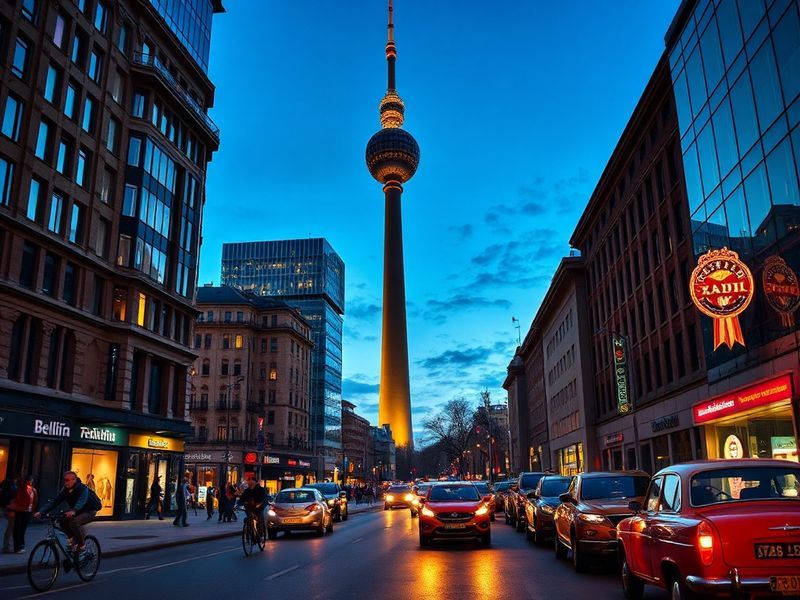
Berlin: Europe’s Cultural Crossroads and Creative Capital
“`html
Berlin: Europe’s Cultural Crossroads and Creative Capital
Berlin stands as a testament to reinvention, where layers of history collide with contemporary creativity. Unlike many European capitals that preserve their past through museums and grand architecture, Berlin wears its history on its sleeve—literally etched into the bullet holes of the Reichstag, the graffiti-covered remnants of the Berlin Wall, and the raw, unfinished edges of its post-war reconstruction.
The city’s identity has been shaped by division and reunification, but today it thrives as a global hub for artists, musicians, and entrepreneurs. Berlin’s appeal lies not in its ability to conform to expectations, but in its refusal to do so. It is a city that embraces contradictions: traditional and avant-garde, somber and celebratory, affordable and rapidly gentrifying. For travelers, expats, and creatives alike, Berlin offers something rare—a blank canvas where the rules of urban life are constantly rewritten.
The City’s Historical Layers: From Prussian Power to Cold War Divide
Berlin’s story begins in the 13th century as a modest trading post, but it wasn’t until the 18th century that it emerged as the political and cultural heart of Prussia. Under Frederick the Great, the city became a center of Enlightenment thought, attracting philosophers like Voltaire and composers like Bach. The 19th century saw Berlin transform into an industrial powerhouse, its population exploding from 200,000 in 1800 to over two million by 1900.
The 20th century, however, tested the city’s resilience. The fallout from World War I and the rise of the Weimar Republic turned Berlin into a laboratory of modernity—home to groundbreaking art movements like Dadaism, experimental theater, and a burgeoning film industry. Yet this cultural explosion was cut short by the rise of the Third Reich. The city’s Jewish population, once a vital part of its fabric, was decimated during the Holocaust, and its infrastructure was reduced to rubble by Allied bombing campaigns.
After the war, Berlin became the epicenter of the Cold War. The construction of the Berlin Wall in 1961 divided the city for nearly three decades, symbolizing the ideological battle between East and West. The wall’s fall in 1989 not only reunited a city but also unleashed a wave of creativity. Abandoned buildings in the east were repurposed into squats and art studios, giving birth to the underground scene that still defines Berlin today.
Berlin’s Creative Economy: A Magnet for Artists and Entrepreneurs
Berlin’s transformation into a creative capital is no accident. It’s the result of deliberate policies, affordability (at least historically), and an unshakable reputation for fostering innovation. The city’s creative industries—including music, fashion, digital media, and design—contribute billions to its economy annually. Unlike London or Paris, where high costs and corporate structures can stifle experimentation, Berlin’s creative scene thrives on accessibility and collaboration.
The city’s music scene is perhaps its most famous export. From the industrial beats of Einstürzende Neubauten to the techno revolution of Berghain and Tresor, Berlin has been a global leader in electronic music for decades. Clubs like Sisyphos and KitKat operate as 24-hour playgrounds where music, art, and hedonism blend seamlessly. These venues are more than just nightlife spots; they’re cultural institutions that challenge norms around gender, sexuality, and social interaction.
Berlin’s fashion industry is equally dynamic. The city’s annual Berlin Fashion Week showcases a mix of established designers and emerging talent, with a focus on sustainability and unconventional aesthetics. Brands like Voo Store and 69 Worldwide have gained international recognition for their innovative approaches, blending streetwear with high fashion. Meanwhile, Berlin’s art galleries—from the historic Hamburger Bahnhof to the cutting-edge Haus am Waldsee—provide platforms for both local and international artists.
For entrepreneurs, Berlin’s startup ecosystem is a major draw. The city ranks among Europe’s top destinations for tech startups, thanks in part to initiatives like the Berlin Startup Scholarship, which supports founders from around the world. Companies like SoundCloud, Zalando, and Delivery Hero began in Berlin, attracted by its collaborative culture and access to venture capital. The city’s universities, including the Berlin University of the Arts and TU Berlin, also play a key role in nurturing talent and fostering innovation.
The Challenges of Growth: Gentrification and Social Tensions
Berlin’s rapid ascent has not been without controversy. The city’s affordability—once its greatest asset—has been eroded by rising rents, corporate investment, and an influx of wealthy expats. Neighborhoods like Kreuzberg and Friedrichshain, long bastions of alternative culture, are now experiencing steep increases in property prices. This gentrification has sparked protests and debates about the future of Berlin’s creative identity.
Critics argue that the city is losing its soul as it becomes more mainstream. Longtime residents and artists are being priced out, while international investors snap up real estate. The city government has attempted to curb speculation with measures like rent controls and the expropriation of corporate landlords, but the battle over Berlin’s future remains contentious. Can the city preserve its rebellious spirit while accommodating growth? The answer may determine whether Berlin remains a model for creative cities or becomes just another global metropolis.
Berlin’s Global Influence: Beyond Borders and Expectations
Berlin’s impact extends far beyond its city limits. It has become a symbol of what a city can achieve when it embraces its contradictions and prioritizes creativity over conformity. For many, Berlin represents a kind of urban freedom—a place where experimentation is not just tolerated but encouraged. This influence is evident in cities from Lisbon to Buenos Aires, where Berlin’s model of cultural and economic reinvention is being studied and replicated.
The city’s educational institutions also play a role in its global reach. Programs like the Berlin International Film Festival’s talent development initiatives and the Berlin School of Creative Leadership attract students and professionals from around the world. These connections foster cross-cultural exchange and ensure that Berlin’s ideas continue to resonate internationally.
Berlin’s culinary scene is another area where its global influence is evident. The city’s food culture is as diverse as its population, with everything from traditional German Currywurst stands to high-end vegan restaurants. Berlin’s street food markets, like Markthalle Neun, showcase international flavors while highlighting local producers. This fusion of global and local cuisines reflects Berlin’s broader identity as a city without borders.
A City in Constant Motion
What makes Berlin unique is its refusal to stand still. The city is in a perpetual state of becoming, shaped by the people who live there and the ideas they bring. It is a place where history is not just remembered but actively engaged with, where the past is not buried but repurposed. Whether it’s the remnants of the Berlin Wall transformed into a canvas for street artists or the abandoned airports of Tempelhof and Tegel reimagined as parks and cultural spaces, Berlin demonstrates that the future is not something to be predicted but created.
For those who call Berlin home, the city’s impermanence is part of its charm. It is a place where nothing is sacred—except perhaps the right to reinvent oneself. This mindset has made Berlin a beacon for those seeking freedom, whether artistic, personal, or political. As the city continues to evolve, one thing is certain: Berlin will always be a work in progress.
For travelers and expats, Berlin offers an unparalleled opportunity to witness the collision of history and innovation. It is a city that challenges visitors to look beyond the surface, to engage with its complexities, and to leave with a deeper understanding of what it means to build a future from the fragments of the past.