Barely There Sandals: Minimalist Footwear’s Global Rise
“`html
Barely There Sandals: The Global Rise of Minimalist Footwear
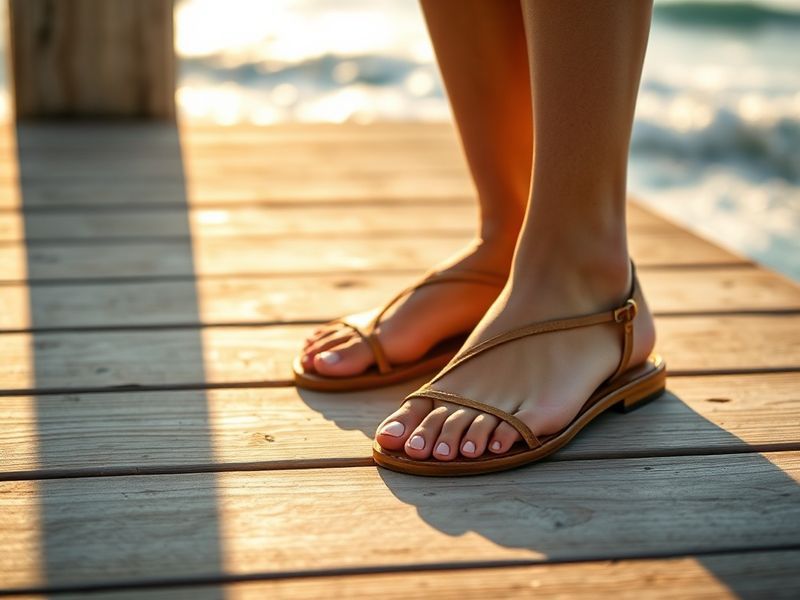
Across sun-scorched beaches, dusty cobblestone streets, and urban jungle sidewalks, a quiet revolution has taken shape in footwear. The barely there sandal—characterized by slender straps, minimal soles, and an almost invisible presence—has evolved from a niche summer accessory to a global fashion staple. This trend reflects more than just seasonal whims; it mirrors broader cultural shifts toward simplicity, sustainability, and the rejection of excess.
What began as functional footwear for ancient civilizations has transformed into a symbol of modern minimalism. From the leather thongs of Roman soldiers to the handwoven jute of Indian villagers, the concept of walking with as little between foot and earth as possible is as old as human mobility itself. Yet today, barely there sandals grace the feet of fashion influencers in Tokyo, beachgoers in Rio, and urban commuters in Berlin—often at price points that rival luxury sneakers.
The Anatomy of a Trend: Design and Material Evolution
The modern barely there sandal is a study in contradiction. It is at once delicate and durable, casual and curated. Designers have refined the form to its essence: a sole that barely cushions, straps that barely hold, and an overall silhouette that barely covers. Materials have followed suit. Traditional leather has been joined by recycled plastics, plant-based foams, and even algae-based compounds, each chosen for its lightness and low environmental footprint.
A closer look at the construction reveals a fascinating blend of tradition and innovation. Some brands source hand-cut leather from tanneries in Morocco, while others use 3D-printed midsoles produced in Italy. The straps, once simple cords, now feature ergonomic contours and adjustable closures. Even the soles, once uniformly flat, now incorporate subtle arch support or textured treads for urban grip.
This evolution has been driven by both consumer demand and technological progress. As awareness of foot health grows—fueled in part by the rise of barefoot running movements—designers have re-examined what it means to support the foot without restricting it. The barely there sandal, in many ways, represents the intersection of these ideals: a return to natural movement with the convenience of modern materials.
A Global Phenomenon: Where Are They Worn?
The appeal of barely there sandals is not confined by geography. In coastal cities, they are everyday wear—paired with linen pants in Los Angeles, silk pajamas in Shanghai, or board shorts in Sydney. In arid regions, their breathable design makes them ideal for desert climates, while in temperate zones, they serve as the perfect transition from winter boots to summer sandals.
In Japan, brands like Tsubo and Beams have elevated the minimalist sandal to an art form, often collaborating with local craftsmen to produce limited-edition models. In Brazil, the Havaianas Top line has become a status symbol, worn by both beach vendors and fashion editors. Meanwhile, in Scandinavia, designers have embraced the aesthetic with sleek, monochrome designs that align with the region’s penchant for understated elegance.
But the trend is not limited to affluent markets. In parts of Africa and Southeast Asia, local artisans have long produced similar footwear using traditional techniques. Organizations like SoleRebels in Ethiopia and Oliberte in Liberia have turned these designs into sustainable livelihoods, proving that the barely there aesthetic can be both culturally rooted and economically empowering.
- Western Markets: Often associated with wellness, travel, and festival culture. Brands like Bedrock Sandals and Xero Shoes cater to hikers and yogis.
- East Asia: Minimalist design and high-quality craftsmanship drive demand. Collaborations with luxury labels are common.
- Latin America: Bright colors and playful designs dominate, reflecting the region’s vibrant street style.
- Scandinavia: Neutral tones and streamlined silhouettes align with Nordic design principles of functionality and simplicity.
Sustainability and Ethics: The Hidden Cost of Barely There
Despite their pared-down appearance, barely there sandals carry a complex ethical and environmental footprint. The materials used—whether recycled rubber, organic cotton, or chrome-free leather—are often marketed as sustainable. Yet the global supply chain for these products can be murky, with labor practices and resource extraction posing challenges.
Some brands have responded with transparency. Allbirds, known for its wool sneakers, launched a line of minimalist sandals made from eucalyptus fiber and sugarcane-based soles. Sanuk, another major player, uses recycled yoga mats for its signature footbeds. These innovations are steps toward reducing the industry’s environmental impact, but they are not without critics who argue that any mass-produced footwear—regardless of materials—contradicts the minimalist ethos.
The rise of resale platforms and rental services has also influenced the lifecycle of these sandals. In cities like New York and London, platforms like The RealReal and Hurr have made it easier to access barely there sandals from high-end brands without contributing to overproduction. This circular economy approach aligns with the values of many consumers who see these shoes not just as fashion, but as a statement against waste.
The Cultural Meaning Behind the Straps
More than a fashion item, the barely there sandal has become a cultural artifact. It embodies the tension between freedom and constraint, nature and technology, tradition and innovation. In some contexts, wearing them signals a rejection of corporate footwear giants. In others, they are a status symbol, with limited-edition drops selling out within minutes.
The sandal’s minimalism also invites introspection. When the boundary between foot and ground is so thin, the act of walking becomes more deliberate. Some wearers report a heightened connection to their surroundings—feeling the texture of pavement, the warmth of sand, the coolness of grass. This sensory engagement has led to a resurgence of interest in barefoot walking and its potential benefits for posture and mindfulness.
Yet the trend is not without its contradictions. The same sandals that promise liberation from excess are often priced as luxuries. A pair of handmade leather sandals from a boutique in Portugal might cost as much as a high-end sneaker, while mass-produced versions flood fast-fashion sites at a fraction of the price. This disparity raises questions about accessibility and the commercialization of simplicity.
“The barely there sandal is not just a shoe—it’s a philosophy. It asks us to reconsider what we truly need to move through the world.” — Fashion theorist Dr. Elena Vasquez, Journal of Sustainable Design
Looking Ahead: What’s Next for Barely There Sandals?
The future of barely there sandals will likely be shaped by three key forces: technology, sustainability, and cultural identity. As 3D printing and biofabrication advance, we may see sandals tailored to an individual’s foot shape, printed on demand in local workshops. Biodegradable materials—such as mycelium-based foams or algae-derived polymers—could replace traditional synthetics, further reducing environmental harm.
Culturally, the sandal’s role as a symbol of freedom and rebellion may evolve. As climate change accelerates, the barely there aesthetic could become a visual shorthand for eco-consciousness. Already, brands are experimenting with upcycled materials and zero-waste production methods, signaling a shift toward more responsible design.
Yet the sandal’s enduring appeal may lie in its simplicity. In a world of constant noise, the barely there sandal offers a quiet alternative—one step at a time.
As designers continue to refine the form, and consumers increasingly demand transparency and sustainability, the barely there sandal stands poised to remain more than just a trend. It may well become a lasting testament to the human desire for connection—to each other, to the earth, and to the journey itself.