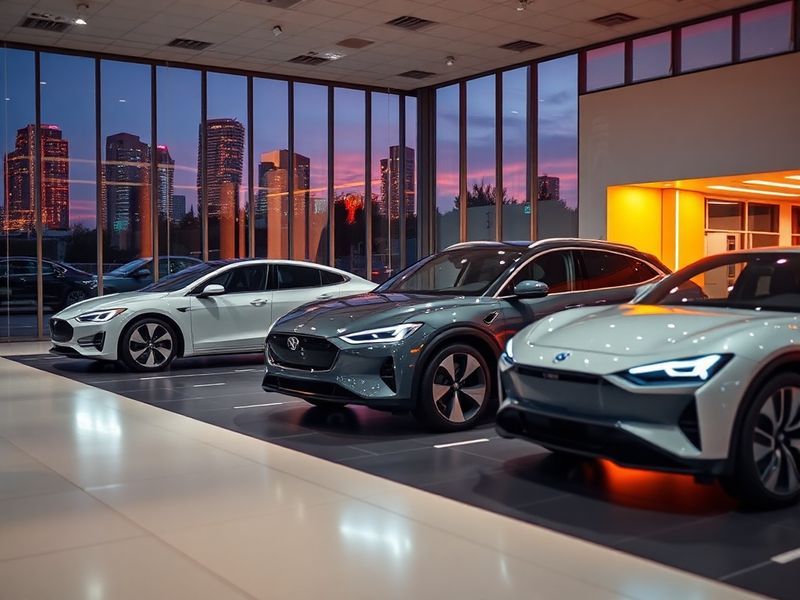
EV Dealerships: How the Auto Retail Model Is Evolving
“`html
EV Dealerships: The Evolving Showroom of the Electric Age
The automotive retail landscape is undergoing a transformation as electric vehicles (EVs) redefine the relationship between drivers and dealerships. Traditional dealerships, built around fossil-fuel models, now face pressure to adapt or risk irrelevance. This shift isn’t just about selling cars—it’s about reimagining customer experience, infrastructure, and even business models in a rapidly electrifying market.
As legacy automakers and startups alike accelerate EV production, dealerships are caught between legacy practices and the demands of a new generation of buyers. These consumers prioritize sustainability, digital integration, and transparency—values that often clash with the commission-based, inventory-heavy model of conventional dealerships. The result is a high-stakes evolution in how vehicles are marketed, serviced, and delivered to consumers.
The Hybrid Challenge: Why Some Dealers Hesitate
For many dealerships, the transition to EVs presents a paradox. On one hand, electric vehicles represent the future—one that regulators, investors, and customers increasingly demand. On the other, legacy dealerships have invested heavily in internal combustion engine (ICE) infrastructure: service bays, parts departments, and sales teams trained for gas-powered cars. Switching to EVs isn’t just swapping one product line for another—it requires retooling facilities, retraining staff, and reimagining profit streams.
This hesitation is not unfounded. According to a 2023 report by the National Automobile Dealers Association (NADA), only about 10% of U.S. dealerships had invested in EV charging infrastructure. Many cite concerns over low margins on EVs, limited availability of popular models, and uncertainty over federal and state incentives. Some dealers have even pushed back against state laws requiring EV sales quotas, arguing that the infrastructure and consumer demand aren’t ready.
Yet, the market is not waiting. EV sales in the U.S. grew by over 50% in 2023, according to Kelley Blue Book, and automakers like Ford, GM, and Tesla are accelerating production timelines. Dealerships that fail to adapt risk losing market share to direct-to-consumer EV brands like Rivian and Lucid, which bypass traditional dealerships entirely. This creates a growing divide: while some dealers race to modernize, others remain tethered to a business model that may soon be obsolete.
Innovation in Retail: How EV Dealerships Are Changing the Game
In response to these pressures, a new wave of EV-focused dealerships is emerging—ones that prioritize transparency, digital tools, and customer education. These dealerships often operate with leaner inventories, relying instead on online configurators and virtual walkthroughs. Some have adopted a “guaranteed price” model, eliminating haggling and building trust through upfront pricing.
One notable example is Rivian’s direct-to-consumer approach, which combines online sales with physical “experience centers” that focus on test drives and brand immersion rather than traditional showroom sales. Similarly, Tesla’s minimalist stores—often located in high-traffic urban areas—prioritize brand storytelling over inventory displays. These models reflect a broader trend: the dealership as a service hub rather than a sales floor.
For traditional dealers making the shift, key adaptations include:
- Training and Certification: Sales and service staff must learn EV-specific diagnostics, charging systems, and software updates—skills that differ significantly from ICE vehicles.
- Charging Infrastructure: Dealerships are installing Level 2 and DC fast chargers to serve both customers and the broader community, turning service visits into revenue opportunities.
- Subscription and Leasing Models: To address higher upfront costs, some dealers are offering flexible EV leasing or subscription programs that include maintenance and charging access.
- Digital Integration: From online financing applications to virtual VIN decoders, digital tools are becoming central to the EV buying process.
These innovations aren’t just about survival—they’re about redefining the dealership’s role in a sustainable future. As more states ban the sale of new gas-powered cars by 2035, dealerships that embrace EV adoption early will be better positioned to lead the transition.
The Broader Implications: Infrastructure, Policy, and Consumer Trust
The rise of EV dealerships isn’t happening in a vacuum. It’s part of a larger ecosystem that includes government policy, charging networks, and consumer behavior. For instance, the Biden administration’s $7.5 billion investment in EV charging infrastructure aims to install 500,000 public chargers by 2030—a critical step in alleviating range anxiety and making EVs viable for long-distance travel.
Policy also plays a role in shaping dealership models. States like California and New York have implemented zero-emission vehicle mandates that require automakers to sell a certain percentage of EVs. These regulations create both pressure and opportunity for dealerships. Some states, like Virginia, have even loosened franchise laws to allow automakers to sell directly to consumers, bypassing traditional dealers altogether.
Consumer trust remains a wildcard. A 2024 survey by Consumer Reports found that while 60% of Americans are interested in EVs, only 30% feel confident about the charging process. Dealerships that invest in education—offering test drives, hosting charging workshops, or providing home charger consultations—can bridge this gap. The dealership becomes not just a place to buy a car, but a trusted advisor in the transition to electric mobility.
Moreover, the environmental impact of dealerships themselves is under scrutiny. Many are retrofitting buildings with solar panels, energy-efficient lighting, and water-saving systems to align with the sustainability message of EVs. Some are even exploring partnerships with renewable energy providers to offer “green charging” plans for customers.
A Look Ahead: What’s Next for EV Dealerships?
The next decade will determine whether dealerships evolve into agile, customer-centric hubs or become relics of a bygone era. The most successful dealers will likely be those that combine deep technical expertise with a seamless digital experience. They’ll treat EVs not as a niche product but as the new standard—and adapt their business models accordingly.
For consumers, the shift promises greater transparency, lower total cost of ownership, and a more sustainable way to drive. For dealers, the challenge is daunting but clear: innovate or be left behind. The dealerships that thrive in the electric age will be those that see themselves not just as sellers of cars, but as partners in a cleaner, more connected future.
One thing is certain: the road ahead is electric, and the dealerships that navigate it best will define the next chapter of automotive retail.
For more insights into automotive trends and industry shifts, visit Dave’s Locker Automotive section.
To explore deeper analysis on consumer trends shaping the market, check out Dave’s Locker Analysis category.