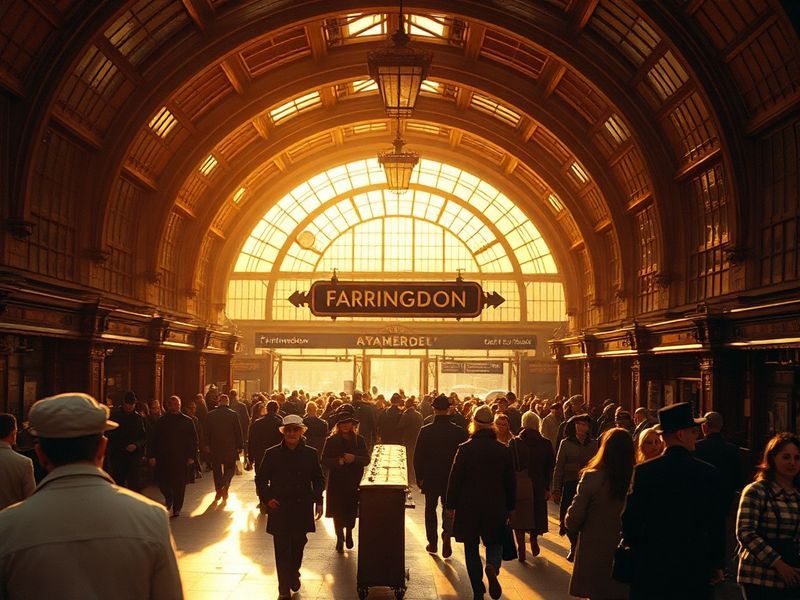
Farringdon Station: London’s Hidden Transport Nexus
Nestled in the heart of London, Farringdon Station stands as a testament to the city’s relentless evolution. More than just a transit hub, it embodies the intersection of history, modernity, and urban connectivity. With its roots stretching back to the 19th century, Farringdon has transformed from a modest railway stop into a critical artery for commuters, travelers, and explorers alike.
The station’s significance extends beyond its brick-and-mortar structure. It serves as a cultural crossroads, where the past and future collide in a symphony of steel and stone. Whether you’re a daily commuter navigating the Tube or a visitor charting a course through London’s labyrinthine streets, Farringdon Station is a place where journeys begin—and where stories unfold.
The Historical Foundations of Farringdon
Farringdon Station first opened its doors in 1865 as part of the Metropolitan Railway, the world’s first underground railway. Designed by engineer John Fowler, the station was a marvel of Victorian engineering, built to alleviate the growing congestion of London’s streets. Its original purpose was to connect the City of London with the expanding suburbs, a role it still fulfills today.
Over the decades, Farringdon has witnessed pivotal moments in London’s history. During the Blitz of World War II, the station served as a shelter for thousands of Londoners seeking refuge from aerial bombings. Decades later, it became a key player in the 2012 London Olympics, facilitating the movement of athletes and spectators to and from the city’s sporting venues.
The station’s architecture reflects its layered history. The original Victorian façade, with its arched windows and ornate detailing, remains a striking contrast to the sleek, contemporary additions of the 21st century. This blend of old and new is not just aesthetic; it’s a reminder of London’s ability to adapt without erasing its past.
A Global Hub for Connectivity
Today, Farringdon Station is one of London’s busiest transport hubs, serving millions of passengers annually. It is a vital node in the city’s public transport network, linking the London Underground, National Rail, and Elizabeth Line. For travelers, this means seamless connections to Heathrow Airport, St. Pancras International, and beyond.
The station’s role in international travel is particularly noteworthy. Located in the heart of the City of London, Farringdon provides direct access to the financial district, making it a favorite among business travelers. Meanwhile, its proximity to cultural landmarks like the Barbican Centre and Smithfield Market ensures that tourists and locals alike find it indispensable.
Farringdon’s connectivity extends beyond physical travel. In an era where digital connectivity is as crucial as physical mobility, the station has embraced technology to enhance the passenger experience. Free Wi-Fi, contactless payment systems, and real-time travel updates are now standard features, reflecting London’s commitment to modernizing its infrastructure.
For those looking to explore London’s broader transport network, Farringdon is often a starting point. Whether you’re heading to the coastal towns of Kent or the historic cities of the Midlands, the station’s strategic location ensures that your journey begins smoothly.
The Cultural Pulse of Farringdon
Beyond its practical functions, Farringdon Station is a cultural landmark in its own right. The area surrounding the station, known as Farringdon, has evolved into a vibrant neighborhood that blends tradition with innovation. From its medieval market roots at Smithfield to its contemporary culinary scene, Farringdon offers a microcosm of London’s diversity.
The station itself has become a canvas for artists and designers. Temporary installations, such as the 2022 “London Transport Museum’s Hidden London” exhibition, have transformed the station into a gallery space, inviting passengers to engage with art in unexpected ways. Meanwhile, the annual Farringdon Street Fair celebrates the community’s creative spirit, featuring live music, street food, and local crafts.
Farringdon’s cultural significance is also tied to its role in London’s nightlife. The area is home to some of the city’s most iconic pubs, such as The Jerusalem Tavern, a 17th-century landmark that has survived centuries of change. For those seeking a taste of London’s literary history, a short walk from the station leads to the historic St. Bride’s Church, where Samuel Johnson once worshipped.
As London continues to grow, Farringdon remains a symbol of the city’s resilience and adaptability. It is a place where history is preserved, modernity is embraced, and culture thrives—a true nexus of urban life.
What’s Next for Farringdon Station?
The future of Farringdon Station is as dynamic as its past. As part of the Elizabeth Line’s expansion, the station is undergoing further upgrades to accommodate even greater passenger volumes. These improvements include step-free access, expanded platforms, and enhanced digital infrastructure, ensuring that Farringdon remains at the forefront of London’s transport network.
Beyond physical upgrades, Farringdon is poised to play a key role in London’s sustainability efforts. The station is a pilot site for initiatives like air quality monitoring and energy-efficient lighting, reflecting the city’s commitment to reducing its carbon footprint. These changes align with London’s broader goal of becoming a net-zero city by 2030, a target that Farringdon Station is helping to achieve.
For commuters and travelers, these developments mean a more efficient, eco-friendly, and enjoyable journey. But they also signal something deeper: Farringdon Station’s continued evolution as a living, breathing part of London’s fabric. Whether you’re a first-time visitor or a lifelong resident, the station offers a unique perspective on the city’s past, present, and future.
Why Farringdon Matters
Farringdon Station is more than a transit point—it’s a gateway to London’s soul. It connects people from all walks of life, fosters cultural exchange, and drives economic growth. In a city as vast and complex as London, such a hub is invaluable, serving as a reminder that even the most ordinary places can hold extraordinary stories.
As London continues to change, Farringdon Station remains a constant. It is a place where history is remembered, the present is navigated, and the future is shaped. For anyone stepping into its bustling concourse, it offers a glimpse into the heart of one of the world’s greatest cities.
So the next time you find yourself in London, take a moment to appreciate Farringdon Station. Look beyond the crowds and the schedules, and you’ll see why this unassuming hub is truly one of the city’s most vital landmarks.