The May full moon, known as the Full Flower Moon, rises this year on May 23, illuminating spring’s peak with its luminous presence. This annual lunar event carries both astronomical significance and deep cultural roots, bridging ancient traditions with modern observation. Unlike other celestial phenomena, the Full Flower Moon offers something universally accessible—a moment when the night sky becomes a shared canvas for wonder.
Its name originates from Native American traditions, where each full moon was named to reflect seasonal changes. The Flower Moon signifies the month when blossoms blanket the landscape, signaling renewal and growth. Beyond its poetic title, the Full Flower Moon serves as a reminder of humanity’s enduring connection to the cosmos, a theme that resonates even in today’s technology-driven world.
The Science Behind the Full Flower Moon
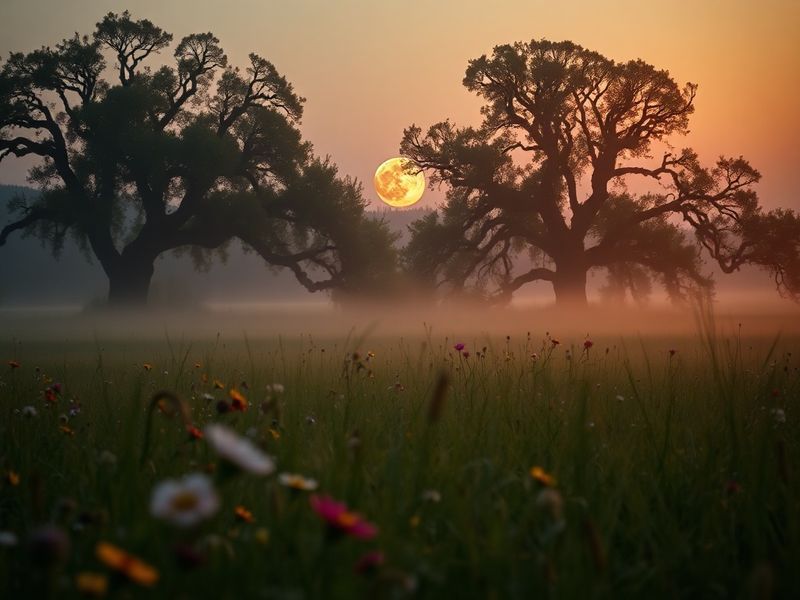
Astronomically, the Full Flower Moon occurs when the moon is positioned directly opposite the sun, with Earth in between. This alignment allows the moon’s face to be fully illuminated, creating its signature bright disc. While the moon itself doesn’t change color, atmospheric conditions—such as dust or pollution—can sometimes give it a warm, golden hue as it rises or sets.
For stargazers, timing is everything. The moon rises at sunset and sets at sunrise during a full moon, providing nearly 12 hours of visibility. However, the best viewing experience often comes just after moonrise, when the moon hangs low on the horizon. This low angle creates an optical illusion, making the moon appear larger than usual—a phenomenon known as the “moon illusion.”
According to NASA’s lunar data, the Full Flower Moon in 2024 will reach peak illumination at 9:53 AM EDT on May 23. While daylight may obscure the moment in some regions, the moon will still appear full the night before and after, offering multiple opportunities for observation.
Key Observational Tips for the Full Flower Moon
To fully appreciate the Full Flower Moon, consider these practical suggestions:
- Find a dark-sky location: Light pollution from cities can diminish the moon’s brilliance. Seek out parks, rural areas, or designated dark-sky preserves for optimal visibility.
- Check local moonrise times: Websites like TimeandDate.com or astronomy apps can provide precise timing based on your location.
- Use binoculars or a telescope: While the moon is visible to the naked eye, these tools reveal details like lunar craters and mare (dark plains formed by ancient volcanic activity).
- Photograph the moment: A DSLR camera with a zoom lens can capture the moon’s texture. Use a tripod and a remote shutter to avoid blur.
- Observe with the naked eye: Sometimes, the simplest approach yields the most profound experience. Let the moon’s light wash over you without distraction.
The Cultural Tapestry of the Full Flower Moon
The Full Flower Moon is more than an astronomical event; it’s a cultural touchstone woven into traditions across continents. In Native American lore, the Algonquin tribes named it the Flower Moon for the blooming wildflowers of May. Other tribes associated it with planting season, calling it the Corn Planting Moon or Milk Moon, reflecting agricultural rhythms.
In East Asia, the May full moon holds significance in the festival of Vesak, which commemorates the birth, enlightenment, and death of the Buddha. Lanterns are released, and temples are adorned with flowers, creating a visual spectacle that mirrors the moon’s glow. Similarly, in Hindu traditions, the full moon in May coincides with Buddha Purnima, a day of fasting and prayer.
European folklore ties the Full Flower Moon to fertility and romance. The Maypole dances of medieval England celebrated spring’s vitality, while Celtic traditions honored the moon as a symbol of the goddess Flora. Even in modern times, the moon’s name evokes nostalgia for simpler, agrarian lifestyles—a contrast to today’s fast-paced digital existence.
A Modern Perspective: Why the Full Flower Moon Still Matters
In an age dominated by artificial light and digital distractions, the Full Flower Moon offers a rare opportunity to reconnect with nature’s rhythms. It invites us to pause and reflect on the cyclical nature of time, a concept increasingly overshadowed by the relentless march of technology.
Environmentalists point out that the moon’s phases influence tides, animal behavior, and even plant growth. The Full Flower Moon, occurring at the height of spring, aligns with peak biodiversity. This makes it an ideal moment to observe local ecosystems—whether it’s the first fireflies of summer or the migration patterns of birds.
Psychologically, the moon has long been linked to human emotions. While modern science dismisses the idea that the moon directly affects behavior, its luminous presence can still evoke awe and introspection. The Full Flower Moon, in particular, serves as a metaphor for renewal, encouraging personal reflection and goal-setting.
For photographers and artists, the moon is a muse. Its stark, silver light contrasts with the darkness of night, creating striking visuals. Social media platforms like Instagram and TikTok often see a surge in moon-themed content during full moon events, reflecting society’s enduring fascination with celestial beauty.
Beyond the Moon: Broader Implications
The Full Flower Moon also intersects with broader themes in science, culture, and environmentalism. Astronomers use full moons to study lunar topography and test new imaging technologies. Meanwhile, Indigenous communities continue to reclaim and share their traditional moon names, preserving linguistic and cultural heritage.
Environmental organizations leverage such celestial events to highlight issues like light pollution. The International Dark-Sky Association estimates that 80% of the world’s population lives under light-polluted skies. Events like the Full Flower Moon encourage advocacy for darker skies and the preservation of natural nightscapes.
In the realm of mental health, the Full Flower Moon has inspired wellness trends. Moonlight therapy, moon gazing meditations, and even “moon milk” (a warm beverage with adaptogenic herbs) have gained popularity as people seek holistic ways to align with natural cycles. While these practices aren’t scientifically validated, they underscore a growing desire to reconnect with primal, earth-based experiences.
Finally, the Full Flower Moon serves as a reminder of our place in the universe. In an era where space exploration is becoming more accessible—with companies like SpaceX and Blue Origin making headlines—events like this ground us in the tangible beauty of our nearest celestial neighbor. They remind us that exploration isn’t just about distant planets; it’s also about appreciating the wonders right above our heads.
Conclusion: A Moment of Shared Wonder
The Full Flower Moon is a fleeting yet profound event, blending science, tradition, and human emotion into a single night. Whether you’re an astronomer tracking lunar cycles, a photographer chasing the perfect shot, or simply someone who finds solace in the night sky, this celestial phenomenon offers something for everyone.
As we look up on May 23, we’re not just witnessing the moon—we’re participating in a tradition that spans millennia. In a world often divided by borders and beliefs, the Full Flower Moon stands as a universal symbol of renewal, beauty, and connection. So step outside, breathe in the spring air, and let the moonlight remind you of the enduring cycles that bind us all.
For those eager to explore more about celestial events and their cultural significance, visit Dave’s Locker Science section for in-depth articles on astronomy and space exploration.