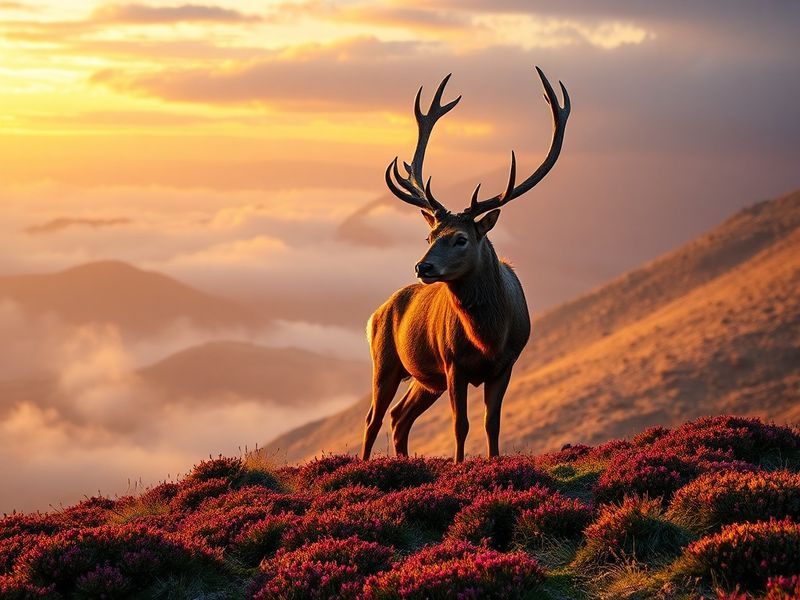
The image of a solitary stag standing proudly against the rugged backdrop of the Scottish Highlands is one of the most enduring symbols of wild British nature. Known as Monarch of the Glen, this iconic stag has transcended its origins to become a cultural touchstone, appearing in art, literature, and advertising for over a century. Its image evokes a sense of untamed wilderness, resilience, and the majesty of the natural world.
Originally a painting commissioned for the cover of a magazine in the late 19th century, Monarch of the Glen has since evolved into a symbol of Scottish heritage and environmental conservation. Its legacy continues to inspire artists, conservationists, and travelers alike, drawing visitors to the Highlands in search of the wild beauty it represents.
The Origins of a National Icon
The story of Monarch of the Glen begins in 1851 with a commission by the Illustrated London News. The magazine sought an image to accompany an article about deer stalking in the Scottish Highlands, and it turned to Edwin Landseer, a renowned animal painter of the Victorian era. Landseer, known for his lifelike depictions of animals, was the perfect choice to capture the essence of the Highland stag.
Landseer’s painting, completed in 1851, depicts a stag standing on a rocky outcrop, its antlers towering against a dramatic sky. The stag’s regal posture and piercing gaze gave it an air of nobility, earning it the title Monarch of the Glen. The painting was an instant success, capturing the imagination of the public and becoming one of the most reproduced images of the 19th century.
The original painting is now housed in the art gallery at the National Museum of Scotland in Edinburgh, where it continues to draw crowds. Its influence, however, extends far beyond the walls of the museum. The image has been reproduced in countless forms, from postcards and posters to advertisements and even a popular television series.
The Stag in Art and Popular Culture
The legacy of Monarch of the Glen is deeply embedded in British popular culture. The image has been referenced, parodied, and reinterpreted in various forms of media, cementing its status as a cultural icon. One of the most notable adaptations is the 1990s BBC television series Monarch of the Glen, which aired from 2000 to 2005. The show, set in the fictional Glenbogle estate in the Scottish Highlands, drew inspiration from the original painting, using its imagery to evoke a sense of timelessness and wild beauty.
The series starred Alastair Mackenzie as the estate manager and introduced audiences to the challenges of modern life in the Highlands. While the show’s tone was often comedic, it also touched on themes of tradition, change, and the enduring appeal of the natural landscape. The series’ opening credits featured a stag running through the Highlands, a direct nod to Landseer’s iconic image.
Beyond television, the stag has appeared in advertising campaigns, most notably for the Glenfiddich whisky brand. The brand’s use of the stag in its logo and marketing materials has further cemented its association with the Highlands and the qualities of strength, independence, and tradition. The image of the stag is now synonymous with Glenfiddich, appearing on bottles, advertisements, and even limited-edition merchandise.
Reinterpretations and Parodies
The enduring appeal of Monarch of the Glen has led to countless reinterpretations and parodies. Artists and creators have put their own spin on the iconic image, from humorous takes to more serious artistic statements. One notable example is the 2016 parody by the artist Banksy, who depicted the stag as a graffiti-covered urban animal, challenging the notion of wilderness in the modern world.
Other artists have used the image to explore themes of conservation and environmentalism. The stag, once a symbol of unspoiled nature, has become a metaphor for the fragility of the natural world and the need for its protection. These reinterpretations highlight the versatility of the image and its ability to evolve with the times.
The Stag as a Symbol of Conservation
Beyond its cultural significance, Monarch of the Glen has also played a role in the conservation movement in the Scottish Highlands. The image of the stag, standing tall against the rugged landscape, has become a symbol of the region’s rich biodiversity and the need to preserve its natural habitats. Conservation organizations have used the image to raise awareness about the challenges facing the Highlands, from habitat loss to climate change.
The Scottish Highlands are home to some of the UK’s most iconic wildlife, including red deer, golden eagles, and pine martens. However, the region faces numerous threats, including overgrazing by deer, which can lead to habitat degradation. Conservation efforts, such as deer management programs and reforestation projects, aim to restore balance to the ecosystem and ensure the survival of species like the red deer.
The image of the stag has become a rallying point for these efforts, symbolizing the wild beauty of the Highlands and the need to protect it. Organizations like Scottish Natural Heritage and the John Muir Trust have used the image in their campaigns to highlight the importance of conservation and sustainable land management.
The Allure of the Highlands: Why the Stag Endures
The enduring appeal of Monarch of the Glen
The image of the stag standing proud in the Highlands taps into something primal in the human psyche. It represents wilderness, freedom, and the untamed beauty of nature. For many, the Highlands are a place of escape, a retreat from the hustle and bustle of modern life. The stag, with its majestic antlers and solitary presence, embodies this sense of escape and the enduring power of the natural world.
Visitors to the Highlands often describe a sense of awe and reverence when encountering a stag in the wild. The experience is fleeting but unforgettable, a reminder of the raw beauty of nature. The Highlands are home to some of the most breathtaking landscapes in the world, from the towering peaks of Ben Nevis to the serene waters of Loch Lomond. The stag, as a symbol of this landscape, has become a metaphor for the region’s enduring appeal.
Tourism and the Stag’s Legacy
The image of the stag has also played a significant role in driving tourism to the Scottish Highlands. Visitors flock to the region in search of the wild beauty it represents, hoping to catch a glimpse of a stag in its natural habitat. Guided tours, photography workshops, and wildlife safaris are popular activities, offering visitors a chance to experience the Highlands through the lens of the iconic stag.
One of the most popular destinations for stag-spotting is the Cairngorms National Park, home to one of the largest red deer populations in Europe. The park offers a range of activities, from hiking and cycling to wildlife watching and cultural experiences. The image of the stag is woven into the fabric of the park, from its marketing materials to its visitor centers.
However, tourism in the Highlands is not without its challenges. The popularity of the region has led to concerns about overcrowding, environmental degradation, and the impact on local communities. Conservationists and tourism operators are working to balance the needs of visitors with the need to protect the natural environment. The image of the stag serves as a reminder of the importance of sustainable tourism and responsible travel.
A Lasting Legacy
As we reflect on the legacy of Monarch of the Glen, it’s clear that its influence extends far beyond the realms of art and popular culture. The iconic stag has become a symbol of the Scottish Highlands, representing its wild beauty, rich biodiversity, and enduring appeal. Its image continues to inspire artists, conservationists, and travelers, drawing them to the region in search of a connection to something timeless and untamed.
For future generations, the stag will remain a powerful reminder of the importance of preserving the natural world. Its image challenges us to consider our relationship with the environment and the role we play in protecting it. Whether through art, conservation, or tourism, the legacy of Monarch of the Glen will continue to inspire and endure.
The Highlands are more than just a landscape; they are a living, breathing ecosystem that demands our respect and protection. The stag, as a symbol of this ecosystem, reminds us of the fragility and resilience of nature. Its enduring image is a testament to the power of art to capture the essence of a place and the emotions it evokes.
As we look to the future, the legacy of Monarch of the Glen serves as a call to action. It challenges us to protect the wild beauty of the Highlands and to ensure that future generations can experience the awe and wonder it inspires. In a world that often feels increasingly disconnected from nature, the stag stands as a reminder of what we stand to lose—and what we must fight to preserve.