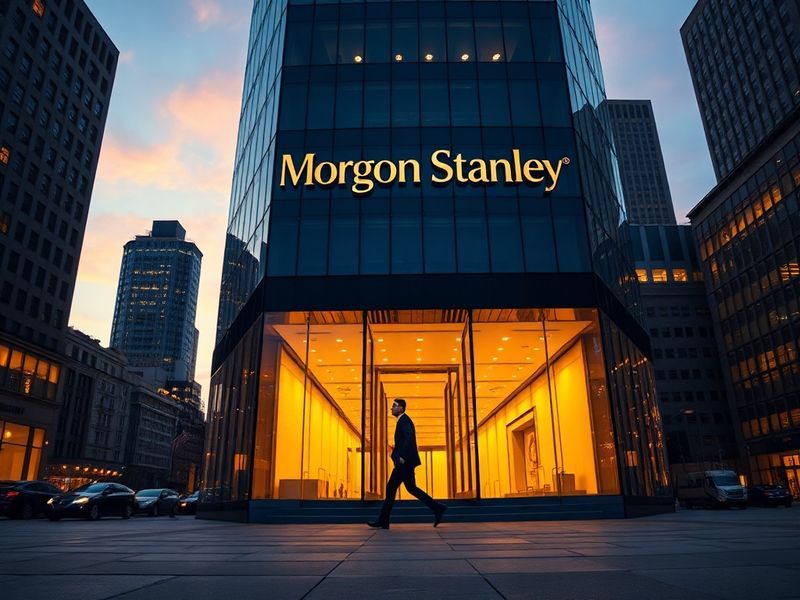
Few names carry as much weight in global finance as Morgan Stanley. Founded in 1935 as part of the Glass-Steagall Act’s separation of commercial and investment banking, the firm has grown from a New Deal-era startup into one of the world’s most influential financial institutions. With operations spanning wealth management, institutional securities, and investment management, Morgan Stanley doesn’t just follow economic trends—it often shapes them.
The Origins and Evolution of a Financial Titan
Morgan Stanley was born out of necessity. The Great Depression had shattered public trust in banks, and the U.S. government responded with sweeping reforms. The Glass-Steagall Act of 1933 forced the breakup of J.P. Morgan & Co. into two entities: one focused on commercial banking (which became JPMorgan Chase) and another on investment services. Morgan Stanley emerged from that split, opening its doors on September 16, 1935, in New York City.
Early on, the firm carved a niche advising corporations on mergers, acquisitions, and stock offerings—roles that would define its reputation. By the 1960s, Morgan Stanley had become the go-to bank for blue-chip companies like General Electric and IBM. Its underwriting of AT&T’s massive IPO in 1984 cemented its status as a Wall Street heavyweight.
The firm’s evolution accelerated in the late 20th century. In 1997, it merged with Dean Witter Discover, a consumer finance company, in a bold move to expand beyond its traditional investment banking roots. The decision reflected a broader industry trend: financial conglomerates were becoming more diversified. Yet Morgan Stanley retained its core identity as a dealmaker and advisory powerhouse.
How Morgan Stanley Operates in Today’s Financial Landscape
Morgan Stanley’s business model is built on three pillars: Institutional Securities, Wealth Management, and Investment Management. Each segment plays a distinct role in the global economy.
- Institutional Securities: This division handles capital markets activities, including underwriting, mergers and acquisitions (M&A), and trading. It’s where Morgan Stanley shines as a global advisor to corporations, governments, and institutional investors. The unit generated $25.4 billion in net revenue in 2023, accounting for nearly half of the firm’s total revenue.
- Wealth Management: Acquired through the merger with Smith Barney in 2009, this segment serves high-net-worth individuals and families. With over 16,000 financial advisors and $4.7 trillion in client assets, it’s one of the largest wealth managers in the U.S. The focus here is on personalized service, estate planning, and investment strategies tailored to affluent clients.
- Investment Management: This arm oversees $1.6 trillion in assets across mutual funds, hedge funds, and alternative investments. It’s a quieter but critical part of Morgan Stanley’s operations, providing steady income through fees and performance-based revenue.
The firm’s ability to balance these divisions has been key to its resilience. During the 2008 financial crisis, Morgan Stanley faced existential threats but survived by converting to a bank holding company—a move that granted it access to emergency Federal Reserve lending. This pivot underscored its adaptability, a trait that continues to define the institution.
The Firm’s Influence on Markets and Policy
Morgan Stanley doesn’t just react to economic shifts; it often anticipates them. The firm’s research division is among the most respected on Wall Street, producing insights that shape investor sentiment and policy debates. For example, its economists were early to warn about the risks of subprime lending in the mid-2000s, though the firm itself remained heavily exposed to those risks.
Beyond research, Morgan Stanley plays a pivotal role in shaping corporate America. Its M&A team has advised on some of the largest deals in history, including the merger of Disney and 21st Century Fox in 2019 and the $69 billion acquisition of Sprint by T-Mobile in 2020. These transactions don’t just reshape industries—they redefine consumer behavior, labor markets, and even geopolitical dynamics.
The firm’s influence extends to Washington, D.C., where its alumni frequently occupy key regulatory and policymaking roles. Former Morgan Stanley executives have led the U.S. Treasury, the Federal Reserve, and the Securities and Exchange Commission. This revolving door between Wall Street and Washington raises questions about regulatory capture—a concern that has grown louder in an era of increasing financial inequality.
Challenges and Criticisms: The Bank’s Blind Spots
Despite its prestige, Morgan Stanley is not without controversy. Critics argue that the firm’s wealth management division exacerbates inequality by catering primarily to the top 1% of earners. While the average American struggles with stagnant wages and rising costs, Morgan Stanley’s advisors focus on clients with investable assets of $10 million or more. This concentration of wealth management services has drawn scrutiny from progressive lawmakers and advocacy groups.
Environmental, social, and governance (ESG) issues have also put Morgan Stanley in the crosshairs. In 2021, the firm faced backlash for its financing of fossil fuel projects, including loans to companies involved in oil and gas extraction. Shareholder activists have pressured the firm to align its lending practices with the Paris Agreement, but progress has been slow. As climate risks grow, Morgan Stanley’s role in financing both green energy and carbon-intensive industries has become a flashpoint for debate.
Internally, the firm has grappled with diversity and inclusion challenges. A 2022 report revealed that women and minorities were underrepresented in senior leadership roles, particularly in its investment banking division. While Morgan Stanley has pledged to improve representation, critics note that progress has been incremental at best.
A Glimpse into the Future: What’s Next for Morgan Stanley?
The next decade will test Morgan Stanley’s ability to adapt to a rapidly changing financial landscape. Three key trends are likely to shape its trajectory:
- Technology and AI: Morgan Stanley has invested heavily in artificial intelligence, using machine learning to enhance trading algorithms, risk management, and client services. Its acquisition of Solus Alternative Asset Management in 2021 signaled a push into data-driven investing. However, the firm must balance innovation with the risk of over-reliance on unproven technologies.
- Regulatory Pressures: Post-2008 reforms like Dodd-Frank have subjected banks to stricter oversight, but calls for further regulation persist. Morgan Stanley’s lobbying efforts will be crucial in shaping policies that protect its interests while maintaining systemic stability. The outcome of these battles could determine whether the firm remains an independent powerhouse or becomes a target for breakup.
- Generational Wealth Transfer: By 2045, an estimated $84 trillion will pass from Baby Boomers to Millennials and Gen Z, according to Cerulli Associates. Morgan Stanley’s wealth management division is well-positioned to capture a share of this transfer—but only if it can appeal to younger, tech-savvy investors who distrust traditional banking.
The firm’s ability to navigate these challenges will hinge on its willingness to embrace change without losing sight of its core strengths. Morgan Stanley’s legacy is built on its dealmaking prowess and advisory dominance, but its future may depend on how well it can serve a new generation of clients and adapt to a world where finance is increasingly digital and transparent.
For investors, policymakers, and everyday Americans, Morgan Stanley remains a bellwether of the global economy. Its decisions ripple across markets, its policies influence regulations, and its culture reflects the broader trends shaping finance. As the firm approaches its centenary, one thing is clear: Morgan Stanley is far more than a bank. It’s a guardian of capital, a shaper of industries, and a reflection of the financial world’s contradictions.
For more insights into the financial sector, explore our Business and Finance categories on Dave’s Locker.