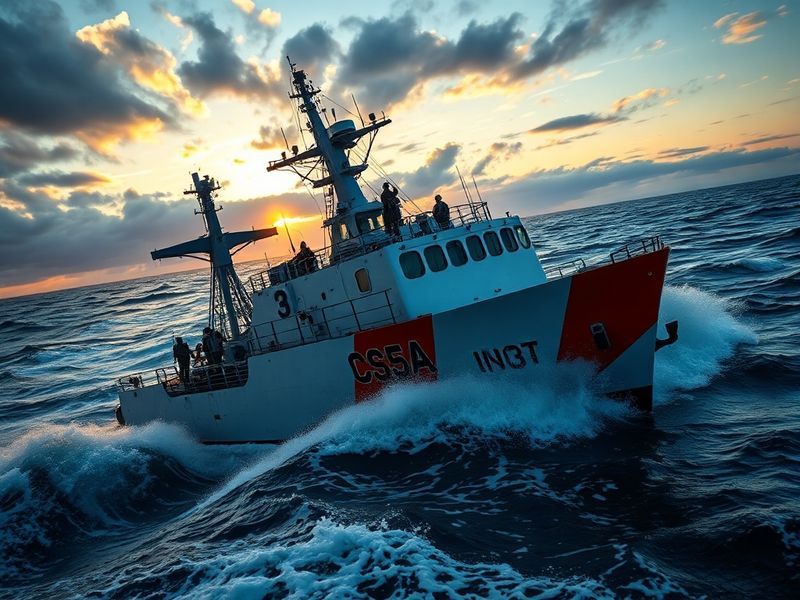
The United States Coast Guard stands as a unique branch of America’s armed forces, blending military readiness with civilian law enforcement and humanitarian duties. Unlike other military services, the Coast Guard operates under the Department of Homeland Security in peacetime, though it can be transferred to the Navy during wartime. This dual role makes it one of the most versatile agencies in the federal government.
Founded in 1790 as the Revenue Cutter Service, the Coast Guard has evolved into a critical force for maritime safety, security, and environmental protection. Its missions range from search-and-rescue operations to counter-narcotics patrols, icebreaking in polar regions, and even space mission support. The Coast Guard’s reach extends from bustling ports to remote Arctic waters, making it indispensable to national security and economic stability.
A Brief History and Evolution
The Coast Guard’s origins trace back to Alexander Hamilton’s creation of the Revenue Cutter Service, tasked with enforcing tariffs and preventing smuggling. Over the centuries, it absorbed other agencies, including the Lighthouse Service and the Bureau of Navigation, before merging with the U.S. Life-Saving Service in 1915 to form the modern Coast Guard. World War II solidified its military role, with cutters and personnel serving in every major theater.
Post-war, the Coast Guard expanded its focus to include environmental protection and drug interdiction. The 9/11 attacks reshaped its priorities once again, leading to the creation of the Department of Homeland Security and a heightened emphasis on port security and counterterrorism. Today, the Coast Guard faces new challenges, from climate change-induced Arctic expansion to the surge in migrant interdiction operations.
Core Missions and Operational Capabilities
The Coast Guard’s missions are as diverse as they are critical. Below are its primary operational domains:
- Maritime Law Enforcement: The Coast Guard enforces federal laws on the high seas, including drug interdiction, fisheries regulation, and migrant smuggling prevention. Its cutters and aircraft conduct patrols that disrupt criminal networks operating across international waters.
- Search and Rescue (SAR): The Coast Guard is the lead federal agency for maritime SAR, responding to thousands of distress calls annually. Its rescue swimmers and specialized boats are often the difference between life and death in rough seas.
- Icebreaking and Arctic Operations: With melting Arctic ice opening new shipping lanes, the Coast Guard’s icebreakers—such as the heavy-duty Polar Star—play a vital role in maintaining access to polar regions. These vessels support scientific research and ensure safe passage for commercial ships.
- Port Security and Counterterrorism: The Coast Guard protects America’s ports through the Maritime Transportation Security Act, which mandates vessel inspections, crew screenings, and coordinated responses to potential threats.
- Environmental Protection: The Coast Guard responds to oil spills, hazardous material leaks, and other environmental disasters. Its Strike Teams and specialized equipment are deployed to mitigate ecological damage.
The Coast Guard in the 21st Century: Challenges and Adaptations
The 21st century has brought unprecedented challenges to the Coast Guard. Climate change is reshaping its operational landscape, particularly in the Arctic, where melting ice is creating both opportunities and risks. The Coast Guard must balance increased commercial activity with environmental stewardship while preparing for potential conflicts in a region where territorial disputes are intensifying.
Technological advancements also present both opportunities and challenges. Drones and unmanned systems are being integrated into surveillance and SAR operations, improving efficiency and reducing risk to personnel. However, these tools require significant investment and training to deploy effectively. Cybersecurity has emerged as another critical concern, as the Coast Guard’s networks and communication systems become increasingly interconnected with civilian infrastructure.
Budget constraints and aging infrastructure remain persistent issues. The Coast Guard’s fleet of cutters and aircraft is aging, with some vessels operating well beyond their intended lifespans. The Technology sector at Dave’s Locker often highlights these modernization efforts, noting how innovations in shipbuilding and automation could alleviate some of these pressures.
Broader Implications: Why the Coast Guard Matters
The Coast Guard’s work extends far beyond its operational duties. It serves as a symbol of American resilience and adaptability, embodying the nation’s commitment to maritime security and humanitarian aid. Its presence in international waters fosters goodwill and strengthens alliances, particularly in regions like the Pacific where China’s maritime ambitions are growing.
Economically, the Coast Guard’s role is equally vital. By ensuring safe and secure maritime trade, it supports industries worth trillions of dollars annually. Ports like Los Angeles and New York are economic powerhouses, and their smooth operation depends on the Coast Guard’s vigilance against threats ranging from terrorism to piracy.
The Coast Guard also plays a unique role in disaster response. Whether it’s responding to hurricanes in the Gulf Coast or wildfires in California, its assets and personnel are often among the first on scene. This versatility underscores its value as a multi-purpose agency capable of addressing both man-made and natural crises.
Conclusion
The United States Coast Guard remains one of the country’s most adaptable and vital institutions. From its humble beginnings as a revenue service to its current role as a global maritime leader, it has continually evolved to meet emerging challenges. As climate change, geopolitical tensions, and technological disruption reshape the world’s oceans, the Coast Guard’s mission will only grow in importance.
For those interested in exploring further, the News section of Dave’s Locker offers in-depth coverage of maritime security issues, while the Science category delves into the environmental and technological factors influencing the Coast Guard’s future. Whether viewed through the lens of national security, economic stability, or humanitarian service, the Coast Guard’s legacy is one of unwavering dedication to duty.