For centuries, humans have looked to supernatural beings for protection, guidance, and divine connection. Among the most enduring figures in religious and cultural traditions are angels and guardians. While these terms are often used interchangeably, they represent distinct roles—one rooted in theology, the other in folklore and modern reinterpretations. This distinction becomes clearer when examining their origins, functions, and how they’ve evolved in storytelling and belief systems.
Defining Angels: Messengers and Divine Intermediaries
Angels occupy a central place in many religious traditions, particularly in Christianity, Islam, and Judaism. The word “angel” derives from the Greek angelos, meaning “messenger,” which reflects their primary role: serving as intermediaries between the divine and humanity. In Christian theology, angels are categorized into hierarchies, such as the Seraphim, Cherubim, and Archangels, each with specific duties. The Archangel Michael, for example, is often depicted as a warrior defending heaven against evil, while Gabriel is known for delivering divine messages, such as the announcement of Jesus’ birth to Mary.
Angels are also portrayed as guardians in some interpretations, but their function extends beyond protection. They act as witnesses to human actions, executors of God’s will, and symbols of holiness. Artistic representations frequently show them with wings, halos, and serene expressions, emphasizing their purity and otherworldly nature. The Bible and other sacred texts describe angels performing miracles, offering comfort, and delivering judgment—roles that underscore their multifaceted nature.
Angels in Popular Culture
Beyond religious contexts, angels have become ubiquitous in modern media. Films like It’s a Wonderful Life (1946) and Michael (1996) humanize these beings, portraying them with flaws, humor, and emotional depth. Television series such as Supernatural and Lucifer blend angelic lore with mythology, often reimagining them as complex characters with their own agendas. These portrayals reflect a cultural fascination with the idea of benevolent, supernatural forces watching over humanity—whether in a literal or metaphorical sense.
Guardians: Protectors Across Mythologies
The concept of a “guardian” is far broader and more fluid than that of an angel. Guardians appear in myths, legends, and even secular contexts as protectors of specific places, people, or ideals. In ancient Egyptian religion, the god Anubis served as a guardian of the dead, guiding souls through the afterlife. Norse mythology features the Valkyries, warrior maidens who select the bravest fallen warriors to escort them to Valhalla. Meanwhile, guardian spirits are common in Indigenous traditions, where they serve as protectors of individuals, families, or natural landmarks.
Unlike angels, guardians are not necessarily divine. They can be ancestral spirits, mythical creatures, or even ordinary humans elevated to legendary status. For instance, the Japanese Kami are guardian spirits associated with natural elements, while in Greek mythology, the Hecatoncheires were hundred-handed giants who guarded the gates of Tartarus. This diversity highlights how the guardian archetype adapts to different cultural needs—whether as a symbol of justice, a defender of the weak, or a custodian of sacred spaces.
Guardians in Modern Mythmaking
In contemporary storytelling, guardians often take the form of superheroes or mythic protectors. Characters like Superman, who watches over humanity, or Captain America, who embodies the spirit of justice, can be seen as secular guardians. Video games frequently feature guardian figures, such as the Elder Scrolls series’ Daedric Princes, who act as both protectors and tempters of mortals. These modern interpretations strip away the religious connotations of angels, focusing instead on the idea of guardians as symbols of hope, resilience, and moral strength.
Key Differences Between Angels and Guardians
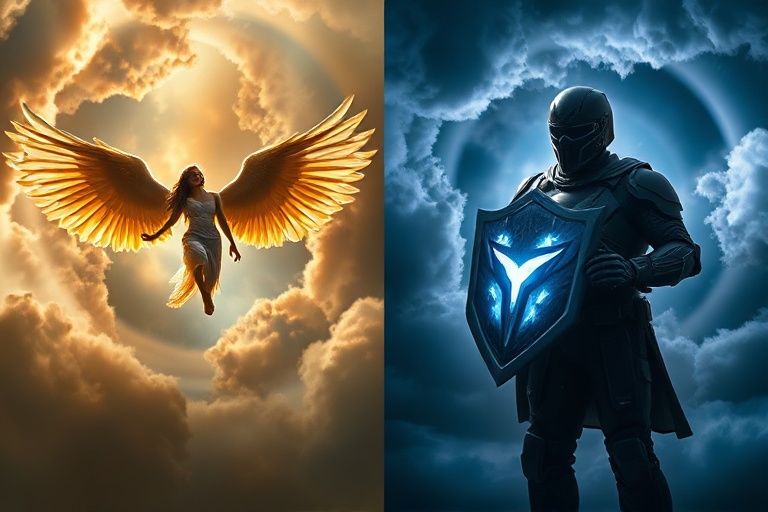
While angels and guardians may seem similar at first glance, their roles, origins, and cultural functions set them apart. Below is a breakdown of their key differences:
- Divine vs. Secular Role: Angels are inherently divine or sacred beings, often serving as messengers or servants of a higher power. Guardians, on the other hand, can be secular or even mythical, with their roles defined by cultural or narrative needs rather than religious doctrine.
- Hierarchy and Structure: Angels are typically organized into rigid hierarchies (e.g., Archangels, Seraphim), each with specific duties. Guardians lack such structure; their roles are fluid and adaptable to the stories they inhabit.
- Symbolism: Angels symbolize purity, holiness, and divine intervention. Guardians often represent protection, justice, or the preservation of natural or cultural order.
- Cultural Presence: Angels are most prominently featured in religious texts and art, while guardians appear across a wider range of mediums, from myths to modern pop culture.
These distinctions highlight how angels and guardians fulfill different psychological and cultural needs. Angels offer a sense of divine order and moral guidance, while guardians provide a more tangible, often earthly form of protection and heroism.
Why the Distinction Matters in Today’s World
The blurred line between angels and guardians reflects humanity’s ongoing search for meaning and security. In times of crisis, people often turn to these figures for comfort—whether through prayer to angels or by idolizing secular guardians like first responders or community leaders. This duality is evident in how modern spiritual movements blend religious traditions with new age beliefs, often merging angelic imagery with guardian-like roles.
For example, the New Age concept of “spirit guides” borrows from both angelic and guardian traditions, presenting these beings as personal protectors who offer wisdom and support. Similarly, the rise of superhero culture has reinforced the idea of guardians as flawed but heroic figures who inspire collective hope. These reinterpretations show how ancient archetypes evolve to meet contemporary needs, bridging the gap between the sacred and the secular.
Understanding the difference between angels and guardians also sheds light on how different cultures approach the idea of protection. In Western traditions, angels are often seen as benevolent but distant forces, while guardians—whether mythical or human—are more closely tied to action and intervention. This contrast underscores the diverse ways humanity conceptualizes safety, justice, and divine presence.
A Closer Look at Guardian Angels
One of the most intriguing intersections between angels and guardians is the concept of a guardian angel. Rooted in Christian theology but widely adopted in secular contexts, guardian angels are believed to be assigned to individuals at birth to protect and guide them. Unlike general angels, guardian angels are often seen as personal companions, offering comfort in times of distress and steering people away from harm.
This idea has permeated popular culture, from the 1989 film Always to the TV show Touched by an Angel. Even in non-religious contexts, the term “guardian angel” is used metaphorically to describe someone who provides unwavering support, such as a mentor or a loyal friend. This blending of roles illustrates how flexible these archetypes can be, adapting to both spiritual and everyday narratives.
For those interested in exploring spiritual protection further, Dave’s Locker’s spirituality section offers resources on angelic lore and guardian traditions across cultures.
Conclusion: Embracing the Duality
Angels and guardians, while often conflated, serve distinct roles in human consciousness. Angels represent the divine, offering a connection to the sacred and a framework for morality. Guardians, in contrast, embody the human desire for protection and heroism, whether through myth, legend, or modern storytelling. Together, they form a dual archetype that addresses humanity’s need for both spiritual and earthly safeguards.
As society continues to evolve, so too will the interpretations of these figures. Whether through religious devotion, cultural myths, or secular heroism, the roles of angels and guardians will persist as timeless symbols of hope, guidance, and protection. By recognizing their differences—and their intersections—we gain a deeper appreciation for the ways these archetypes shape our understanding of the world and our place within it.