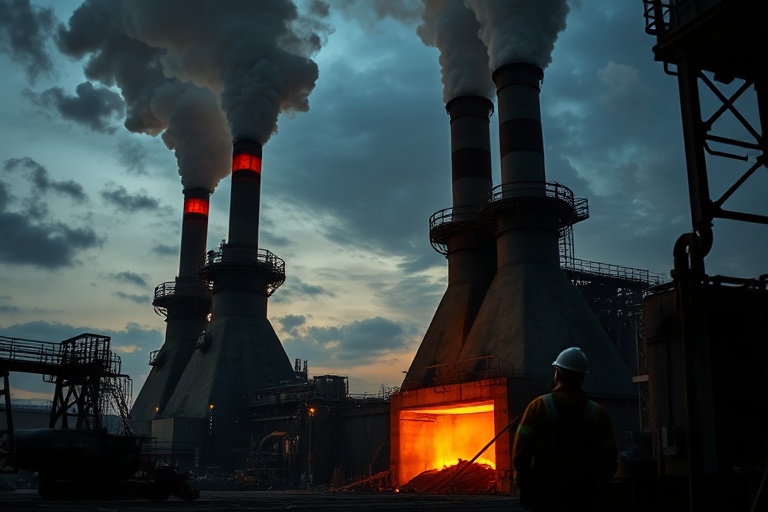
For over a century, British Steel has stood as a symbol of industrial might and engineering excellence. From its origins in the heart of Britain’s industrial revolution to its modern incarnations, the name has carried weight across continents. Today, the story of British Steel is one of resilience, adaptation, and the enduring power of manufacturing tradition.
This narrative is not just about steel itself—it’s about the people, the places, and the policies that have shaped one of the UK’s most iconic industrial brands. It’s also a story of challenges faced and lessons learned, especially in an era where global competition and economic shifts have tested the very foundations of traditional industries. To understand British Steel is to understand a chapter of British industrial history that refuses to fade into the past.
The Origins and Rise of British Steel
The foundations of British Steel were laid in the mid-19th century, a time when Britain was the workshop of the world. The Industrial Revolution had transformed the nation’s economy, and steel became the backbone of progress. Railroads, bridges, and ships—all required vast quantities of high-quality steel. British manufacturers answered the call, establishing foundries and mills across Sheffield, Scunthorpe, and Teesside.
By the early 20th century, the British steel industry was a global leader. It supplied the materials that built the Empire and fueled two world wars. Companies like Dorman Long, Stewarts & Lloyds, and later the British Steel Corporation (formed in 1967), consolidated the industry under state ownership. The post-war years saw massive investment in modernisation, with new plants and technologies designed to keep pace with international competitors.
Yet even in its heyday, the industry faced challenges. Globalisation began to shift production to countries with lower costs, and the oil crises of the 1970s exposed vulnerabilities in energy-intensive steelmaking. The British steel industry, once unassailable, found itself at a crossroads.
Privatisation and the Turbulent 1980s and 1990s
The election of Margaret Thatcher’s government in 1979 marked a turning point. The state-owned British Steel Corporation was privatised in 1988, becoming British Steel plc. The move was intended to inject efficiency and competitiveness into the sector. While some plants thrived under private ownership, others struggled to compete with cheaper imports and foreign rivals.
In 1999, a pivotal merger occurred. British Steel merged with Dutch conglomerate Koninklijke Hoogovens to form Corus Group. This transnational alliance was hailed as a bold step toward global competitiveness. Yet it also signalled a shift—British steel was no longer solely British. Production lines in Scunthorpe and Port Talbot became part of a larger European network.
The merger brought short-term benefits but long-term complexities. Cultural clashes between British and Dutch management styles, differing labour practices, and the complexities of integrating large-scale operations led to friction. Over time, the Corus Group itself became a takeover target, eventually being acquired by Tata Steel in 2007. The British steelmaking tradition was now in Indian hands.
A Decade of Ownership Changes
Under Tata Steel Europe, the Corus assets—including British Steel’s historic sites—continued to operate. For a time, the future looked stable. But global steel prices began to fluctuate wildly, and overcapacity in China led to a glut of cheap steel flooding international markets. By 2016, Tata Steel Europe was haemorrhaging money. The company announced plans to sell or close parts of its European operations, including the mothballing of the iconic Port Talbot plant.
This precipitated a crisis not just for workers, but for communities. Port Talbot, once the beating heart of Welsh industry, faced an existential threat. Campaigns were launched. Politicians intervened. The government, under pressure, brokered a rescue deal in 2017, securing a £100 million lifeline and a commitment from Tata to invest £1 billion in modernising the plant.
But the reprieve was temporary. By 2019, with global demand softening and Brexit looming, even the Scunthorpe plant—one of the few remaining large-scale steelworks in the UK—was under threat. A perfect storm of factors—rising energy costs, cheap imports, and the uncertainty of post-Brexit trade—pushed the company to the brink.
From Collapse to Revival: The 2020s Comeback
In May 2019, British Steel collapsed into liquidation. The Scunthorpe plant, which had produced steel since the 1860s, fell silent. Over 3,000 jobs were at risk. The closure sent shockwaves through the industry and the local economy. It wasn’t just a factory shutting down—it was a way of life ending.
Yet from the ashes, a new British Steel emerged. In 2021, a consortium led by investment firm Greybull Capital acquired the Scunthorpe site and associated businesses, reviving the brand under the name British Steel Limited. The company committed to investing £150 million in decarbonisation and modernisation, aiming to make it one of the greenest steelworks in Europe.
This revival was not just about saving jobs—it was about reimagining steelmaking for the 21st century. British Steel announced plans to transition to hydrogen-based steel production, aligning with the UK’s net-zero ambitions. The Scunthorpe plant, once a symbol of industrial decline, became a flagship for green industrial policy.
The Role of Government and Policy
The resurrection of British Steel underscored the critical role of government in industrial strategy. The UK government provided £50 million in grants and £300 million in loans to support the transition. This intervention reflected a broader shift in economic thinking—recognising that strategic industries like steel are vital not just for employment, but for national security and technological sovereignty.
British Steel’s revival also highlighted the importance of supply chain resilience. The COVID-19 pandemic exposed vulnerabilities in global supply chains, particularly in critical materials. Steel, essential for everything from construction to defence, became a strategic priority. The government’s decision to back British Steel was partly driven by a desire to reduce reliance on foreign imports.
British Steel in the Modern Era: Challenges and Opportunities
Today, British Steel operates as a leaner, more agile company. The Scunthorpe plant remains its flagship, but the company also produces steel at sites in Skinningrove and Teesside. Its product range includes heavy rail, construction steel, and specialty sections used in infrastructure and renewable energy projects.
One of the company’s key challenges is balancing environmental goals with economic realities. While the push toward hydrogen-based steelmaking is commendable, the technology is still in development. In the meantime, British Steel must compete with rivals using traditional methods and lower-cost labour.
Yet opportunities abound. The global demand for sustainable steel is growing. Major infrastructure projects, including HS2 and the UK’s offshore wind farms, require high-quality British-made steel. The company’s recent contracts with Network Rail and renewable energy developers signal a new chapter—one where British Steel is not just surviving, but innovating.
Looking Ahead: What’s Next for British Steel?
The future of British Steel will be shaped by several key factors:
- Decarbonisation: The company’s commitment to cutting carbon emissions by 80% by 2030 will be pivotal. Success could position it as a leader in green steel, attracting investment and customers.
- Energy Costs: High energy prices remain a threat. Government support for industrial energy costs will be crucial in keeping British Steel competitive.
- Trade Policy: Post-Brexit trade agreements will determine tariffs and market access. A favourable deal with the EU could boost exports.
- Innovation: Investment in R&D, particularly in hydrogen and carbon capture, could redefine steelmaking for the next generation.
There’s also the human element. British Steel has always been more than just a company—it’s a community. The skills, traditions, and pride of its workforce are irreplaceable. Retaining talent and inspiring the next generation of steelworkers will be essential to its long-term success.
Conclusion: The Enduring Spirit of British Steel
British Steel’s journey—from industrial titan to near-collapse and back—is a testament to the power of resilience. It reflects the broader story of British manufacturing: a cycle of boom, crisis, and reinvention. While the industry may never regain the scale it once had, its role in the UK’s economic and environmental future is more important than ever.
As the world moves toward a greener, more sustainable economy, British Steel has a chance to prove that tradition and innovation can coexist. The Scunthorpe plant, once a symbol of decline, now stands as a beacon of possibility. With the right support, investment, and vision, British Steel can help build not just bridges and buildings, but a sustainable future.
For those who work there, the steel is more than just metal—it’s a legacy. And as long as British Steel continues to stand, that legacy will endure.
To explore more about the history of British manufacturing, visit our History section. For insights into modern industrial policy, check out our Analysis category.