European Single Market: How It Shapes Europe’s Economy & Culture
The Foundation of Europe’s Economic Integration
The European Single Market stands as one of the most ambitious economic projects in modern history. Established in 1993, it created a borderless space where goods, services, capital, and people can move freely across 27 member states. This seamless flow has transformed Europe into a unified economic powerhouse, rivaling the United States and China in global trade influence.
At its core, the Single Market operates on four fundamental freedoms: the free movement of goods, services, capital, and labor. These principles dismantled trade barriers, standardized regulations, and fostered competition, driving innovation and efficiency. The result has been a steady rise in cross-border trade, which now accounts for nearly 60% of the EU’s total trade activity.
The Single Market isn’t just an economic tool; it’s a cultural bridge. As businesses expand across borders, they bring with them new ideas, products, and consumer trends. A small artisan bakery in rural Poland can now sell pastries to a café in Lisbon without navigating customs paperwork. Meanwhile, a tech startup in Berlin can hire developers from Lisbon or Warsaw without work visa restrictions. This interconnectedness has reshaped daily life across Europe, making diversity a competitive advantage rather than a logistical challenge.
The Cultural Ripple Effects of a Unified Market
Cultural exchange has flourished under the Single Market’s framework. Consider the rise of pan-European media and entertainment industries. Streaming platforms like Netflix and Spotify curate content tailored to multiple languages and markets, but their algorithms also introduce audiences to foreign films, music, and literature. A French film can now reach viewers in Finland as easily as it does in France, fostering a shared cultural dialogue.
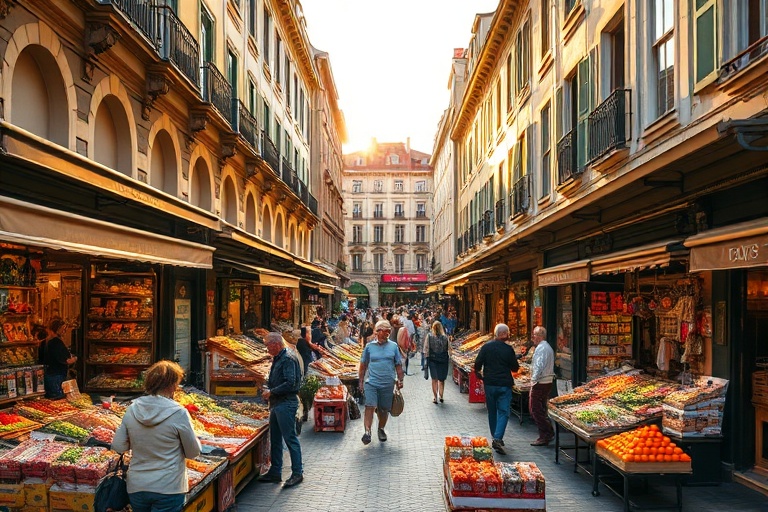
Food and fashion have become particularly dynamic sectors. Supermarkets across Europe stock Italian pasta, Dutch cheese, and Spanish olive oil alongside local produce. Fashion brands like Zara and H&M design collections for a continental audience, blending trends from Berlin’s street style with Parisian haute couture. This cross-pollination of styles has given rise to a distinctly European aesthetic—one that balances tradition with modernity.
The labor market has also undergone a quiet revolution. Young professionals increasingly view Europe as a single job market. A software engineer from Athens might take a job in Dublin, while a nurse from Bucharest relocates to Stockholm. This mobility has alleviated labor shortages in some regions and created vibrant multicultural communities in others. Cities like Berlin, Amsterdam, and Prague have become magnets for talent, their economies thriving on the influx of skilled workers from across the continent.
Challenges and Controversies Along the Way
Despite its successes, the Single Market has faced persistent challenges. Regulatory harmonization remains a contentious issue. While the EU has standardized many rules, differences in taxation, labor laws, and environmental standards still create friction. For example, companies often relocate headquarters to countries with lower corporate tax rates, sparking debates about tax competition and fairness. The Netherlands and Ireland have been particular focal points for these discussions.
Another ongoing debate revolves around the free movement of people. While migration within the EU has boosted economies, it has also led to political backlash in some regions. Rising housing costs in cities like Amsterdam and Vienna have been partly attributed to increased demand from foreign workers. Meanwhile, Brexit highlighted the tensions between national sovereignty and the benefits of EU membership, leaving lasting questions about the future of European unity.
Bureaucracy remains a stubborn obstacle. The sheer scale of coordination required to maintain a market of 450 million people means that decision-making can be slow. Small and medium-sized enterprises (SMEs) often struggle with compliance costs, particularly when navigating different national regulations. Initiatives like the Single Digital Gateway aim to simplify administrative processes, but progress has been uneven.
A Look Ahead: The Digital and Green Frontiers
The Single Market is evolving beyond its traditional boundaries. The digital economy presents both opportunities and challenges. E-commerce giants like Amazon and local platforms such as Germany’s Zalando have thrived under the Single Market’s rules, but digital taxation and data privacy remain unresolved issues. The EU’s General Data Protection Regulation (GDPR) has set a global standard for privacy, but its implementation varies widely across member states, creating compliance headaches for businesses.
Sustainability has emerged as a new frontier. The European Green Deal aims to make the EU carbon-neutral by 2050, and the Single Market plays a crucial role in this transition. Policies like the Carbon Border Adjustment Mechanism (CBAM) seek to prevent carbon leakage by taxing imports based on their environmental impact. Meanwhile, renewable energy projects increasingly cross borders, with offshore wind farms in the North Sea powering multiple countries.
The future of the Single Market may also hinge on its ability to adapt to geopolitical shifts. Rising tensions with China and Russia have forced Europe to rethink its supply chains. The COVID-19 pandemic exposed vulnerabilities in global trade, leading to calls for reshoring critical industries like pharmaceuticals and semiconductors. Initiatives like the Chips Act aim to bolster Europe’s technological sovereignty, but they risk fragmenting the Single Market if not carefully managed.
Conclusion: A Model for Global Integration?
The European Single Market is far from perfect, but its achievements are undeniable. It has lifted millions out of poverty, fostered innovation, and created a cultural tapestry that celebrates diversity. More than just an economic policy, it is a testament to what can be achieved when nations choose cooperation over isolation.
As the world grapples with fragmentation and protectionism, the Single Market offers a compelling alternative. Its blend of pragmatism and idealism demonstrates that integration can drive prosperity without eroding national identities. The challenges it faces—digital transformation, sustainability, and geopolitical pressures—are the same ones confronting global trade systems everywhere. If Europe can navigate these complexities, it may well provide a blueprint for other regions seeking to balance unity with sovereignty.
For now, the Single Market remains a work in progress, constantly adapting to new realities. But its core achievement—proving that diversity can be a source of strength rather than division—is one that resonates far beyond Europe’s borders.