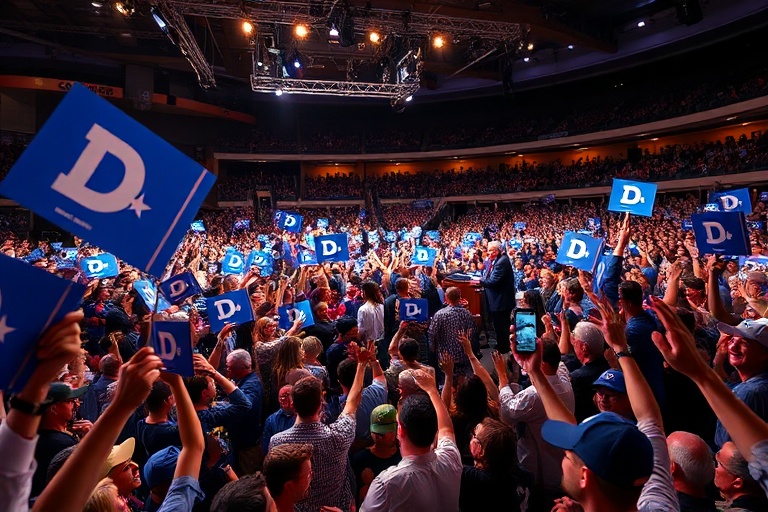
Understanding the Democratic Party: History, Ideology & Modern Role
The Democratic Party stands as one of the two major political forces in the United States, shaping policy debates and governance for over two centuries. With roots tracing back to Thomas Jefferson’s Democratic-Republican Party, it has evolved through multiple ideological shifts—from Andrew Jackson’s populist expansion to Franklin D. Roosevelt’s New Deal coalition. Today, the party represents a broad coalition of progressives, moderates, and centrists, advocating for policies ranging from social justice to economic reform.
Its influence extends beyond elections, often setting the agenda for national conversations on healthcare, climate change, and civil rights. Understanding the Democratic Party requires examining its historical foundations, ideological divisions, and current strategic challenges. This analysis explores those dimensions while highlighting how the party continues to adapt in an increasingly polarized political landscape.
The Historical Evolution of the Democratic Party
The Democratic Party’s origins can be traced to the early 19th century, when supporters of Andrew Jackson formed a political movement that challenged the established elite. Jackson’s presidency (1829–1837) marked a shift toward populism, expanding voting rights for white men while excluding women and minorities. This era solidified the party’s identity as a champion of the “common man,” though its legacy remains complicated by its defense of slavery and later Jim Crow laws.
The party underwent dramatic transformations in the 20th century. Under Woodrow Wilson, Democrats implemented progressive reforms like the Federal Reserve and child labor laws, though Wilson’s segregationist policies tarnished his reputation. The New Deal era under Franklin D. Roosevelt redefined the party as a vehicle for economic relief and social welfare, creating Social Security and labor protections that endure today. By the mid-20th century, Democrats like Harry Truman and Lyndon B. Johnson pushed civil rights legislation, culminating in the Civil Rights Act of 1964 and Voting Rights Act of 1965—decisions that alienated Southern conservatives and reshaped the party’s base.
These historical shifts reveal a party that has repeatedly reinvented itself. From Jacksonian populism to FDR’s welfare state to the civil rights era, each transformation reflected broader societal changes. Yet the party’s ability to balance competing interests—whether labor unions, racial minorities, or suburban moderates—has often determined its electoral success.
Ideological Divisions Within the Party
Modern Democrats are not a monolithic bloc but a coalition of factions with distinct priorities. The most visible divide separates progressive and centrist wings, each advocating for different approaches to governance.
- Progressives prioritize policies like Medicare for All, the Green New Deal, and wealth taxation. Figures like Bernie Sanders and Alexandria Ocasio-Cortez have amplified these demands, pushing the party leftward on issues such as student debt relief and criminal justice reform.
- Centrists and Moderates often emphasize electability and bipartisan compromise. Leaders like Joe Biden and Hillary Clinton have championed incremental reforms, such as the Affordable Care Act, while advocating for economic policies that appeal to suburban and independent voters.
- Third Way Democrats blend market-based solutions with social liberalism, exemplified by Bill Clinton’s welfare reform and deregulation efforts. This faction remains influential in shaping the party’s economic messaging.
These ideological tensions have played out in recent presidential primaries, where progressive insurgents have challenged establishment candidates. The 2020 primary saw Bernie Sanders and Elizabeth Warren push for sweeping systemic change, while Joe Biden positioned himself as a unifying figure capable of defeating Donald Trump. The eventual nomination of Biden reflected the party’s preference for pragmatism over ideological purity—a recurring theme in Democratic strategy.
Beyond policy debates, cultural and generational divides shape the party’s direction. Younger voters increasingly demand bold action on climate change and racial justice, while older Democrats often prioritize stability and experience. These dynamics ensure that the party’s platform remains a work in progress, constantly negotiating between idealism and pragmatism.
Policy Priorities and Legislative Impact
Democrats have historically driven major policy initiatives, particularly during periods of unified government. Key legislative achievements include:
- Social Welfare Programs: The New Deal established Social Security, unemployment insurance, and labor protections. Later, Lyndon Johnson’s Great Society expanded Medicare, Medicaid, and food stamps, reducing poverty rates.
- Civil Rights Legislation: The Civil Rights Act of 1964 and Voting Rights Act of 1965 dismantled legal segregation, though enforcement and systemic inequities persist.
- Healthcare Reform: The Affordable Care Act (2010) expanded insurance coverage to millions, despite ongoing debates over its scope and cost.
- Climate and Environmental Policy: Recent initiatives focus on clean energy investments and rejoining the Paris Agreement, though critics argue these measures do not go far enough.
Under President Biden, Democrats passed the American Rescue Plan (2021), a $1.9 trillion stimulus package addressing COVID-19 relief and economic recovery. They also secured the Infrastructure Investment and Jobs Act (2021), funding roads, bridges, and broadband expansion. These victories demonstrated the party’s ability to govern but also highlighted internal disagreements over spending and taxation.
Foreign policy has been another area of divergence. While some Democrats advocate for military restraint and diplomacy, others support robust alliances and interventionist approaches. The party’s stance on issues like Ukraine and China reflects this broader tension between idealism and realpolitik.
The Democratic Party in the 21st Century: Challenges and Opportunities
The Democratic Party faces significant challenges as it navigates a polarized electorate and shifting demographics. One of its greatest obstacles is the electoral college, which has twice delivered the presidency to Republican candidates despite Democratic popular vote victories (2000, 2016). This structural disadvantage forces the party to compete in swing states like Pennsylvania, Michigan, and Wisconsin, where narrow margins decide elections.
Demographic changes, however, offer long-term opportunities. Younger voters, people of color, and suburban women increasingly align with Democratic priorities. The party’s success in 2020 and 2022 elections—winning the presidency and narrow congressional majorities—demonstrated its ability to mobilize these groups. Yet turnout fluctuations and voter suppression laws in Republican-led states pose persistent threats.
Another challenge is the party’s messaging. Democrats often struggle to articulate a cohesive economic narrative that resonates with working-class voters outside urban centers. While progressive policies like student debt cancellation and child tax credits have broad support, critics argue they lack clarity in addressing inflation and housing costs.
Looking ahead, the Democratic Party must balance its evolving base with the need to appeal to independents and disaffected Republicans. The 2024 election will test whether the party can maintain its coalition while countering GOP attacks on issues like crime, immigration, and cultural identity. Success may hinge on its ability to frame policy debates in terms of economic security and shared prosperity.
For deeper insights into the party’s historical strategies, explore Dave’s Locker Politics section, which tracks evolving political narratives and their cultural impact. Additionally, the Analysis archive offers critical perspectives on policy shifts and electoral trends.
Conclusion
The Democratic Party remains a dynamic force in American politics, shaped by its past but constantly adapting to new realities. From its Jacksonian origins to its modern coalition, the party has demonstrated resilience in the face of adversity, whether from internal divisions or external opposition. Its ability to govern—however imperfectly—has delivered tangible benefits to millions of Americans, from Social Security recipients to healthcare consumers.
Yet the party’s future hinges on its capacity to reconcile competing visions. Progressives push for systemic change, while centrists emphasize incremental progress. Demographic shifts offer hope, but structural barriers like the electoral college and voter suppression complicate the path forward. Ultimately, the Democratic Party’s success will depend on its ability to articulate a unifying message that bridges divides without diluting its core values.
As the 2024 election approaches, the stakes could not be higher. The party’s choices—whether in policy, messaging, or coalition-building—will shape not just its own future but the trajectory of American democracy itself.